Eczema: A Complete Guide to Understanding, Managing, and Living Comfortably
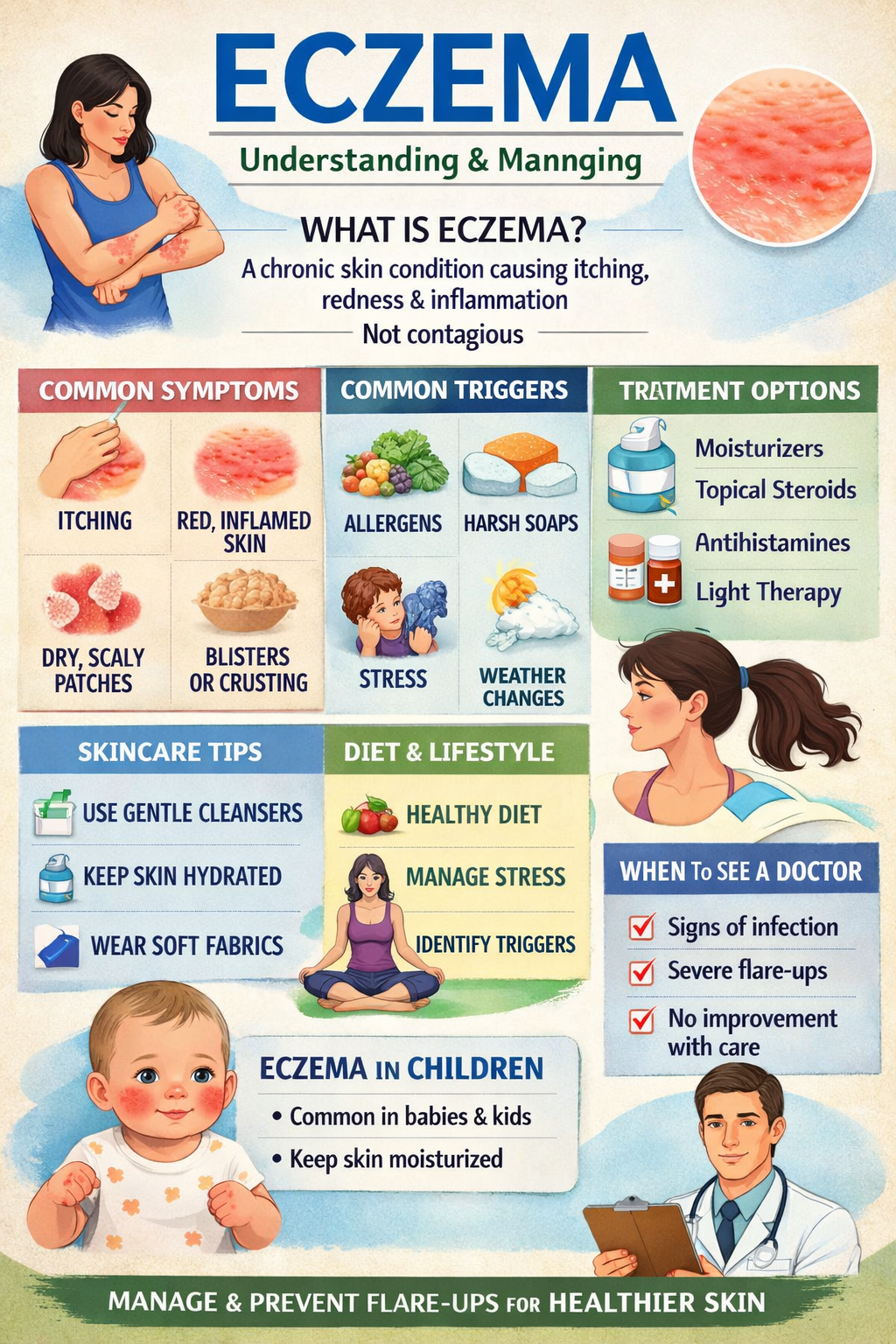
Skin is the body’s largest organ, and when it becomes irritated or inflamed, it can significantly affect daily life. Eczema is one of the most common chronic skin conditions worldwide, impacting people of all ages—from infants to adults. Though it is not contagious, it can be persistent, uncomfortable, and emotionally challenging.
This comprehensive guide explores what eczema is, its causes, symptoms, triggers, treatments, and practical lifestyle strategies to help individuals manage the condition effectively.
What Is Eczema?
Eczema is a term used to describe a group of inflammatory skin conditions that cause redness, itching, dryness, and irritation. It is most commonly associated with atopic dermatitis, the most prevalent form. The condition often begins in childhood but can develop at any age.
People with eczema typically have a weakened skin barrier. This means their skin struggles to retain moisture and protect against irritants, allergens, and bacteria. As a result, the skin becomes dry, sensitive, and prone to flare-ups.
Although it is considered a chronic condition, many individuals experience periods where symptoms improve or temporarily disappear.
Types of Eczema
There are several forms of eczema, each with unique characteristics:
1. Atopic Dermatitis
The most common type, often linked to allergies and asthma. It typically appears in early childhood and may persist into adulthood.
2. Contact Dermatitis
Occurs when the skin reacts to an irritant or allergen, such as soaps, detergents, fragrances, or metals.
3. Dyshidrotic Eczema
Characterized by small, itchy blisters on the hands and feet.
4. Nummular Eczema
Presents as coin-shaped patches of irritated skin, often on the arms or legs.
5. Seborrheic Dermatitis
Affects oily areas like the scalp and face and is commonly associated with dandruff.
6. Stasis Dermatitis
Usually occurs in the lower legs due to poor circulation.
Understanding the specific type helps guide effective treatment and management.
Common Symptoms
Symptoms vary from mild to severe and may differ from person to person. Typical signs include:
-
Persistent itching (often worse at night)
-
Dry, scaly skin
-
Red or inflamed patches
-
Crusting or oozing in severe cases
-
Thickened or leathery skin from frequent scratching
In infants, symptoms often appear on the cheeks and scalp. In children and adults, eczema commonly affects the hands, neck, elbows, knees, and ankles.
What Causes Eczema?
The exact cause is not fully understood, but experts believe it results from a combination of genetic and environmental factors.
Genetic Factors
Individuals with a family history of eczema, asthma, or allergies are more likely to develop the condition. Certain gene variations affect the skin’s ability to retain moisture.
Immune System Response
The immune system in people with eczema tends to overreact to minor irritants or allergens, causing inflammation.
Environmental Triggers
External factors often trigger flare-ups. Common triggers include:
-
Dry weather
-
Harsh soaps and detergents
-
Fragranced skincare products
-
Dust mites and pet dander
-
Stress
-
Sweating
-
Certain fabrics like wool
Identifying and avoiding personal triggers is a key step in managing symptoms.
How Eczema Is Diagnosed
Diagnosis typically involves a physical examination and a review of medical history. Doctors assess the appearance of the rash and ask about symptoms, triggers, and family history.
In some cases, patch testing may be performed to identify specific allergens causing contact dermatitis. Blood tests are rarely necessary but may help in complex cases.
Early diagnosis is important to prevent worsening symptoms and reduce the risk of skin infections.
Treatment Options
While there is no permanent cure for eczema, many treatments effectively control symptoms and reduce flare-ups.
1. Moisturizing
Regular moisturizing is the foundation of treatment. Thick creams and ointments help restore the skin barrier and reduce dryness.
Tips for effective moisturizing:
-
Apply immediately after bathing.
-
Use fragrance-free products.
-
Reapply several times daily if needed.
2. Topical Corticosteroids
These anti-inflammatory creams reduce redness and itching during flare-ups. They are available in varying strengths and should be used under medical supervision.
3. Non-Steroidal Topical Treatments
These medications help manage inflammation without steroids, making them suitable for sensitive areas like the face.
4. Antihistamines
May help relieve itching, especially at night.
5. Phototherapy
Controlled exposure to ultraviolet light can reduce inflammation in moderate to severe cases.
6. Systemic Medications
For severe eczema, doctors may prescribe oral or injectable medications that regulate the immune system.
Treatment plans are often personalized based on age, severity, and overall health.
Daily Skincare Routine for Managing Eczema
Creating a consistent skincare routine can dramatically reduce flare-ups.
Bathing Guidelines
-
Use lukewarm water instead of hot.
-
Limit baths or showers to 10–15 minutes.
-
Choose mild, fragrance-free cleansers.
-
Pat skin dry gently—do not rub.
Clothing Choices
-
Wear soft, breathable fabrics like cotton.
-
Avoid wool and synthetic materials that irritate skin.
-
Wash new clothes before wearing them.
Environmental Adjustments
-
Use a humidifier in dry climates.
-
Keep living spaces clean to reduce allergens.
-
Avoid sudden temperature changes.
These simple changes can make a significant difference in comfort and skin health.
The Emotional Impact of Eczema
Living with eczema is not only a physical challenge but also an emotional one. Persistent itching, visible rashes, and disrupted sleep can affect self-esteem and mental well-being.
Children may experience teasing or discomfort at school, while adults might feel self-conscious in social or professional settings. The constant need for skincare routines can also feel overwhelming.
Managing stress through relaxation techniques, mindfulness, and adequate sleep can help reduce flare-ups, as stress is a common trigger.
Diet and Eczema: Is There a Connection?
For some individuals, certain foods may worsen symptoms. Common potential triggers include:
-
Dairy products
-
Eggs
-
Nuts
-
Soy
-
Wheat
However, not everyone with eczema has food sensitivities. Elimination diets should only be attempted under medical supervision to avoid nutritional deficiencies.
Maintaining a balanced diet rich in fruits, vegetables, omega-3 fatty acids, and whole grains may support overall skin health.
Preventing Flare-Ups
While flare-ups cannot always be avoided, proactive care reduces their frequency and severity.
Preventive strategies include:
-
Keeping nails trimmed to minimize skin damage from scratching.
-
Using gentle laundry detergents.
-
Applying moisturizer consistently.
-
Managing stress effectively.
-
Recognizing early warning signs of irritation.
The goal is to maintain skin hydration and reduce exposure to known triggers.
Eczema in Children
Eczema often appears within the first year of life. Babies may develop dry, red patches on their cheeks, arms, and legs.
Parents can help by:
-
Keeping the baby’s skin moisturized.
-
Using mild baby-safe skincare products.
-
Dressing the child in breathable fabrics.
-
Monitoring for signs of infection.
Many children outgrow eczema as they age, although some continue to experience symptoms into adulthood.
When to See a Doctor
Medical attention is recommended if:
-
Symptoms interfere with sleep or daily activities.
-
Skin becomes infected (yellow crusting, swelling, pus).
-
Over-the-counter treatments are ineffective.
-
Flare-ups become frequent or severe.
Early intervention prevents complications and improves quality of life.
Myths and Misconceptions
There are several common myths surrounding eczema:
Myth 1: It is contagious.
False. It cannot be spread from person to person.
Myth 2: It is caused by poor hygiene.
Incorrect. Over-washing can actually worsen symptoms.
Myth 3: Steroids are always dangerous.
When used properly under medical guidance, topical steroids are safe and effective.
Education plays an essential role in reducing stigma and misunderstanding.
Living Well With Eczema
Although eczema is a chronic condition, it does not have to control one’s life. With proper skincare, trigger management, and medical guidance, most people can maintain healthy, comfortable skin.
Building a support system—whether through family, healthcare providers, or support groups—can make the journey easier. Awareness, consistency, and patience are key components of long-term management.
Final Thoughts
Eczema is a complex but manageable skin condition that affects millions worldwide. Understanding its causes, recognizing triggers, and maintaining a consistent skincare routine are vital steps toward relief.
While flare-ups may occur, modern treatments and preventive strategies offer hope and control. By combining medical advice with healthy lifestyle practices, individuals living with eczema can achieve improved comfort, confidence, and overall well-being.
With the right approach, clearer and calmer skin is an achievable goal.