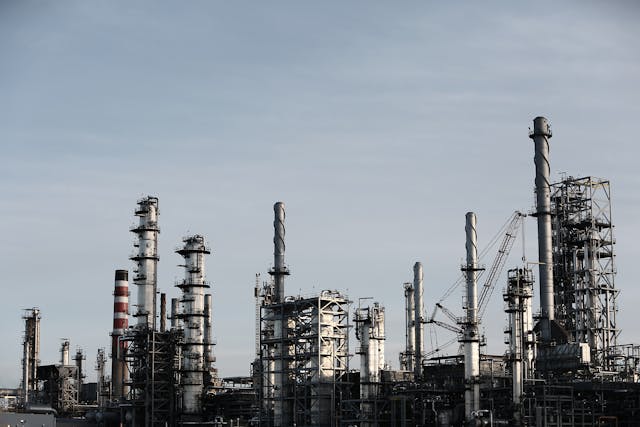
Energy prices are ever-increasing, and when it comes to industries that utilise gas-powered systems, efficiency is no longer an option. It acts as a viable method of minimising operational cost, minimising emissions, and increasing the life of equipment. You may be operating manufacturing equipment, heating systems or a steam boiler; small improvements can save you significant money in the long run.
This guide will simplify the process by breaking down real-world tips that would assist in getting more out of your industrial gas systems without complicating the process.
Begin with Routine Repairs
The most straightforward method of making your energy efficient is to maintain your equipment. Gas systems, over time, acquire dirt, scale and residues that decrease performance.
Valves, heat exchangers and burners must be checked and scrubbed. The ineffective transfer of heat can make a poorly maintained steam boiler use more fuel since it cannot transfer this heat. The presence of a single thin layer of scale within the system can seriously diminish efficiency.
Establish a routine and adhere to it. It is always cheaper to have preventive care than to use up fuel and emergency repair.
Optimize Combustion Settings
Combustion efficiency is one of the key factors in determining the amount of energy consumed by your system. When the air-to-fuel ratio is incorrect, you will be wasting fuel or generating unnecessary emissions.
Measure the temperature of oxygen, carbon monoxide, and flue gases using proper combustion analysis tools. Set the settings to allow full combustion without unnecessary consumption of more air. Excess air causes a system to be over-cooled and reduces efficiency.
This is particularly relevant when dealing with a steam boiler, where the accurate regulation of heat has a direct impact on the performance and output.
Insulate Where It Matters
One of the highest hidden costs in industrial systems is heat loss. Pipes, valves, and storage tanks tend to lose heat to the surrounding environment, and a greater amount of work is required of your system.
Insulation is used correctly to conserve heat and fuel. Pay attention to hot places like steam lines and boiler surfaces. Isolating these parts will make sure that energy is used in its required places rather than being wasted.
Older systems may also be improved instantly by upgrading the insulation materials.
Recover Waste Heat
In gas systems, a significant part of the energy is wasted by exhaust gases. Reusing and capturing this heat can considerably enhance efficiency.
Fit heat recovery devices such as economisers or heat exchangers. These systems involve exhaust heat preheating incoming water or air, and less fuel is required.
An economiser can reduce the use of fuel in plants with a steam boiler by first warming feedwater prior to its introduction into the boiler. This will not only conserve energy but also reduce thermal pressure on equipment.
Monitor and Control Usage
What you do not measure, you cannot improve. Real-time monitoring of gas consumption also allows for detecting inefficiencies, as well as unexpected peaks in the consumption.
Install performance monitoring control systems and smart meters. Automated control systems will be able to modify the operation of the system according to demand, eliminating the needless use of fuel when it is not in demand.
Modulating burners would be one example of this, where the system would operate at reduced capacity rather than operating on and off all the time. This results in a smooth running and improved efficiency.
Efficiency Upgrade to High-Efficiency Equipment
The systems that were designed many years ago are not efficient in many cases. Your equipment might be decades old, and therefore, it is time to reconsider an upgrade.
The modern gas system is constructed in such a way that it is efficient. Efficiency burners, condensing boilers, and sophisticated control systems can drastically minimise fuel consumption.
Cost savings can be realised when an old steam boiler is replaced by a new one that is energy efficient. The initial investment might be high, but the payoffs in the long term are normally worth it.
Reduce System Leaks
Leaks of gas and steam are silent energy killers. Small leaks can be, in the long run, very costly.
Check your system to confirm that pipes, joints and valves do not leak. Use leak-detecting tools as needed. Addressing these problems not only results in an efficient environment but also increases safety.
Leaks also decrease pressure in steam systems and cause the boiler to strain more to keep output at a constant. Quickly solving leakages keeps your system running.
Train Your Team
Efficiency is not only concerned with equipment. It is also contingent on the way people work and handle the system.
Ensure that your employees know how to operate equipment effectively. It can be as simple as turning off idle systems, checking the level of pressure, and reporting abnormal activity.
Train and update frequently to keep your team abreast of best practices and emerging technologies.
Conduct Energy Audits
An energy audit will give you a clear understanding of the areas in which your system is doing well or in which it is spending time.
Professional audits examine the use of fuel, the performance of the systems and heat loss. They tend to identify inefficiencies that are not evident in the day-to-day running of activities.
Based on audit findings, develop a specific improvement plan. This will help to make sure that you are working on areas that will have the best impact.
Final Thoughts
A total overhaul of the energy efficiency of industrial gas systems is not necessary. Begin with simple measures such as maintenance, insulation, and monitoring. Next, proceed to more complex solutions like heat recovery and equipment upgrades.
Such improvements can be of great benefit in systems such as a steam boiler, in terms of cost savings and also reliability. In the long run, systematic initiatives will result in less fuel usage, fewer emissions, and a more sustainable operation.
The key is to stay proactive. Minor modifications when done regularly contribute to major outcomes.