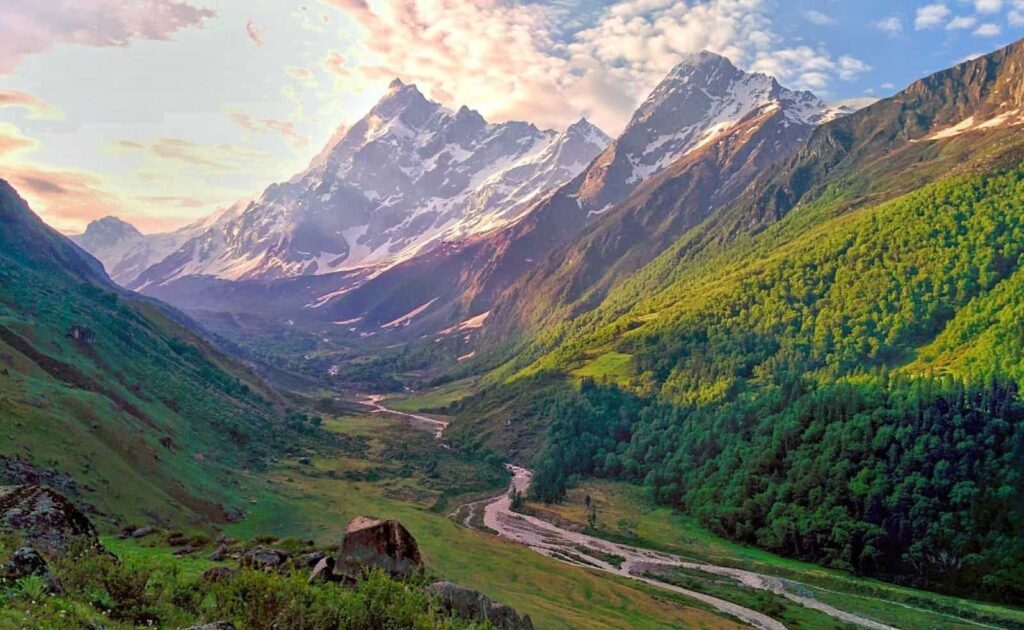
Har Ki Dun Trek is one of the most beautiful valley treks in Uttarakhand. It is famous for its wide mountain views, peaceful forest trails, and traditional Himalayan villages. This trek is a great choice for people who want to enjoy nature, culture, and adventure together without choosing something too difficult.
In this guide, you will find all the important details about the route, altitude, difficulty level, and useful tips so you can plan your journey confidently.
Where Is Har Ki Dun Located?
Har Ki Dun is situated in the Garhwal region of Uttarakhand, inside Govind Pashu Vihar National Park. The trek begins from Sankri village, which is the base point for many well-known Himalayan treks.
The valley is surrounded by beautiful snow-covered peaks like Swargarohini, Bandarpoonch, and Black Peak. Because of its remote location, the area feels peaceful and less crowded compared to popular tourist spots.
Har Ki Dun Trek Route Overview
The route of Har Ki Dun is gradual and scenic. This makes it suitable for beginners who have basic fitness and stamina.
Standard Route:
- Dehradun to Sankri (drive)
- Sankri to Taluka (short drive)
- Taluka to Pauni Garaat / Seema (trek)
- Seema to Har Ki Dun Valley (trek)
- Return via the same route
The trail goes through pine and deodar forests, wooden bridges, riverside paths, and traditional villages like Osla and Seema. Each day offers different landscapes and calm surroundings.
Har Ki Dun Altitude and Height
- Maximum altitude: around 11,700 feet (3,566 meters)
- Sankri (base camp): around 6,400 feet
The altitude gain during the trek is slow and steady. Because of this gradual climb, the risk of altitude sickness is lower. This is one of the reasons why Har Ki Dun is often recommended as a first Himalayan trek.
Trek Difficulty and Fitness Level
Har Ki Dun is considered an easy to moderate trek.
You should be able to:
- Walk 8–10 km in a day with a backpack
- Manage steady uphill and downhill sections
- Stay active for 5–6 continuous trekking days
Simple preparation like daily walking, light jogging, or stair climbing for a few weeks before the trek is usually enough to build stamina.
Best Time to Do the Har Ki Dun Trek
Har Ki Dun is mainly accessible in two seasons:
Spring & Summer (April to June)
- Pleasant weather
- Green meadows and blooming flowers
- Clear mountain views
Autumn (September to November)
- Fresh and stable weather
- Golden-brown landscapes
- Clear views of snow peaks
The trek usually remains closed during heavy monsoon and peak winter because of rainfall and snowfall.
What Makes Har Ki Dun Special?
Har Ki Dun is special because of:
- A wide alpine valley with open views
- Traditional wooden houses and rich local culture
- Peaceful trails with fewer crowds
- A comfortable balance of nature and adventure
- Suitable for beginners and families with trekking experience
Unlike many high-altitude treks, Har Ki Dun allows you to enjoy the journey without constant physical pressure.
Essential Tips for Har Ki Dun Trek
- Wear proper trekking shoes with good grip
- Carry warm clothes, even in summer
- Stay hydrated and maintain a steady pace
- Respect local traditions and protect nature
- Trek with experienced guides or a registered trekking company
Final Thoughts
Har Ki Dun Trek is not just about reaching a valley. It is about walking through forests, crossing traditional villages, and experiencing the peaceful rhythm of mountain life.
If you are looking for a trek that is scenic, safe, and truly satisfying, Har Ki Dun is a wonderful choice for your Himalayan journey.