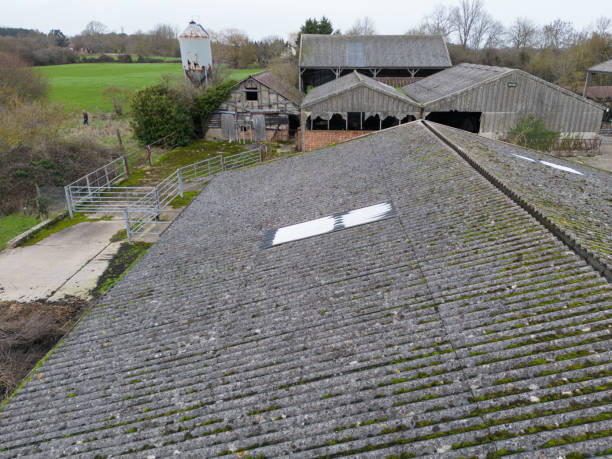
Drone view of an old asbestos roof seen on a farm building, prior to being removed. The shed is used to house livestock during the winter months.
People like to think asbestos is old news. Something stuck back in the 70s with shag carpet and questionable wallpaper choices. Truth is, it’s still sitting inside thousands of buildings right now, quiet and dangerous. Every year property owners get surprised when a renovation or demolition project suddenly turns into a hazardous material removal situation. An experienced asbestos abatement contractor sees this daily. Floors, insulation, ceiling tiles, pipe wraps, roofing materials — asbestos hid everywhere because it worked. It resisted fire, heat, and corrosion. Great for builders back then. Not so great for lungs today.
Understanding What Makes Asbestos Dangerous
Asbestos isn’t dangerous when it’s just sitting untouched and stable. That part confuses people. The real problem starts when materials containing asbestos get disturbed, cracked, drilled, or torn apart. That’s when microscopic fibers release into the air. You breathe them in without knowing.
Once inhaled, those fibers stay in your lungs. They don’t break down. Over time they can lead to serious illnesses like mesothelioma, lung cancer, and asbestosis. And here’s the ugly part — symptoms can take decades to show up. Someone exposed in their twenties might not feel the effects until their fifties or sixties.
Where Asbestos Commonly Hides Inside Buildings
You’d be surprised where asbestos still turns up. It’s not just insulation around old boilers, although yeah, that’s a classic. It shows up in vinyl floor tiles, popcorn ceilings, drywall joint compound, cement siding, roofing shingles, even fireproof doors. The list gets weirdly long.
Older commercial buildings tend to have more asbestos-containing materials, but residential homes built before the 1980s carry big risks too. Renovation contractors often uncover asbestos mid-project, which halts everything. Deadlines slip. Costs rise. Stress ramps up.

Why DIY Asbestos Removal Is a Terrible Idea
Every now and then someone watches a couple online videos and decides they can handle asbestos removal themselves. It sounds harsh, but that decision can wreck health, property value, and legal standing all at once. Asbestos fibers spread easily and invisibly.
Without specialized containment equipment, fibers contaminate air ducts, carpets, and furniture. Suddenly, what started as a small removal job turns into full building decontamination. Way more expensive, way more complicated. Not to mention, improper handling can violate environmental safety laws.
The Step-by-Step Process Used by Abatement Contractors
People often wonder what actually happens during asbestos abatement. It’s not dramatic demolition like movies show. It’s slower. Careful. Controlled. First comes inspection and lab testing to confirm asbestos presence and type.
Next, the asbestos abatement contractor seals off the contaminated area. Heavy plastic barriers, air filtration machines, warning signage — the works. Workers wear full protective suits and respirators. Materials get dampened to prevent fiber release before removal starts.
Legal Regulations Surrounding Hazardous Material Removal
Asbestos removal isn’t just about safety. It’s also heavily regulated by environmental and occupational health authorities. Regulations require licensed asbestos abatement contractors, specific handling procedures, and detailed project reporting. Miss those rules and penalties hit hard.
Property owners sometimes underestimate these requirements. They hire unlicensed crews or attempt partial removal themselves. If inspectors discover improper asbestos handling, projects can get shut down immediately. Fines can reach thousands, sometimes more depending on contamination severity.
How Asbestos Impacts Renovation and Demolition Projects
Renovation projects uncover asbestos constantly. Walls get opened, ceilings come down, flooring gets stripped, and suddenly hidden asbestos materials get exposed. When that happens, work stops. It has to. Continuing construction risks spreading fibers across the entire structure.

Experienced asbestos abatement contractors coordinate with renovation teams to minimize delays. They isolate contaminated sections, perform targeted removal, and clear the area for construction to continue safely. That coordination saves time compared to emergency shutdowns later.
The Cost Factors Behind Professional Asbestos Removal
Let’s talk money, because everyone eventually asks. Asbestos abatement pricing varies based on contamination size, material type, accessibility, and disposal requirements. Removing pipe insulation costs differently than removing asbestos flooring across a large commercial building.
Some property owners hesitate when they see removal quotes. Totally understandable. But incomplete removal or improper hazardous material removal often leads to secondary contamination. That means repeat remediation, extended closures, and rising costs that blow past original estimates.
Health Protection Benefits of Certified Abatement Services
The biggest benefit of hiring a professional asbestos abatement contractor is simple — protecting human health. Workers, tenants, visitors, and maintenance crews all rely on safe indoor environments. Asbestos exposure doesn’t cause immediate symptoms, which makes prevention even more important.
Hazardous material removal teams follow strict containment and decontamination procedures to stop fiber spread. Air monitoring ensures removal areas meet safety standards before reopening. These safeguards protect not only current occupants but also future building users.
Environmental Responsibility in Asbestos Disposal
Removing asbestos is only half the job. Disposal matters just as much. Hazardous material removal requires transportation to approved disposal facilities that can safely contain asbestos waste. Dumping it improperly risks environmental contamination and legal violations.
Licensed asbestos abatement contractors track disposal through documented chains of custody. Waste packaging must meet strict safety standards to prevent fiber release during transport. It sounds bureaucratic, but those safeguards exist because environmental exposure affects entire communities.
Signs Your Property Might Require Asbestos Inspection
Most people don’t request asbestos inspection until renovation begins. By then, construction delays already cost money. Buildings constructed before the late 1980s should always undergo inspection before major structural work begins. That’s not overkill. That’s smart planning.
Signs that asbestos inspection may be needed include deteriorating ceiling tiles, crumbling insulation, damaged flooring, or exposed pipe wrap materials. Water damage can also weaken asbestos materials, increasing fiber release risks. Even minor structural damage can create hidden hazards.

Choosing the Right Asbestos Abatement Contractor Matters
Reputable hazardous material removal companies also conduct post-removal air testing to confirm successful cleanup. That verification step separates professional abatement services from risky shortcuts. Building owners deserve proof their property is safe, not just verbal reassurance.
If you suspect asbestos or plan construction involving older materials, don’t wait until contamination spreads. Visit Risk Removal to start working with certified asbestos abatement contractors who understand safety, compliance, and responsible hazardous material removal from start to finish.
Frequently Asked Questions About Asbestos Abatement Contractor Services
What does an asbestos abatement contractor actually do?
An asbestos abatement contractor identifies, contains, removes, and safely disposes of asbestos-containing materials. They follow strict safety regulations and conduct air testing to ensure contaminated areas are fully cleared.
Is asbestos always dangerous in buildings?
Asbestos becomes dangerous when disturbed or damaged, releasing microscopic fibers into the air. Hazardous material removal becomes necessary when materials deteriorate or renovation work exposes asbestos.
How long does hazardous material removal take?
Project timelines depend on contamination size and building complexity. Small residential removals may take days, while large commercial asbestos abatement projects can take weeks to complete safely.
Can I stay in my building during asbestos removal?
In some cases, occupants can remain if containment isolates removal areas. However, many hazardous material removal projects require temporary relocation to ensure safety during abatement procedures.
How do I know if my building contains asbestos?
Professional inspection and lab testing are the only reliable ways to confirm asbestos presence. Older buildings and damaged construction materials often require testing before renovation or demolition.