Passive House Architect
Energy-efficient design doesn’t start with solar panels or smart gadgets. It starts with admitting something uncomfortable. Most buildings are bad at their job. They leak heat. They fight the weather instead of working with it. And they cost people more than they should, month after month. A Passive House Architect sees this problem right away. Not as a theory, but as a pattern they’ve watched for years. So their approach is different from the start. Less show. More thinking. Fewer shortcuts. More questions. Sometimes annoying ones. Like, “Why is this wall built that way?” or “Do we really need that much glass?” It’s not glamorous. But it works.
The Site Comes Before the Shape
The first thing a Passive House Architect looks at isn’t the floor plan. It’s the land. Sun paths. Wind direction. Shade from trees or nearby buildings. What happens in winter? What happens in summer? Standing on site matters. You feel things you can’t see on a screen. Cold pockets. Hot corners. Places where wind just barrels through. Turn the building the wrong way, and you’ve created a problem you’ll spend decades paying for. Turn it the right way, and the house does half the work for you. This step feels slow. Clients sometimes get impatient. But skipping it is how energy-efficient dreams fall apart.
Building Envelope Is the Real Machine
People love to talk about systems. Heat pumps. Ventilation units. Controls. But the real machine is the shell of the building. Walls. Roof. Floor. Windows. A Passive House Architect treats that shell like a thermos. Tight. Insulated. Continuous. No random gaps. No guessing. Every joint has a reason. Air leaks are sneaky. You don’t see them, but you feel them in your bones in winter. And on your power bill all year. Good envelope design isn’t about being fancy. It’s about being disciplined. Do the boring parts right, and everything else gets easier.
Windows Are Chosen Like Tools, Not Jewelry
Windows get people emotional. Big glass. Open views. Light everywhere. A Passive House Architect doesn’t hate windows. They just don’t trust them blindly. Glass can help or hurt depending on where it sits. South-facing windows can warm a space beautifully in winter. East and west glass can turn rooms into ovens in summer. So size, placement, and shading all matter. Triple glazing. Deep frames. Exterior shading. Overhangs. These aren’t upgrades. They’re controls. The goal isn’t to block the world out. It’s to let the good parts in and keep the bad parts out. Simple idea. Hard to execute.
Mechanical Systems Shrink When Design Improves
Here’s a weird truth. The better the building, the smaller the equipment. A Passive House Architect designs to reduce demand first. That means heating and cooling systems don’t need to work like bodybuilders. They just need to be steady and smart. Ventilation takes center stage. Fresh air comes in slowly, constantly, and without throwing away heat. No loud blasts. No sudden cold zones. Just even comfort. Room to room. People notice this right away. The house feels calm. Not aggressive. Not jumpy. It’s a different experience than most buildings people are used to.
Details: Decide Whether the Theory Survives
This is where things get real. Drawings. Sections. Connection points. Window meets wall. Roof meets wall. Floor meets foundation. These spots decide everything. A Passive House Architect doesn’t rush this part. They can’t. Thermal bridges don’t care about good intentions. One bad detail can undo ten good ones. So drawings get revised. And revised again. Sometimes the solution is awkward. Sometimes it costs a little more. But it costs less than failure. This is where patience pays off. And where experience shows.
Builders Make or Break the Outcome
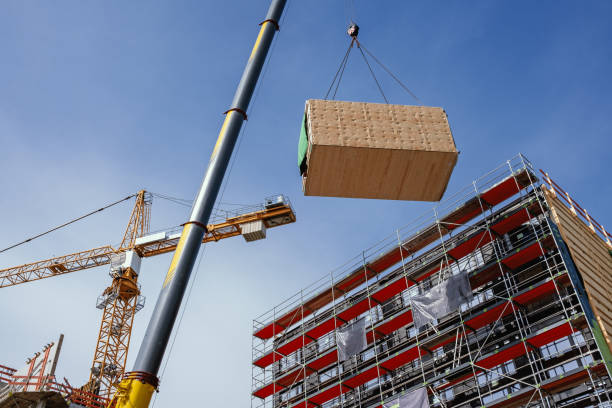
You can design the smartest building in the world and still lose if the builder doesn’t understand what’s happening. Energy-efficient design needs respect on-site. Tapes applied carefully. Insulation is placed without gaps. Sequencing done in the right order. When teams like Carland Constructions are involved, that respect is already there. They don’t treat Passive House ideas as fragile theory. They treat them as construction logic. That changes everything. Mistakes get caught early. Questions get asked. The building ends up performing the way it was meant to, not the way it accidentally became.
Clients Learn a New Meaning of Comfort
Most people think comfort is about temperature. Hot or cold. But a Passive House Architect shows clients something else. Comfort is stable air. Warm surfaces. No drafts sneaking across the floor. No noisy systems kicking on and off. Once people live in this kind of building, their expectations shift. They stop thinking in extremes. They stop fighting the house. And they start trusting it. Energy-efficient design becomes personal at that point. It’s not about charts. It’s about how mornings feel. How nights sound. How bills look at the end of the month.
Conclusion: Quiet Design with Sharp Intent
A Passive House Architect doesn’t chase trends or trophies. They chase performance. Quietly. Patiently. Sometimes stubbornly—and this is the same mindset shared by Carland Constructions. Their approach to energy-efficient design is a chain of choices that stack up over time. Site. Envelope. Windows. Systems. Details. People. Miss one link and the chain weakens. Get them aligned, and the building does what it should. It protects. It saves. It lasts. No drama. No tricks. Just solid thinking turned into walls and roofs. And when it’s done right, you don’t notice the design at all. You just feel good inside it. Which might be the best proof there is.