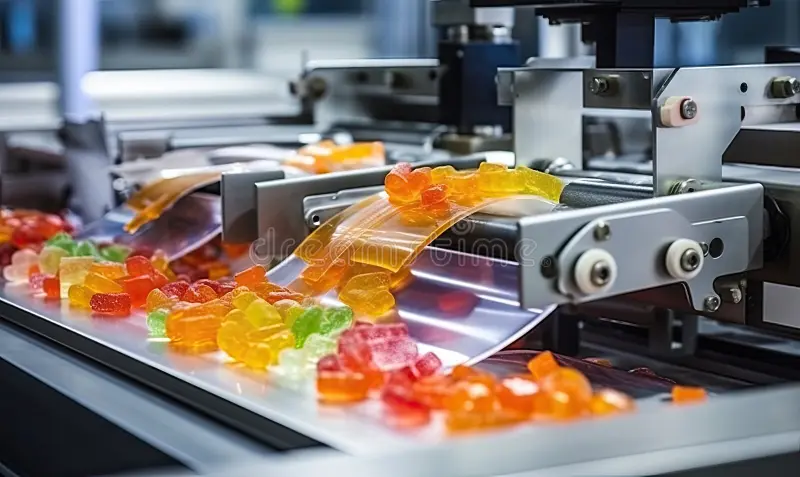
In the competitive confectionery market, producing high-quality jelly candies consistently is crucial for maintaining consumer trust and brand reputation. Variations in texture, taste, or appearance can negatively impact customer satisfaction and increase production waste. To address these challenges, manufacturers are increasingly investing in a Jelly Candy Making Machine. These machines combine automation, precise control, and standardized processes to ensure uniformity across every batch, making them indispensable for modern candy production.
Consistency in jelly candy production starts with precise ingredient handling. Traditional manual methods can result in variations due to human error in measuring, mixing, or cooking times. A jelly candy making machine automates these steps, ensuring the exact quantity of ingredients is mixed uniformly, cooked at controlled temperatures, and deposited in consistent portions. This level of precision reduces batch-to-batch variability and ensures that each candy meets predetermined quality standards.
Automated Mixing and Cooking
One of the key contributors to production consistency is the automated mixing and cooking system. In a jelly candy making machine, ingredients such as sugar, glucose, gelatin, flavorings, and colorings are combined in a controlled environment. Automated mixers maintain a consistent stirring speed and pattern, preventing ingredient separation and ensuring even distribution.
The cooking system is equally critical. The temperature, duration, and heating method are precisely regulated to achieve the desired viscosity and texture. Some machines utilize vacuum cooking technology, which not only improves flavor retention but also ensures that each batch reaches the same level of gelatinization. By automating these critical steps, manufacturers can avoid inconsistencies caused by manual handling, leading to a uniform product every time.
Precision Depositing and Molding
After cooking, the jelly mixture is transferred to depositing units that portion the candy into molds. Precision depositing ensures that each candy has the same size and weight, which is essential for packaging, taste, and consumer appeal. Multi-nozzle depositing systems allow several candies to be formed simultaneously without sacrificing uniformity, significantly enhancing production efficiency.
Molding systems are designed for repeatable accuracy, shaping candies into consistent forms regardless of complexity. Quick-change molds allow manufacturers to switch between designs without compromising quality, ensuring that novelty or seasonal products maintain the same standard as regular offerings. Consistency in shape and size also contributes to the aesthetic appeal of candies, which is a critical factor in consumer preference.
Controlled Cooling and Coating
Once molded, jelly candies need to be cooled and, in some cases, coated with sugar, chocolate, or other finishes. Automated cooling tunnels provide a uniform temperature and airflow, preventing uneven setting or deformation. Candies exit the tunnel with consistent firmness and texture.
Coating units apply toppings evenly and reproducibly, reducing the risk of clumping, uneven coverage, or product defects. Automated coating and drying systems minimize human intervention, ensuring that every piece meets the same quality standard. This consistency is especially important for products sold in bulk or used in multi-candy packaging, where visual uniformity directly affects consumer perception.
Quality Monitoring and Feedback Systems
Modern jelly candy making machines often include integrated quality control systems. Sensors and monitoring devices track parameters such as temperature, viscosity, portion size, and cooking duration in real time. Deviations from the set standards trigger alerts or automatic adjustments, preventing defective products from progressing through the production line.
This feedback loop ensures that issues are corrected immediately, maintaining a high level of consistency throughout the production process. Data collected by these systems can also be used to refine recipes, optimize production settings, and reduce waste, further contributing to operational efficiency and consistent output.
Advantages of Consistent Production
Consistent production provides multiple benefits for manufacturers:
- Improved Brand Reputation: Consumers trust products that look and taste the same every time.
- Reduced Waste: Fewer defective or off-spec candies reduce material waste and production costs.
- Higher Efficiency: Automated systems reduce the need for manual corrections and reprocessing.
- Scalability: Consistency allows manufacturers to scale up production without compromising quality.
- Market Competitiveness: Reliable product quality helps maintain a competitive edge in the crowded candy market.
Conclusion
A Jelly Candy Making Machine is a vital tool for manufacturers seeking to improve production consistency. By automating critical processes such as mixing, cooking, depositing, molding, cooling, and coating, these machines eliminate the variability associated with manual production methods. Advanced monitoring and control systems further enhance uniformity, ensuring every batch meets the highest standards of taste, texture, and appearance.
For businesses aiming to strengthen brand reputation, reduce waste, and increase operational efficiency, investing in a modern jelly candy making machine is not just an option—it is a strategic necessity. Consistency in production translates to satisfied consumers, reliable product quality, and long-term success in the competitive confectionery industry.