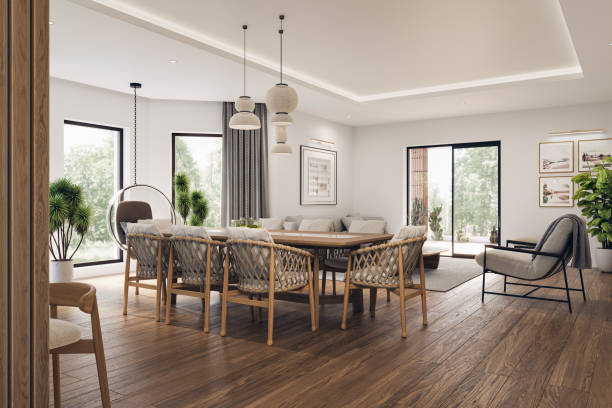
Most homes don’t look put together by accident. That’s just the truth. There’s usually some kind of plan behind it, even if it’s a rough one scribbled in someone’s head. If you’ve ever seen projects handled by Property Development Services in Las Vegas, you’ll notice they don’t just decorate one room and hope the rest magically lines up. There’s always some direction. You don’t need a perfect vision board or anything fancy, but you do need a general feel you’re aiming for. Warm, minimal, a bit industrial, whatever. Without that, things drift. One room looks calm, the next looks loud, and suddenly your house feels like it can’t decide what it is.
Pick a Color Direction and Don’t Keep Changing Your Mind
Color is where people usually go off track. They start strong, then get bored, then try something totally different in the next room. And yeah, that’s how things start feeling disconnected. You don’t need to match everything exactly—that actually looks a bit forced—but you should stay in the same lane. If your base is warm tones, don’t randomly switch to cold greys halfway through the house. It just feels… off. Think of it like background music. It should carry through, not restart every time you walk into a new room.
Materials Matter More Than People Think
This one gets ignored a lot. Everyone focuses on color, but materials do just as much work. Maybe more, honestly. If you’ve got brushed metal or matte black in one area, try to echo that somewhere else. Same with wood. Mixing too many finishes starts to feel messy, even if each piece looks good on its own. You don’t need to match everything perfectly—please don’t—but there should be some repetition. Little hints. Enough that your eye connects the dots without you having to think about it.
Flooring Can Either Help You or Ruin Everything
Bit dramatic, but not wrong. Flooring has a huge impact on how your home flows. If every room has a different type, different color, different vibe… yeah, it breaks things up in a bad way. Open spaces especially need consistency. If you have to switch materials (like tile in bathrooms), keep the tones somewhat related so it doesn’t feel like a hard cut. It’s not about making everything identical. It’s about avoiding that jarring “wait, what just happened here” feeling when you walk around.
Choose One Main Style (Stop Trying to Do Everything)
This is where people get a bit carried away. They like modern, but also rustic, and a little bit of boho, and maybe some classic touches too. Sounds fun, but in reality? It usually turns into a mix that doesn’t quite land. Pick one main style. Let it lead. Then you can layer small influences on top, carefully. A hint of something different is fine. A full mashup of five styles… not so much. That’s how homes start feeling confused.
Furniture Should Feel Like It Belongs Together
Not matching. Just… related. There’s a difference. If your sofa is super sleek and modern but your dining set looks heavy and traditional, the shift can feel awkward. You want some connection between pieces, even if it’s subtle. Could be the shape, could be the finish, could just be the overall vibe. It’s one of those things people don’t notice right away, but they feel it.
Lighting Gets Ignored Until It’s Too Late
Lighting is weirdly overlooked. People spend time on furniture, paint, decor—and then throw in random bulbs and fixtures at the end. And it shows. One room is warm and soft, the next is bright and cold. It messes with the mood of the whole house. Try to keep your light temperature consistent. Also, your fixtures shouldn’t look like they came from completely different worlds. They don’t need to match, just… make sense together.
Decor Doesn’t Need to Match, But It Should Connect
You don’t need identical art or perfectly coordinated cushions everywhere. That actually gets boring pretty fast. But there should be something tying things together. Maybe a repeated color. Maybe similar tones. Maybe just a shared mood. If one space feels calm and neutral and the next is loud and chaotic, the transition can feel a bit harsh. Not always bad, but definitely harder to pull off.
Cut Things Out (Seriously, Be a Bit Ruthless)
This part’s not fun, but it works. Most homes have too much going on. Too many ideas, too many “this might work” pieces that never really found a place. If something doesn’t fit the overall look, it’s not helping. Even if you like it. Editing things down is usually what brings everything together. Less noise, more clarity. Simple, but not easy.
Think About How You Move Through the Space
Your home isn’t just separate rooms—it’s one continuous experience. You walk through it, you glance into other spaces, you notice how things connect (or don’t). Stand in one room and look into the next. Does it feel smooth, or like a visual stop sign? Small changes can fix that. Repeating a color, keeping materials consistent, even just reducing clutter near transitions. It’s not complicated, just overlooked.
Sometimes You Need a Second Opinion
There’s a point where you’ve stared at your space too long and everything starts to blur. That’s normal. Bringing in an Interior Designer in Las Vegas can help—not because they’ll completely redo your home, but because they’ll catch what you’ve missed. Could be scale, could be balance, could be something small that’s throwing everything off. Fresh perspective goes a long way here.
Conclusion
A cohesive home isn’t about making everything match perfectly. That usually ends up looking stiff anyway. It’s more about connection—colors that relate, materials that repeat, spaces that flow into each other without feeling forced. You’ll probably mess up a few times along the way. Everyone does. But once it starts coming together, you can feel it. The house just… makes sense. And that’s really the whole point.