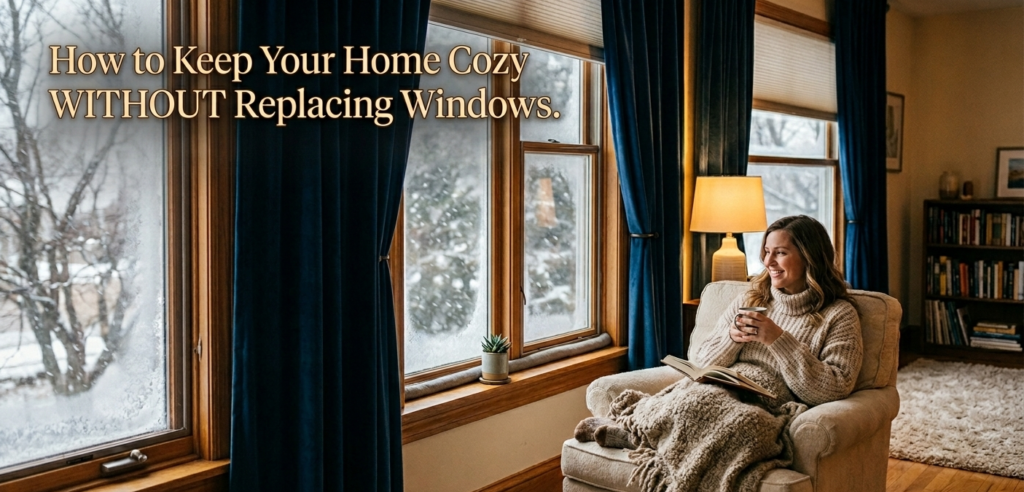
When temperatures drop and energy bills rise, many homeowners assume that full window replacement is the only way to improve comfort. But replacing windows can be expensive, disruptive, and often unnecessary—especially if your existing frames are still structurally sound.
The good news? There are practical, cost-effective ways to make your home warmer, quieter, and more energy-efficient without tearing out your current windows.
In this guide, we’ll walk through proven strategies to reduce drafts, prevent heat loss, and improve indoor comfort—while protecting your home’s character and your budget.
Why Windows Feel Cold in the First Place
Before diving into solutions, it’s important to understand the problem.
Windows are one of the biggest sources of heat loss in a home. Even modern double-glazed units can allow:
- Air leakage around frames
- Heat transfer through glass
- Condensation buildup
- Drafts caused by pressure differences
In older homes, single-pane glass and aging seals make these issues even worse. But here’s the key point: in many cases, the issue isn’t the window itself—it’s insulation, sealing, and thermal performance.
That means you can dramatically improve comfort without replacing the entire unit.
- Seal Air Leaks and Drafts First
If your home feels cold near windows, air leakage is usually the primary culprit.
Check for:
- Cracked or dried-out caulking
- Gaps between window frames and walls
- Worn weatherstripping
- Loose locks that prevent tight closure
Quick Fixes:
- Apply high-quality exterior-grade caulk to seal gaps
- Replace weatherstripping around operable windows
- Install draft stoppers along window sills
- Adjust or replace locking mechanisms for tighter compression
These simple upgrades alone can noticeably reduce cold air infiltration.
Pro Tip: Perform a candle or incense test near windows on a windy day. If the flame flickers, you’ve found an air leak.
- Upgrade Window Coverings Strategically
Window treatments are more than decorative—they can significantly improve insulation.
Best Options for Insulation:
Thermal Curtains
Thick, multi-layer curtains trap air between fabric and glass, reducing heat transfer.
Cellular (Honeycomb) Shades
Their unique structure creates insulating air pockets.
Layered Window Treatments
Combine blinds with heavy drapes for maximum thermal performance.
To get the best results:
- Mount curtain rods close to the ceiling
- Extend curtains beyond window edges
- Ensure they reach the floor
This reduces heat escape around the sides.
- Install Interior Window Film
Window insulation film is an affordable DIY solution that adds a thin insulating layer to glass surfaces.
It works by:
- Creating an air pocket
- Reducing radiant heat loss
- Minimizing condensation
While it won’t match the performance of high-end glazing systems, it’s a useful seasonal solution—especially for single-pane windows.
- Address Condensation Properly
Condensation isn’t just annoying—it’s a sign of thermal imbalance.
When warm indoor air hits cold glass, moisture forms. Over time, this can damage frames, encourage mold growth, and reduce comfort.
Reduce Condensation By:
- Lowering indoor humidity (30–50% ideal in winter)
- Using kitchen and bathroom exhaust fans
- Running a dehumidifier if needed
- Improving insulation around windows
If condensation persists, it may indicate that your glass is too cold due to poor insulation performance.
- Consider Secondary Glazing Instead of Replacement
One of the most effective ways to improve window performance—without replacing them—is installing secondary glazing.
Secondary glazing involves adding an additional pane to the interior side of your existing window. This creates an insulating air gap that significantly reduces:
- Heat loss
- Drafts
- Outside noise
- Condensation
Unlike full replacement, it:
- Preserves original frames
- Costs significantly less
- Installs quickly
- Requires minimal structural alteration
If you’re exploring long-term comfort improvements without renovation headaches, modern energy-efficient window insulation solutions can provide comparable thermal performance to new double glazing—at a fraction of the cost.
- Use Area Rugs and Soft Furnishings
Cold air often settles near floors and window perimeters.
Adding:
- Thick area rugs
- Insulated underlays
- Upholstered furniture near windows
…helps reduce perceived chill and improve comfort.
Soft materials absorb and retain warmth, making rooms feel noticeably cozier even if the thermostat remains the same.
- Improve Air Circulation
Warm air rises. That means ceiling-level heat may never reach seating areas if airflow is poor.
Try:
- Reversing ceiling fans to clockwise (winter mode)
- Using small circulating fans to redistribute warm air
- Keeping interior doors open for better airflow
Better circulation prevents cold pockets near windows and improves overall comfort.
- Upgrade to Interior Storm Windows
Interior storm windows function similarly to secondary glazing but are often removable and seasonal.
Benefits include:
- Improved insulation
- Reduced drafts
- Noise reduction
- Increased comfort
They’re particularly useful for heritage homes where exterior changes aren’t permitted.
- Add Window Inserts for Year-Round Efficiency
Window inserts are custom-fit acrylic or glass panels installed inside your existing window frame.
Unlike temporary film solutions, inserts provide:
- Long-term energy savings
- Enhanced soundproofing
- Reduced condensation
- Improved indoor temperature stability
They’re discreet, removable, and preserve your home’s appearance.
Many homeowners choose this route because it avoids:
- Construction mess
- Structural disruption
- Exterior alterations
Solutions like Magnetite retrofit window systems are specifically designed to transform existing windows into high-performance insulating systems—without the cost or complexity of full replacement.
- Don’t Ignore Frame Insulation
Even with good glass, poorly insulated frames allow heat loss.
If your home is older, consider:
- Removing trim to check insulation around frames
- Adding low-expansion foam insulation
- Sealing interior trim gaps
These improvements can significantly reduce drafts.
- Block Nighttime Heat Loss
Glass loses more heat at night due to temperature differences.
Make it a habit to:
- Close curtains before sunset
- Lower blinds at dusk
- Seal drapes tightly against walls
This simple routine prevents nighttime heat escape and improves sleeping comfort.
- Evaluate Your Heating Strategy
Sometimes the issue isn’t windows—it’s how heat is distributed.
Consider:
- Upgrading to a programmable thermostat
- Installing smart thermostats
- Ensuring vents near windows aren’t blocked
- Scheduling HVAC maintenance
Efficient heating combined with window insulation produces the best results.
- Reduce Radiant Heat Loss with Reflective Solutions
Radiant heat loss occurs when warmth transfers directly through glass surfaces.
Reflective window panels or low-emissivity (Low-E) interior additions can reduce this heat transfer dramatically.
Low-E technology reflects heat back into the room, keeping interiors warmer without raising energy use.
- Preserve the Character of Your Home
Full window replacement can change the appearance of your property—especially in older or architecturally unique homes.
By upgrading performance from the inside, you:
- Maintain original craftsmanship
- Protect property value
- Avoid permit issues
- Reduce environmental waste
Sustainability matters. Extending the life of existing materials is often more eco-friendly than replacing them.
- Calculate the Real Cost Difference
Window replacement can cost thousands per opening.
Before committing, compare:
- Installation costs
- Disposal costs
- Labour disruption
- Energy savings timeline
In many cases, insulation upgrades or secondary systems provide similar efficiency improvements with a far shorter payback period.
- Improve Acoustic Comfort Alongside Warmth
Cold windows aren’t just inefficient—they’re noisy.
Adding interior glazing layers or inserts:
- Reduces traffic noise
- Minimizes wind sounds
- Improves sleep quality
A quieter home naturally feels more comfortable and secure.
- Focus on High-Impact Rooms First
If upgrading every window isn’t feasible, prioritize:
- Bedrooms
- Living rooms
- North-facing windows
- Large picture windows
Targeting the biggest problem areas first maximizes comfort gains while keeping costs manageable.
- Layer Your Insulation Strategy
The most effective approach isn’t one single fix—it’s layering improvements:
- Seal air leaks
- Upgrade coverings
- Improve frame insulation
- Add secondary glazing or inserts
- Optimize heating distribution
Each layer compounds the benefits of the others.
- Increase Property Value Without Major Renovation
Buyers appreciate energy efficiency—but not everyone wants construction chaos.
Improving thermal comfort through non-invasive solutions can:
- Enhance home appeal
- Improve energy ratings
- Demonstrate smart upgrades
- Reduce inspection concerns
All without the sticker shock of full replacement.
- Enjoy Immediate Comfort Improvements
One overlooked benefit of non-replacement solutions? Speed.
Instead of waiting weeks for manufacturing and installation, many insulation upgrades can be completed quickly—with immediate results.
You’ll notice:
- Fewer drafts
- Warmer rooms
- Reduced cold spots
- Lower heating strain
Comfort doesn’t have to require demolition.
Final Thoughts
Keeping your home cozy doesn’t automatically mean replacing your windows. In fact, many homeowners achieve outstanding comfort improvements through smart insulation upgrades, sealing, and interior glazing systems.
Before committing to expensive replacements, explore practical alternatives that:
- Preserve your existing windows
- Improve thermal efficiency
- Reduce noise
- Lower energy bills
- Maintain architectural character
By combining air sealing, strategic window treatments, and modern interior insulation systems, you can transform cold, drafty rooms into warm, inviting spaces—without major renovation.
Comfort is about performance, not replacement.
And sometimes, the smartest upgrade is the one that works with what you already have.