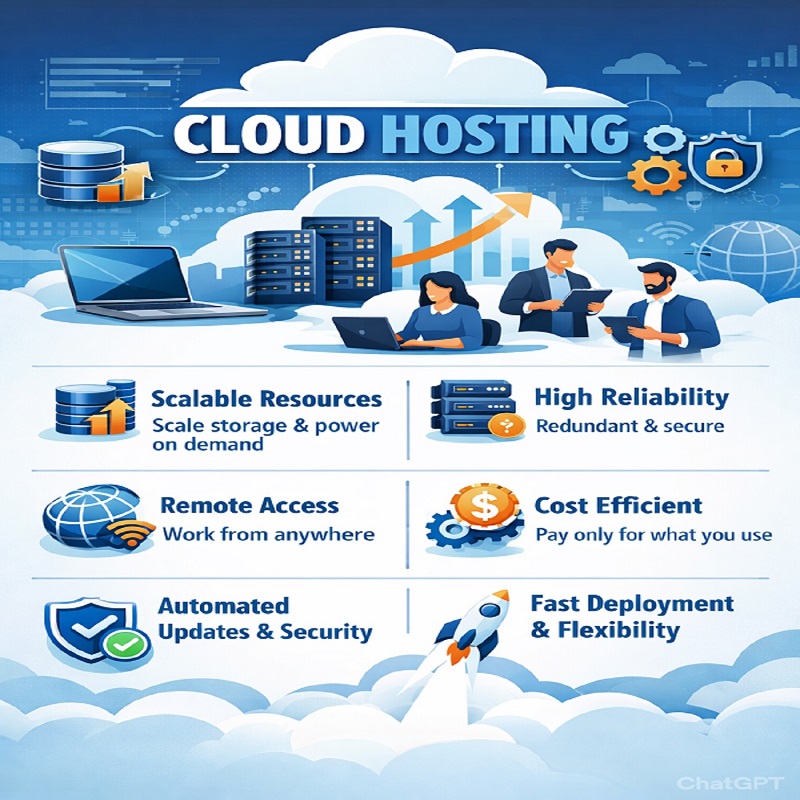
If you’re building a website for the first time, choosing the right hosting can feel overwhelming. Shared hosting, VPS, dedicated servers—and now cloud hosting. So what exactly is web cloud hosting, and why are so many businesses moving to it?
This beginner-friendly guide breaks cloud hosting down in simple terms, explains how it works, and helps you decide if it’s the right choice for your website.
What Is Web Cloud Hosting?
Web cloud hosting is a type of website hosting that uses multiple connected servers (the “cloud”) instead of relying on a single physical server. Your website’s data is distributed across several machines, which work together to deliver fast, reliable performance.
In plain English:
If one server has a problem, another server steps in—so your website stays online.
This is very different from traditional shared hosting, where many websites compete for limited resources on one server.
How Cloud Hosting Works (Beginner Explanation)
Think of cloud hosting like electricity from the power grid.
-
You don’t rely on one power plant
-
If demand increases, more power is supplied
-
If one station fails, others keep things running
With cloud hosting:
-
Your website pulls resources (CPU, RAM, storage) from a pool of servers
-
Resources scale up or down automatically
-
You only pay for what you use (in many cases)
This makes cloud hosting flexible, resilient, and efficient.
Key Benefits of Cloud Hosting for Beginners
1. Scalability Without Stress
If your website traffic suddenly spikes—during a sale, product launch, or viral post—cloud hosting automatically adjusts resources.
Example:
An online store using cloud hosting won’t crash during Black Friday traffic because extra server capacity kicks in automatically.
2. High Reliability and Uptime
Because your site isn’t tied to a single server, downtime is much less likely. If one server fails, another takes over instantly.
This is why cloud hosting is popular for:
-
Business websites
-
SaaS platforms
-
E-commerce stores
3. Faster Website Performance
Cloud hosting often uses load balancing, meaning traffic is spread across servers. This reduces bottlenecks and improves page speed—an important SEO ranking factor.
4. Pay-As-You-Go Pricing
Many cloud hosting plans charge based on usage instead of fixed limits. Beginners can start small and scale as their site grows.
Cloud Hosting vs Traditional Hosting
| Feature | Shared Hosting | Cloud Hosting |
|---|---|---|
| Performance | Limited | High & flexible |
| Scalability | Manual | Automatic |
| Downtime Risk | Higher | Very low |
| Cost | Cheap upfront | Cost-efficient long-term |
| Best For | Small blogs | Growing websites |
If you expect growth, cloud hosting saves you from migrating later.
Who Should Use Cloud Hosting?
Cloud hosting is ideal if you:
-
Plan to grow your website or business
-
Want reliable uptime and fast loading speeds
-
Run an e-commerce or professional site
-
Prefer flexibility over rigid hosting limits
Even beginners can use cloud hosting today thanks to managed solutions that handle the technical setup for you.
Popular Cloud Hosting Providers (Real-World Examples)
Some of the most trusted cloud infrastructure providers include Amazon Web Services, Google Cloud, and Microsoft Azure.
Many beginner-friendly hosting companies build managed hosting services on top of these platforms—meaning you get enterprise-level power without needing to be a systems engineer.
Beginner Tips for Choosing a Cloud Hosting Plan
✔ Look for Managed Cloud Hosting
Managed plans handle:
-
Server setup
-
Security updates
-
Backups
-
Performance optimization
This is ideal if you’re not technical.
✔ Prioritize Security Features
Choose hosting that includes:
-
Free SSL certificates
-
Automatic backups
-
Firewalls and malware protection
✔ Check Support Quality
24/7 customer support is essential—especially for beginners. Live chat and fast response times matter more than fancy features.
Is Cloud Hosting Worth It for Beginners?
Yes—especially if you value performance, reliability, and future growth.
While cloud hosting may cost slightly more than basic shared hosting, the benefits far outweigh the price difference. You get peace of mind, better SEO performance, and a hosting setup that grows with you.
Final Thoughts
Web cloud hosting is no longer just for large enterprises. With today’s managed solutions, beginners can enjoy powerful infrastructure, faster websites, and reliable uptime from day one.
If you’re serious about building a website that performs well and scales smoothly, cloud hosting is one of the smartest foundations you can choose.