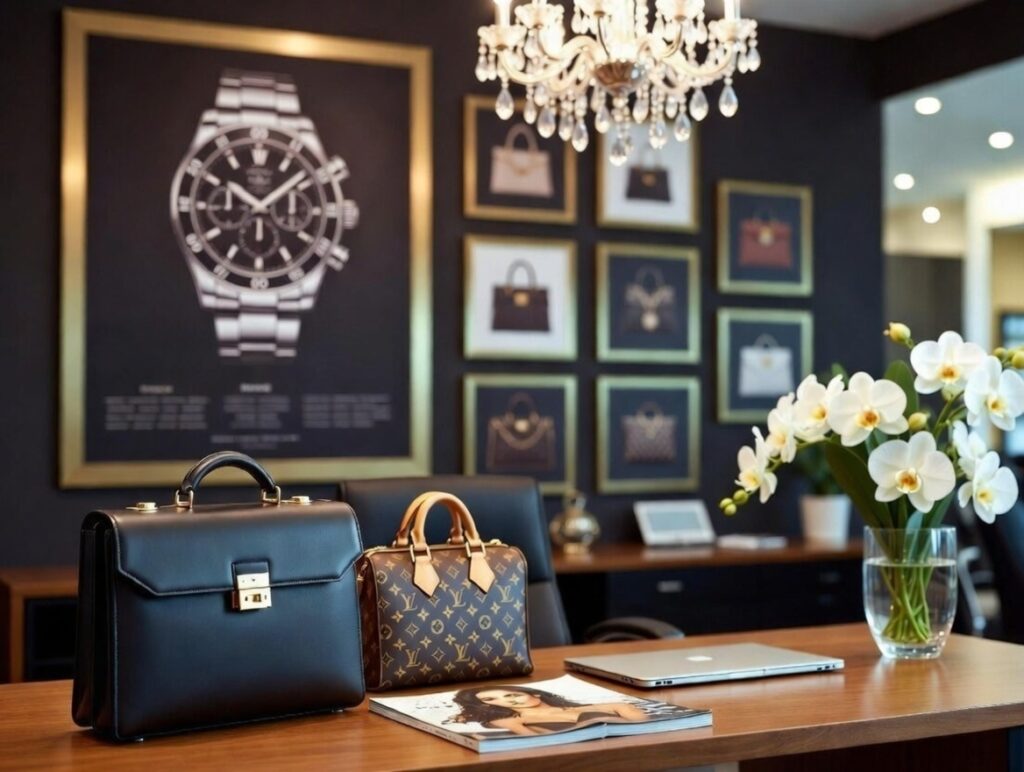
Luxury isn’t only what you sell—it’s what people feel when they encounter your brand.
Effective luxury brand communication creates that feeling consistently, across every touchpoint: your website, your packaging, your store experience, your social content, your email flows, even the way you handle complaints. It’s not louder messaging. It’s clearer standards, better taste, and more intentional signals.
Many brands think luxury communication means using elegant fonts, expensive photos, and words like “premium” or “exclusive.” But customers don’t believe adjectives. They believe patterns—the repeated cues that tell them this brand is different, dependable, and worth paying more for.
So what actually makes luxury brand communication effective?
It comes down to a few principles that the best luxury brands repeat relentlessly: precision, restraint, consistency, proof, and emotional clarity. Let’s break it down into a practical framework you can apply immediately.
1) Clarity beats cleverness in luxury
Luxury communication is often mistaken for being “mysterious.” In reality, effective luxury brands are clear—they just don’t over-explain.
Clarity means:
- You can summarize your brand in one sentence.
- Your customer instantly knows who it’s for.
- Your product promise is understood without effort.
If your audience has to “figure you out,” they’ll move on.
Quick test:
Can a new visitor answer these in 10 seconds?
- What do you sell?
- Who is it for?
- Why is it worth more?
If not, your communication isn’t luxury—it’s confusion.
2) Luxury tone of voice is confident, restrained, and specific
Luxury tone doesn’t chase attention. It assumes attention—because it’s built on standards.
What luxury tone usually sounds like
- calm
- precise
- understated
- self-assured
- detail-led
What it avoids
- hype (“best ever,” “must-have,” “crazy deal”)
- desperation (“limited time!!!”)
- generic adjectives (“high-quality premium luxury”)
Instead, luxury brands use specific nouns and sensory details.
Instead of: “Premium materials and superior craftsmanship.”
Try: “Full-grain leather, hand-finished edges, and a structure designed to hold its shape for years.”
Specificity creates trust. Trust creates willingness to pay.
3) Consistency is the real definition of “premium”
A luxury brand can’t sound premium on Instagram and cheap on its website.
Effective luxury communication is consistent across:
- brand voice (the words)
- visual identity (the look)
- experience (the service)
- rhythm (the pace and presence)
The moment a customer feels inconsistency, they feel risk.
And luxury customers don’t pay premium prices for risk.
That’s why strong brands build a communication system:
- a tone-of-voice guide
- message pillars
- campaign angles
- approved vocabulary (and banned words)
- visual rules
This is often where a luxury marketing agency canada becomes valuable—because the real work isn’t making one great post. It’s building the repeatable standards so everything stays on-brand as you scale.
4) Luxury communication sells the identity, not the item
People don’t buy luxury because they “need” it.
They buy it because of:
- how it makes them feel
- how it expresses who they are
- the status it signals (even subtly)
- the story it lets them step into
So effective luxury messaging answers:
- Who is this for?
- Who do they become when they choose it?
- What standard are they aligning with?
Example identity-based messaging:
- “For those who prefer quiet confidence.”
- “Designed for people who don’t need to prove anything.”
- “A modern classic—built for longevity, not trends.”
When you communicate identity clearly, you don’t need aggressive selling.
5) Proof points matter more than promises
Luxury customers are skeptical—because many brands imitate luxury aesthetics without real substance.
Effective communication includes proof, such as:
- craftsmanship/process details
- material sourcing
- quality controls
- behind-the-scenes footage
- before/after of service experiences
- real customer stories (tastefully framed)
- press features and credible partnerships
A simple method: choose 3 proof points you repeat everywhere:
- Craft proof (how it’s made)
- Design proof (why it’s different)
- Experience proof (how it feels to buy/own)
When proof is consistent, premium pricing becomes logical.
6) Exclusivity is communicated through boundaries, not slogans
Many brands try to communicate exclusivity by saying “exclusive.”
True exclusivity is communicated through boundaries:
- limited product runs (with context, not gimmicks)
- intentional distribution (where it’s available)
- selective collaborations
- controlled discounting (or none)
- brand pace (you don’t post like a fast fashion brand)
Exclusivity is a behavior, not a headline.
7) Luxury storytelling makes communication memorable
If you want people to remember you, you need more than features.
You need narrative.
Luxury storytelling works best when it’s built around:
- a founder standard
- a design philosophy
- a tension you’re solving (fast vs timeless, noise vs restraint)
- a customer truth (what they want to feel)
- an experience promise (how ownership changes the day-to-day)
This is why a luxury brand storytelling agency canada can be a growth lever: not for “nice words,” but for creating a story system that shows up across your homepage, launches, campaigns, and product pages.
8) Effective luxury communication across channels
Luxury communication changes slightly depending on where people meet you.
Website
- clarity + proof + confidence
- product pages focused on detail and experience
- strong brand narrative above the fold
Social media
- aesthetic + story pillars + identity cues
- consistency in pacing (don’t look frantic)
- behind-the-scenes proof content
- welcome series that introduces standards + proof
- launch emails that feel like invitations
- aftercare emails that reinforce “this was a good decision”
Paid ads
Luxury ads should feel like the brand, not like ads.
Focus on:
- identity angles
- premium visuals
- fewer words, stronger signals
- landing pages that match the creative
This is where a paid media agency in Canada can make a measurable difference—because performance improves when targeting, creative, and messaging work as one system without breaking the luxury perception.
A practical checklist: the 10 signals of effective luxury communication
If you want a quick self-audit, use this list:
- Clear one-line brand promise
- Specific language (less generic adjectives)
- Confident tone (no desperation)
- Consistent voice across all touchpoints
- Strong identity positioning (“for who?”)
- Visible proof points (craft/design/experience)
- Controlled use of urgency and scarcity
- Premium visual cues that match the words
- Consistent posting rhythm (calm, not chaotic)
- Story pillars that guide content and campaigns
If you strengthen these, your communication will start to feel premium—even before you spend more on production.
Conclusion: Luxury communication is disciplined taste
Effective luxury brand communication is a combination of:
- clarity
- restraint
- specificity
- proof
- consistency
- story-driven identity
When all of that is aligned, you don’t need to “convince” customers.
You create a world they want to belong to.
FAQs
1) What is “luxury brand communication,” exactly?
Luxury brand communication is the way a luxury brand expresses its identity, standards, and value—through words, visuals, and experiences. It includes your tone of voice, product descriptions, website messaging, packaging language, customer service style, social content, and campaign messaging. What makes it “luxury” is the consistency and restraint: it communicates premium value through detail, confidence, and proof rather than hype or heavy promotions.
2) How do luxury brands communicate value without discounts?
They communicate value through standards and proof:
- materials and craftsmanship details
- design philosophy and timelessness
- limited distribution or small production runs
- ownership experience (packaging, service, aftercare)
- cultural credibility (press, partnerships, community)
Instead of “buy now,” the message becomes “this belongs in your life.” Luxury brands also avoid training customers to wait for sales, which protects perception and margins long-term.
3) What tone of voice works best for luxury brands?
The most effective luxury tone is:
- confident
- calm
- precise
- understated
- detail-led
It avoids exaggerated claims and filler adjectives. Luxury tone often uses shorter sentences, strong nouns, and sensory detail. It also maintains a consistent rhythm across platforms, so the brand feels stable and intentional.
4) What are common mistakes that make a brand’s communication feel “not luxury”?
The big ones are:
- generic messaging (“premium quality,” “best in class”)
- inconsistent voice between website and social media
- too much urgency or aggressive sales language
- overusing “exclusive” without boundaries or proof
- mismatched visuals and copy (luxury visuals with cheap captions)
- discount-heavy communication (damages trust and perception)
Fixing these usually creates an immediate lift in conversion and brand credibility.
5) How can a luxury brand stay consistent across social, website, email, and ads?
Build a simple “communication system”:
- 1 narrative paragraph (who/feel/belief/proof/transformation)
- 3 proof points (craft, design, experience)
- 5 story pillars (origin, craft, identity, culture, proof)
- approved vocabulary + banned words list
- examples of captions, product descriptions, and ad lines
Then enforce it across creators, designers, and media buyers. Consistency is not a creative constraint—it’s the source of luxury perception.
6) Does storytelling matter for luxury brands that sell practical products?
Yes—sometimes even more. Practical products can easily become commoditized. Storytelling protects you from competing on price by shifting the conversation to:
- identity (“this is for people who…”)
- standards (“we refuse to compromise on…”)
- experience (“ownership feels like…”)
Even if the product is functional, the brand can feel luxurious through the way it communicates detail, durability, design, and the customer’s transformation.