forging manufacturer india
Steel does not care about marketing language. It responds only to heat, pressure, timing, and precision. When a forged component fails inside a gearbox or a rail assembly, nobody asks how impressive the brochure looked. The question is always simple: who made the part, and how was it made?
That question has become more important as India’s manufacturing sector grows deeper into automotive, rail, energy, and heavy engineering supply chains. Buyers today expect reliability measured in years, not weeks. That expectation has forced every serious forging manufacturer India to upgrade the way metal is shaped, tested, and finished.
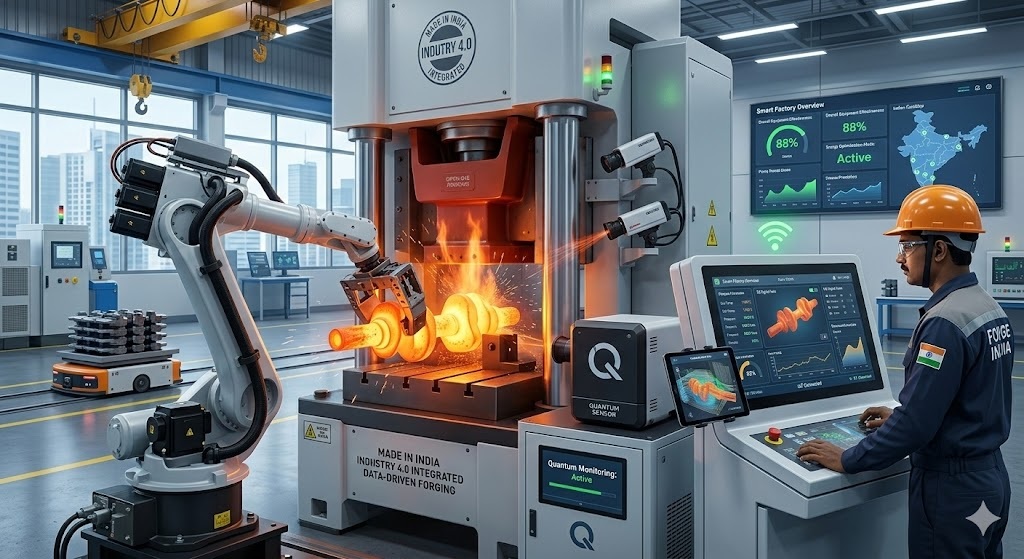
The forging floor is no longer just hammers and furnaces. Sensors, CNC machines, simulation tools, and metallurgical testing labs now sit beside the presses. Old-school metallurgy still matters, but technology is what keeps modern forging competitive.
Below is a grounded look at the technologies actually driving modern forging operations across India.
High-Capacity Forging Presses
Everything begins with force. Controlled, repeatable force.
Traditional forging relied heavily on manual hammering techniques. Modern plants rely on hydraulic and mechanical presses capable of applying thousands of tons of pressure with controlled motion.
Hydraulic presses allow operators to control deformation speed. That matters because metal flow inside a die determines grain structure. A poorly controlled press produces weak spots inside the forged piece.
Large forging presses now produce parts used in:
- transmission systems
- axle components
- rail infrastructure
- heavy machinery assemblies
Precision press control helps ensure the metal fills the die correctly without creating internal voids.
Modern forging facilities also combine multiple press capacities so that small parts and large structural components can be produced within the same plant.
Drop Hammers Still Matter
Even with sophisticated presses, drop hammers remain essential tools in many forging plants.
Drop hammers deliver intense impact energy in a short burst. That sudden force helps shape metal rapidly while preserving internal density.
Different hammer capacities allow manufacturers to forge parts ranging from small mechanical fittings to medium-sized engineering components. A well-equipped forging plant operates several hammer lines, each dedicated to different part sizes and production volumes.
The difference between a modern hammer shop and an old one lies in monitoring. Today’s hammer systems are integrated with sensors that track strike energy and alignment, ensuring consistent deformation during each blow.
Without that monitoring, forged parts vary from batch to batch.
Controlled Heating Systems
Metal cannot be forged properly if temperature is inconsistent. Too cold, and the metal cracks during deformation. Too hot, and the grain structure weakens.
Modern forging plants use controlled heating systems that maintain precise temperature ranges before forging begins.
Induction heating systems have become particularly common. These systems heat billets rapidly using electromagnetic energy rather than open flames. The advantages are straightforward:
- faster heating cycles
- more consistent temperature distribution
- lower energy consumption
Operators monitor billet temperature before the metal enters the forging die. If the temperature falls outside the acceptable range, the billet returns to the furnace rather than entering production.
This kind of discipline prevents defective parts from ever being formed.
Die Design Through Digital Engineering
Forging dies are expensive. They are also critical. A poorly designed die wastes metal, creates flash defects, and shortens tool life.
Modern forging manufacturers design dies using digital modeling software before any steel block is machined.
Computer-aided design allows engineers to analyze the geometry of a forged component in three dimensions. More importantly, simulation tools predict how hot metal will flow inside the die cavity during forging.
That digital simulation reveals potential problems early:
- incomplete die filling
- stress concentration points
- uneven material distribution
By solving these problems digitally, manufacturers reduce expensive trial runs on the shop floor.
This shift toward simulation-driven die design is one reason India’s forging sector has become more competitive globally.
CNC Machining After Forging
Forging shapes the metal, but the forged piece rarely leaves the press ready for assembly. Precision machining finishes the job.
Modern forging plants integrate CNC machining centers directly into the production flow. After forging and trimming, components move into machining stations where final dimensions are achieved.
CNC turning machines refine shafts, hubs, and cylindrical components. Milling centers cut slots, grooves, and complex surfaces required by engineering assemblies.
Multi-axis CNC machines allow operators to achieve tight tolerances repeatedly. When hundreds or thousands of identical parts must match precisely, manual machining is not enough.
Automation ensures that every piece leaving the machining cell matches the engineering drawing.
Heat Treatment Systems
Forging creates shape and density. Heat treatment determines mechanical strength.
After forging, metal components often undergo thermal treatment to adjust hardness and internal structure.
Common treatments include:
Quenching – rapid cooling to increase hardness.
Tempering – controlled reheating to reduce brittleness.
Normalizing – refining grain structure for improved toughness.
These processes take place inside industrial furnaces where temperature cycles are controlled digitally. Deviating from the specified temperature curve even slightly can affect mechanical properties.
Modern heat treatment lines track time, temperature, and cooling conditions for each batch. That data becomes part of the component’s quality documentation.
Metallurgical Testing Laboratories
Technology in forging is not just about making parts. It is about verifying them.
Modern forging manufacturers operate in-house laboratories where forged samples undergo mechanical and structural testing.
Testing commonly includes:
- tensile strength evaluation
- hardness measurement
- microstructure analysis
- impact resistance testing
Universal testing machines measure how much force a forged sample can withstand before failure. Hardness testers verify whether heat treatment achieved the required mechanical properties.
Non-destructive testing methods also play a major role. Ultrasonic inspection can detect internal flaws inside forged components without cutting them open. Magnetic particle inspection identifies surface cracks invisible to the naked eye.
Testing ensures that parts delivered to customers meet strict industrial standards.
Automated Material Handling
Forging environments are intense. Billets move from furnaces at extremely high temperatures. Handling them manually is slow and dangerous.
Automation has changed how materials move through modern forging plants.
Robotic arms and conveyor systems now transport hot billets from heating stations to forging presses. Automated trimming lines remove excess material from forged parts before they cool.
Automation improves safety. It also improves consistency. Machines handle every piece the same way, reducing variation in production flow.
Data-Driven Process Monitoring
Modern manufacturing relies heavily on data. Forging is no exception.
Sensors across the production floor collect information about:
- press force
- billet temperature
- die temperature
- machine performance
Engineers analyze this data to detect trends and identify problems before they disrupt production.
For example, if die temperature begins rising above its ideal range, cooling adjustments can be made immediately. Without that monitoring, die wear accelerates and part quality declines.
Data monitoring transforms forging from reactive manufacturing into controlled manufacturing.
Sustainability Technologies
Energy use in forging operations is significant. Furnaces, presses, and machining equipment consume substantial power.
Many forging plants now adopt energy-efficient technologies to reduce operating costs and environmental impact.
Induction heating systems consume less energy than traditional furnaces. Heat recovery systems capture waste heat and reuse it within the facility. Metal scrap generated during trimming and machining is recycled back into the raw material supply chain.
Sustainability in forging is not just environmental responsibility. It is also economic efficiency.
Technology Inside Sendura’s Operations
Technology becomes meaningful when applied consistently inside real production facilities.
Sendura operates as an Indian forging manufacturer producing components used in automotive, railway, petrochemical, and heavy engineering industries. The company’s production environment combines forging presses, machining infrastructure, heat treatment facilities, and quality inspection systems within one operational framework.
This integrated approach allows tighter process control—from raw metal billets to finished components ready for industrial assembly.
Manufacturing setups structured in this way reduce dependency on external subcontracting and provide stronger quality oversight during each stage of production.
Where Forging in India Is Heading
India’s forging industry is moving far beyond traditional hammer shops. Digital engineering, advanced presses, CNC machining, and metallurgical testing have become standard expectations rather than optional upgrades.
Global supply chains demand reliability. That reliability depends on manufacturing discipline supported by modern technology.
For every competitive forging manufacturer India, success now depends on combining traditional metallurgical knowledge with modern manufacturing systems.
Steel still responds to heat and force. But today, technology determines how precisely that force is applied—and how reliably the final component performs once it leaves the factory floor.