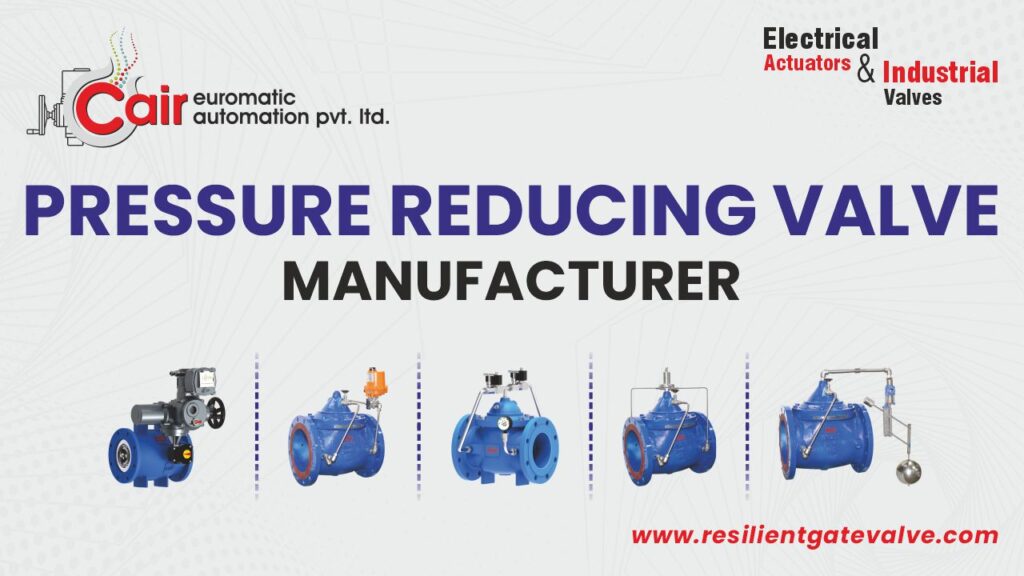
In today’s water supply networks and industrial pipeline systems, controlling pressure is just as important as controlling flow. Excessive pressure may not always be visible, but over time it silently damages pipelines, valves, and equipment. This is why understanding when you should use a pressure reducing valve is essential for system safety, efficiency, and long-term performance.
Whether you are managing a municipal water network, an industrial plant, or a commercial pipeline system, installing a pressure reducing valve (PRV) at the right point can prevent failures and save significant costs. In this article, we explain the situations where a PRV is required, how it works with other flow control valves, and why industries trust Cair Euromatic Automation, a leading Pressure Reducing Valve manufacturer in India, Ahmedabad.
What Is a Pressure Reducing Valve?
A Pressure Reducing Valve is an automatic control valve that reduces high inlet pressure to a stable, safe outlet pressure—regardless of fluctuations on the upstream side. Unlike manual valves, a PRV adjusts itself continuously, ensuring consistent downstream pressure.
At Cair Euromatic Automation, we design and manufacture PRVs that perform reliably in real-world water and industrial pipeline conditions.
When Should You Use a Pressure Reducing Valve?
1. When Inlet Pressure Is Higher Than System Design Pressure
If the incoming pressure from pumps, storage tanks, or municipal supply lines is higher than what your pipeline or equipment can handle, a pressure reducing valve becomes essential.
Without a PRV:
-
Pipes experience excessive stress
-
Joints weaken over time
-
Valves fail prematurely
A PRV ensures your system operates within safe pressure limits.
2. In Water Distribution Networks
Municipal water systems often supply water at high pressure to meet peak demand. However, not all zones require the same pressure.
PRVs are used when:
-
Supplying water to low-lying areas
-
Protecting domestic plumbing systems
-
Reducing leakage in old pipelines
They work effectively with AWWA butterfly valve installations commonly used in water supply networks.
3. When Using Butterfly Valves in High-Pressure Pipelines
Butterfly valves are widely used for flow isolation and regulation, but they perform best when pressure is controlled.
Common butterfly valves used in such systems include:
-
Double Flanged Butterfly Valve for high-pressure and large-diameter pipelines
-
Wafer type butterfly valve where space is limited
-
Motorized butterfly valve for automated systems
-
Motorized double flange butterfly valve for heavy-duty industrial pipelines
A pressure reducing valve upstream protects these valves from pressure shocks, extending their service life. As a Top Butterfly Valve Manufacturer flow control valve supplier, Cair Euromatic Automation ensures perfect compatibility between PRVs and butterfly valves.
4. In Industrial Process Pipelines
Industrial pipelines often experience sudden pressure changes due to:
-
Pump start-ups and shutdowns
-
Flow demand variations
-
Temperature fluctuations
You should use a pressure reducing valve when:
-
Equipment requires constant operating pressure
-
Downstream instruments are pressure-sensitive
-
Safety and process stability are critical
PRVs ensure smooth operation and prevent costly production downtime.
5. When Automation Is Required
Modern pipelines increasingly rely on automation for efficiency and safety. PRVs are a key component of automatic control valve systems.
You should use a PRV when:
-
Remote pressure control is required
-
Manual adjustment is impractical
-
System pressure must adjust automatically
Cair Euromatic Automation is an automatic control valve designed leading manufacturer, supplier, and exporter, delivering precision-engineered PRVs for automated applications.
6. To Reduce Leakage and Maintenance Costs
High pressure accelerates wear on:
-
Gaskets and seals
-
Pipe joints
-
Valves and fittings
If your system experiences frequent leaks or maintenance issues, installing a pressure reducing valve is a smart solution. By lowering pressure, PRVs significantly reduce leakage and extend maintenance intervals.
7. When Protecting Pumps and Downstream Equipment
Pumps and control equipment operate best under stable pressure conditions. A PRV helps:
-
Prevent pump overloading
-
Protect meters and sensors
-
Ensure consistent system performance
PRVs are often installed along with non return valves to prevent backflow and pressure reversal. As a trusted non return valve manufacturer, Cair Euromatic Automation offers complete pipeline protection solutions.
8. In Long-Distance Pipelines
Long pipelines create pressure variations due to elevation changes and friction losses. A pressure reducing valve should be used when:
-
Pressure builds up at lower elevations
-
Downstream pipelines require controlled pressure
-
System balance is critical
PRVs help maintain uniform pressure throughout the pipeline.
How a Pressure Reducing Valve Works
The working principle is simple and reliable:
-
High-pressure fluid enters the valve
-
The valve senses downstream pressure
-
If pressure rises, the valve throttles flow
-
If pressure drops, the valve opens
This continuous adjustment ensures stable downstream pressure without manual intervention.
Why Choose Cair Euromatic Automation?
Cair Euromatic Automation is your ultimate destination for getting Ahmedabad’s best PRV valve. Our commitment to quality and customer satisfaction has made us a preferred choice across India and global markets.
What Sets Us Apart
-
High-quality materials and precision engineering
-
Proven performance in water and industrial pipelines
-
Custom-built solutions based on project needs
-
Reliable after-sales and technical support
Our commitment and dedication to providing the best value products are clearly visible through the consistent quality of our valves.
Pressure Reducing Valve Manufacturer in India – Ahmedabad
As a Pressure Reducing Valve manufacturer in India, Ahmedabad, we support:
-
Municipal water authorities
-
Industrial plants
-
EPC contractors
-
Export markets
If you are searching to buy a pressure reducing valve near me, near Ahmedabad, or anywhere in India, our experienced team is ready to guide you.
Choosing the Right Time to Install a PRV
You should consider installing a pressure reducing valve when:
-
System pressure exceeds safe limits
-
Flow control valves face frequent failures
-
Automation and pressure stability are required
-
Long-term cost savings matter
If you feel confused regarding product selection, have specific requirements, or want to ask any query, feel free to connect with our team—we would be more than happy to serve you.
Conclusion
Knowing when to use a pressure reducing valve is essential for designing reliable, safe, and efficient pipeline systems. PRVs protect pipelines, enhance valve performance, reduce leakage, and improve overall system longevity.
At Cair Euromatic Automation, we manufacture high-performance pressure reducing valves and automatic control valve solutions that meet real-world operating conditions. Whether you are planning a new project or upgrading an existing system, our expertise ensures you get dependable, long-lasting results.