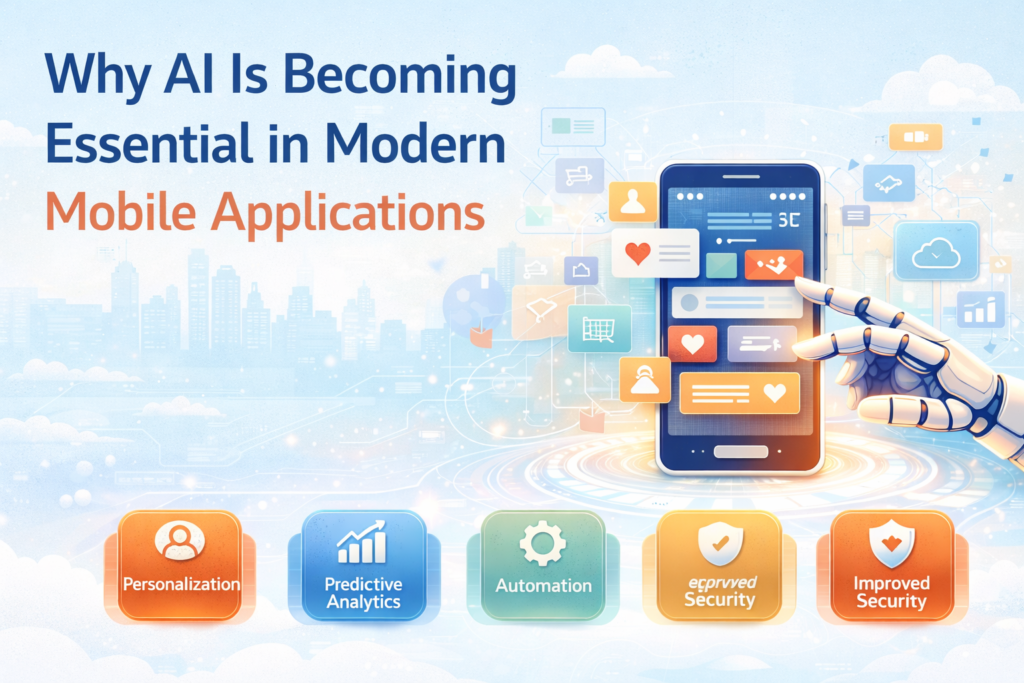
Mobile apps used to follow fixed instructions. Developers wrote clear rules, and the app responded in a set way. Every user saw the same screens and experienced the same journey. The system was stable but rigid.
That model no longer fits today’s digital world.
In 2026, users expect apps to adjust to their behavior, learn from their actions, and improve over time. Businesses also expect apps to deliver insights, boost engagement, and support better decisions. To achieve this, many organizations now invest in structured AI Development Services that build intelligence directly into the foundation of mobile platforms instead of adding it later.
This shift from static code to adaptive systems is not just technical progress. It represents a deeper change in how mobile apps are designed and experienced.
The Problem With Static Applications
Static apps treat every user the same. The layout remains unchanged. Notifications are generic. Suggestions are basic.
This approach limits growth.
People have different habits, needs, and goals. A shopping app user in the morning may behave differently at night. A fitness app user may need encouragement one week and advanced challenges the next.
Static systems cannot respond to these changes easily.
Adaptive systems can.
Instead of following strict instructions, AI-driven apps study patterns and adjust automatically. The app evolves based on real usage.
Learning Instead of Following Scripts
Traditional development relies on predicting scenarios. Developers try to imagine how users might behave and write code accordingly.
But human behavior is complex. It changes quickly.
AI removes the need to predict everything in advance. Instead, the system learns from real behavior. It observes how users navigate, what they click, and how long they stay on certain features.
Over time, the app becomes more accurate and helpful.
The more it is used, the smarter it gets.
Personalization Is Now a Standard
Personalization used to be considered a bonus feature. Today, it is expected.
Users want apps that remember their preferences and guide them efficiently. AI analyzes browsing history, interaction patterns, and usage frequency to create tailored experiences.
Instead of showing endless options, the app highlights what matters most. This reduces effort and increases satisfaction.
When users feel understood, they stay engaged longer.
Apps without personalization often lose attention quickly.
Prediction Creates Smoother Experiences
One of the biggest strengths of adaptive systems is prediction.
AI studies past behavior and identifies patterns. Based on those patterns, it suggests actions before users even search for them.
A finance app may warn users about unusual spending. A travel app may suggest transport after landing. A productivity app may remind users of tasks at the best time of day.
Prediction saves time and reduces stress.
In 2026, apps that only react feel slow. Apps that anticipate feel intelligent.
Real-Time Adaptation
Modern apps operate in fast-moving environments. Users expect instant updates.
AI allows systems to process data in real time. As conditions change, the app adjusts immediately.
This is especially useful in areas like ride-sharing, online shopping, and streaming services. Prices, recommendations, and availability shift based on demand and behavior.
Real-time intelligence improves responsiveness and keeps users engaged.
Stronger Security Through Intelligence
Security is a major concern in mobile ecosystems.
Traditional systems rely on fixed limits. For example, they may flag transactions above a certain amount.
AI goes further. It monitors behavior patterns and detects unusual activity. If a login attempt comes from a new location or device, the system responds quickly.
This approach prevents threats before they grow.
Users benefit from protection without constant interruptions.
Smarter Development Practices
The AI shift also affects development teams.
Modern tools use artificial intelligence to detect coding errors, suggest improvements, and automate testing. This reduces manual effort and speeds up production.
Product managers use AI analytics to understand how features perform. Instead of guessing, they rely on clear data.
This makes development more efficient and focused.
Platform-Focused Intelligence
Different mobile ecosystems require specialized expertise.
In the middle of delivering advanced iOS applications, many companies work with a specialized iphone app development company to ensure adaptive AI features align with Apple’s performance standards and user interface guidelines.
Platform alignment ensures intelligence does not compromise speed or usability.
Consistency builds long-term trust.
Ethical and Responsible AI
As apps become smarter, responsibility increases.
Users care about privacy and fairness. Adaptive systems must include strong data protection and clear communication.
Ethical design means explaining how data is used and allowing users to control personalization settings.
Trust grows when transparency is prioritized.
Intelligence should empower users, not confuse them.
Business Value of Adaptive Systems
Adaptive apps deliver measurable benefits.
They improve retention because experiences feel relevant. They increase conversions because suggestions match user interests. They reduce operational costs through automation.
More importantly, they provide insights that guide strategic decisions.
Mobile apps are no longer just customer-facing tools. They are intelligent platforms that support long-term growth.
The Future of Adaptive Apps
The shift toward AI-driven systems will continue.
Future apps may include voice-driven personalization, emotion-aware interfaces, and deeper predictive features. They will feel less like tools and more like digital assistants.
Continuous learning will become standard.
Static systems will struggle to keep pace with evolving expectations.
Scaling Intelligence for Growth
As adaptive systems expand, scalability becomes critical.
Infrastructure must handle large data flows and increasing users without performance issues.
In the middle of the last paragraph, as organizations focus on sustainable innovation and intelligent architecture, partnering with a trusted Mobile App Development Company ensures scalable design, seamless AI integration, and long-term system reliability.
Scalability protects user experience and business stability.
Final Thoughts
The transition from static code to adaptive systems defines modern mobile development.
AI transforms apps from fixed tools into flexible platforms that learn and improve continuously. It enhances personalization, strengthens security, and supports better decision-making.
In 2026, intelligence is no longer optional. It is essential.
Apps that adapt will lead the market. Apps that remain static may still function, but they will struggle to compete in a world that expects responsiveness and personalization.
The AI shift is not just a trend. It is the foundation of the future of mobile applications.
Frequently Asked Questions (FAQs)
1. What does “adaptive system” mean in mobile apps?
Ans: An adaptive system is a mobile app that learns from user behavior and adjusts its features, recommendations, and interface over time.
2. Why is AI essential in modern mobile applications?
Ans: AI helps apps personalize experiences, predict user needs, improve security, and support real-time decision-making.
3. How does AI improve user engagement?
Ans: AI analyzes user patterns and delivers relevant content, smart notifications, and personalized suggestions that increase retention.
4. Are adaptive mobile apps more secure?
Ans: Yes. AI-powered systems can detect unusual behavior and respond quickly to potential threats.
5. Does AI replace traditional app development?
Ans: No. AI enhances traditional development by adding intelligence and automation, but strong design and coding fundamentals remain important.