Choosing an engagement ring is one of the biggest purchase decisions most people ever make, and it rarely feels simple. Between styles, diamonds, budgets, and sizing, it’s easy to feel overwhelmed before you’ve even started browsing. The good news: once you break it into a clear process, choosing the right engagement ring becomes far less stressful than it first seems.
This guide walks through exactly how to choose an engagement ring, step by step, from budget to final purchase.
Set a Realistic Budget First
Before looking at a single engagement ring, decide what you’re comfortable spending. Build that number around the total cost, not just the center stone.
- Diamond or gemstone price
- Metal type and band weight
- Setting and any customization
- Taxes, shipping, and insurance
- Possible resizing costs
A clear budget keeps the entire engagement ring search focused and prevents overspending once you start comparing beautiful options.
Understand the Diamond Before You Choose the Ring
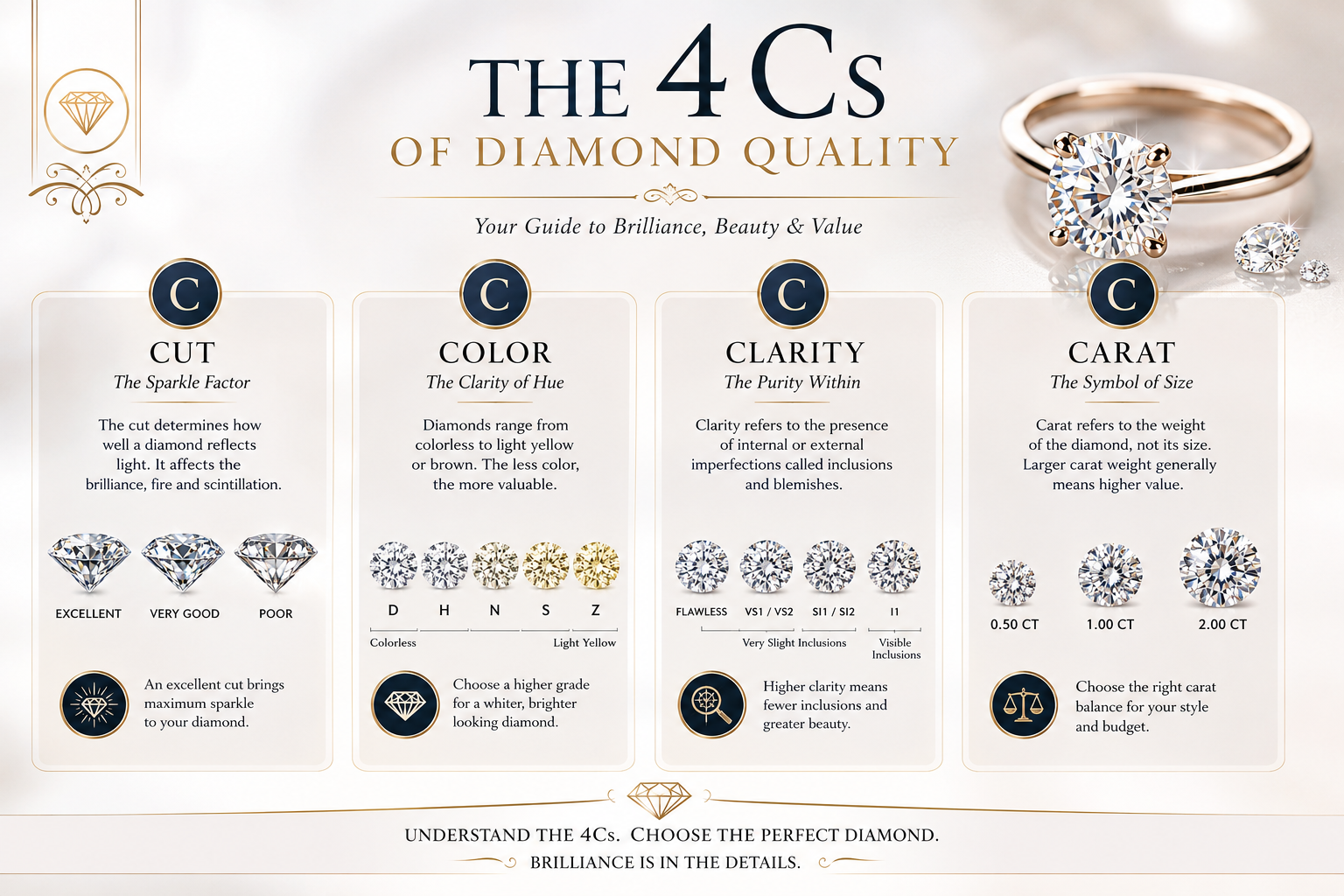
The diamond is usually the biggest factor in both price and appearance, so understanding it matters more than any other single decision in choosing an engagement ring.
The 4Cs guide this process:
- Cut determines how much light the diamond reflects, driving most of its visible sparkle.
- Color measures how close to colorless the diamond is, graded from D to Z.
- Clarity describes internal and surface characteristics, usually invisible to the naked eye at higher grades.
- Carat measures weight, not visual size, which is why two similar engagement rings can look very different.
Cut deserves the most attention here. A well-cut, smaller diamond often outperforms a larger, poorly cut one in every engagement ring comparison that matters.
Choose a Style That Matches the Wearer
Every engagement ring falls somewhere on a spectrum from simple to detailed, and the right choice depends entirely on how the wearer already dresses and lives.
- A classic solitaire suits minimalists who want a timeless, low-maintenance engagement ring.
- A halo setting adds visual size and brilliance, ideal for anyone who wants a fuller, more eye-catching engagement ring.
- A vintage-inspired design suits buyers drawn to detail, history, and a less conventional engagement ring.
There’s no single best option here. The right engagement ring reflects the person who’ll wear it every day, not a passing trend.
Consider Lab-Grown Diamonds
Lab-grown diamonds have changed what’s realistic for many engagement ring budgets. They share the same chemical composition, hardness, and brilliance as mined diamonds, graded on the identical 4Cs scale, just formed in a controlled environment instead of underground.
For buyers who want the classic look without the scarcity premium, a lab grown solitaire ring keeps the timeless engagement ring silhouette while often allowing for a larger stone or higher grade at the same price point.
Get the Sizing Right
Size is one of the easiest details to overlook, but it matters enormously once the engagement ring actually arrives.
- Use the retailer’s official sizing guide rather than a generic chart.
- Borrow a ring that already fits well, and match it against a sizing tool if possible.
- Confirm whether resizing is free, and whether it affects the warranty.
- When unsure, size slightly larger, since sizing down is easier than sizing up.
An engagement ring that doesn’t fit comfortably won’t get worn as often, no matter how beautiful the design is.
Research the Seller Carefully
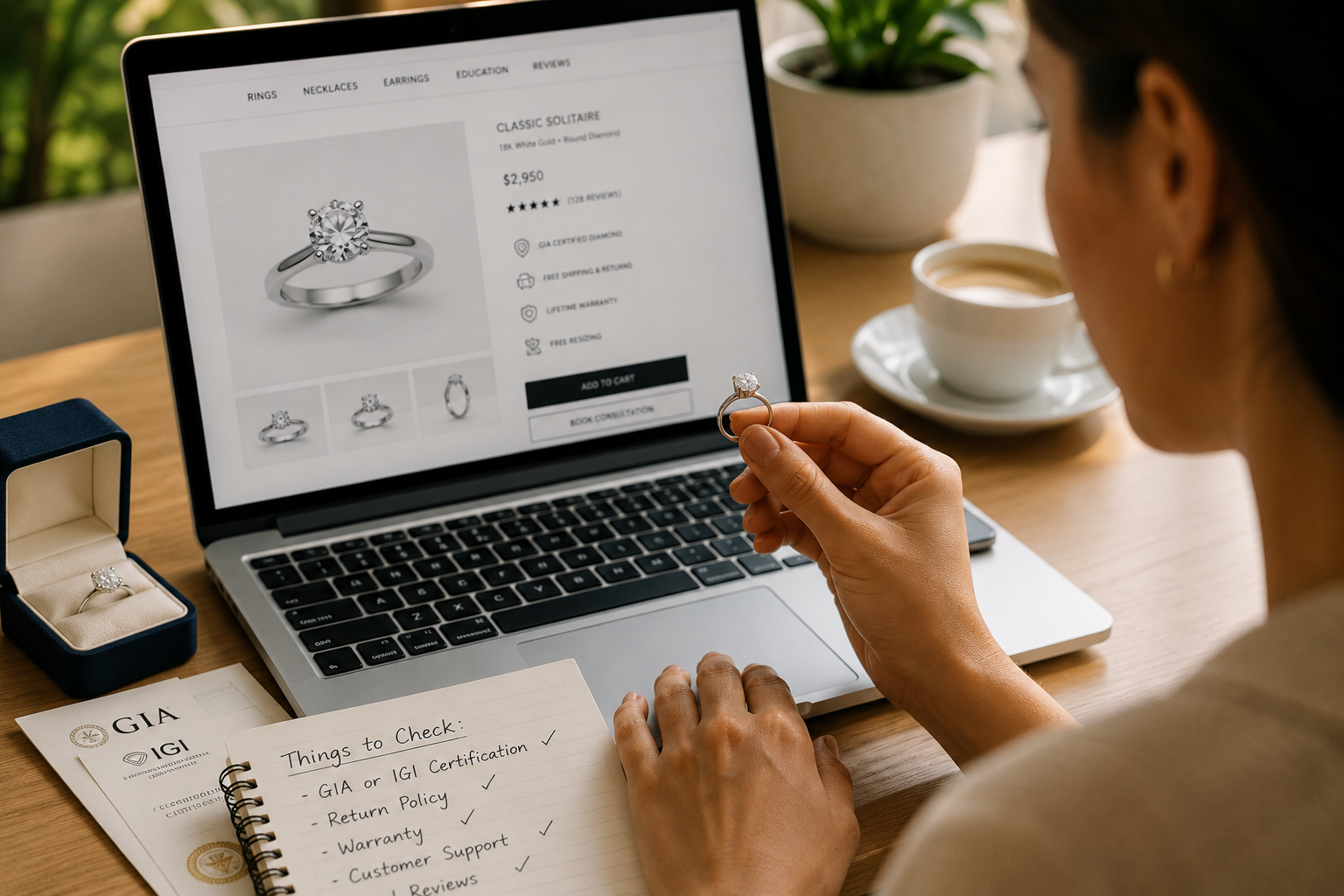
The retailer matters as much as the ring itself, especially since most engagement ring purchases can’t be physically inspected beforehand.
Look for:
- Verifiable certification from GIA or IGI
- Clear return, warranty, and resizing policies
- Detailed reviews, not just star ratings
- Real, responsive customer support
A trustworthy seller makes every part of choosing an engagement ring easier, from comparing options to resolving issues after the sale.
Read the Policies Before You Buy
Return windows, warranty coverage, and resizing terms deserve the same attention as the diamond specifications themselves. These details often separate a good engagement ring purchase from a stressful one, especially once the ring is actually being worn daily.
If you’re planning to Buy engagement ring online, confirming these policies before checkout is the single best way to remove risk from a purchase you can’t fully evaluate in person first.
A Simple Checklist for Choosing an Engagement Ring
- Set a total budget, including taxes and potential resizing
- Prioritize cut quality over carat weight
- Choose a style that matches the wearer’s everyday habits
- Consider a lab-grown diamond for more size or quality per dollar
- Confirm accurate sizing before ordering
- Verify the seller’s certification and policies before purchasing
Following this order turns choosing an engagement ring from a source of stress into a clear, manageable process.
Frequently Asked Questions
1. What’s the most important factor when choosing an engagement ring?
Ans. – Cut quality typically matters most, since it drives visible sparkle more than carat weight, color, or clarity. A well-cut diamond consistently outperforms a larger, poorly cut one.
2. Are lab-grown diamonds a good choice for an engagement ring?
Ans. – Yes. Lab-grown diamonds share identical hardness, brilliance, and chemical composition with mined diamonds, often making a larger stone or higher grade affordable at the same budget.
3. How do I know what engagement ring style to choose?
Ans. – Look at how the wearer already dresses and wears jewelry daily. Minimalists usually suit a solitaire, while those who prefer bold, detailed pieces often gravitate toward a halo or vintage-inspired design.
4. What should I check before buying an engagement ring online?
Ans. – Verify certification independently, read detailed reviews, and confirm the return, resizing, and warranty policies clearly before checkout, since you won’t be able to inspect the ring in person first.
5. Is it safe to guess a ring size for an engagement ring?
Ans. – It’s better to confirm sizing whenever possible, but if a guess is unavoidable, sizing slightly larger is safer, since resizing down is generally easier and less expensive than resizing up.
The Bottom Line
Choosing an engagement ring doesn’t need to feel overwhelming once it’s broken into clear steps: set a budget, understand the diamond, match the style to the wearer, confirm sizing, and buy from a seller whose policies protect you after the sale. Get those steps right, and the ring you choose will be one that fits both the moment and the years that follow.