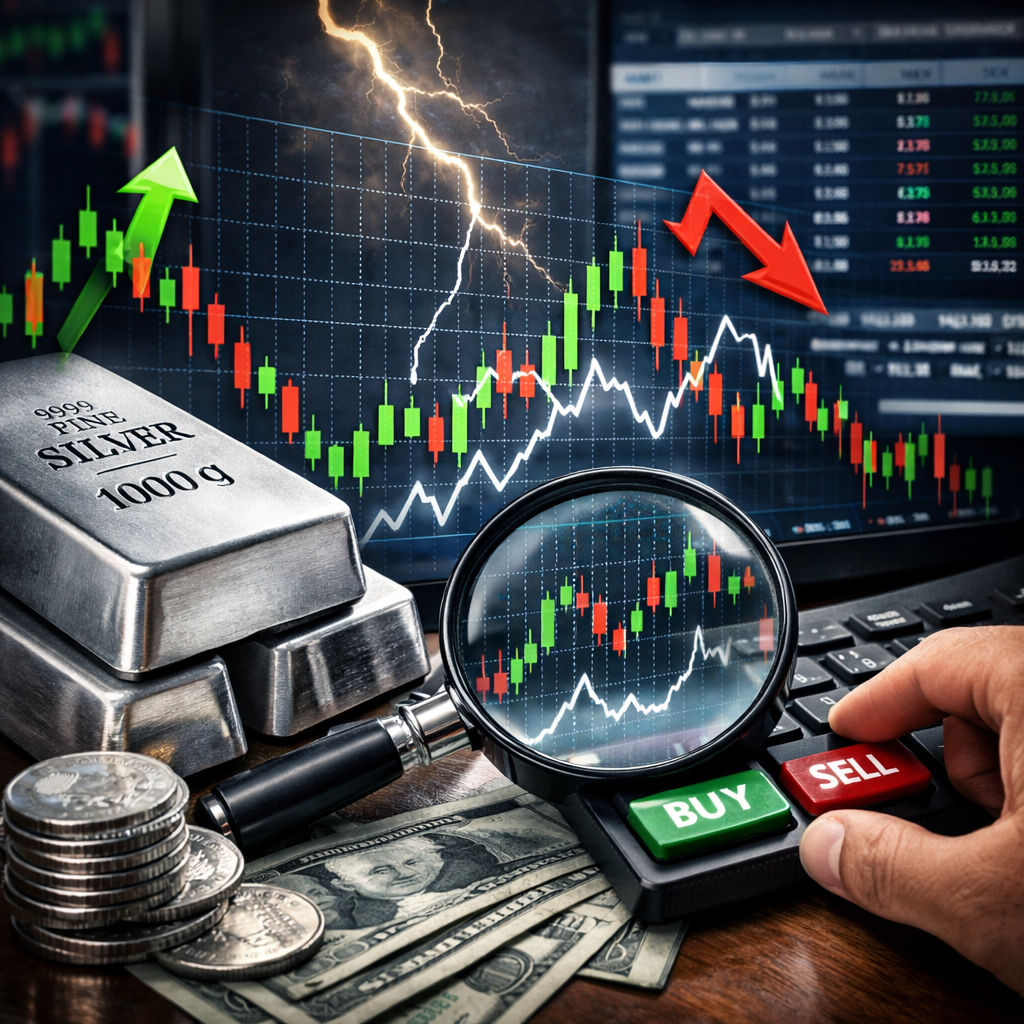
Silver price swings create fast-paced opportunities for short-term traders navigating volatile markets.
1. Introduction
Silver is one of the most actively traded commodities in the global and Indian markets. Unlike gold, silver tends to show sharper and faster price movements, making it highly attractive for traders who focus on short-term opportunities. This characteristic is known as silver price volatility, and it plays a crucial role in trading decisions.
For short-term traders, volatility is not a risk alone—it is also an opportunity. Frequent price swings create multiple entry and exit points, especially for intraday and derivatives traders. Understanding how to navigate this volatility can help traders identify structured opportunities rather than relying on speculation.
In this article, we will explore how silver price volatility creates trading opportunities and how traders can use data, strategies, and discipline to participate effectively.
2. What Is Silver Price Volatility?
Volatility refers to the degree of variation in the price of an asset over time. In simple terms, it shows how fast and how much the price moves.
Key Points:
- High volatility = Large and rapid price movements
- Low volatility = Stable and slow price changes
Silver is generally more volatile than gold because:
- It has both industrial and investment demand
- It reacts more sharply to global economic changes
- Market participation is relatively smaller compared to gold
As a result, silver price volatility tends to be higher, especially during uncertain global conditions.
3. Factors Driving Silver Price Volatility
Understanding what drives price movement is essential for any trader. Several global and domestic factors influence silver prices:
1. US Dollar Index
Silver is priced globally in dollars. A strong dollar usually leads to weaker silver prices, and vice versa.
2. Inflation Trends
Silver is often seen as a hedge against inflation. Rising inflation can push prices higher.
3. Industrial Demand
Silver is widely used in:
- Electronics
- Solar panels
- Automobiles
Changes in industrial demand can significantly impact price movement.
4. Global Uncertainty
Events like geopolitical tensions or economic slowdowns increase demand for safe-haven assets, including silver.
These factors contribute to overall commodity market volatility, making silver highly dynamic.
4. Why Volatility Creates Trading Opportunities
Volatility is the foundation of trading. Without price movement, there would be no opportunity to profit or manage trades.
How Traders Benefit:
- Frequent price swings create multiple entry points
- Intraday traders can capture small but consistent moves
- Short-term trends provide structured opportunities
In short term trading in silver, traders typically focus on:
- Price momentum
- Breakout levels
- Reversal zones
Volatility allows traders to act quickly and capitalize on short-term inefficiencies in the market.
5. Role of Real-Time Price Tracking
Tracking live prices is essential in a volatile market like silver. Delayed data can lead to missed opportunities or incorrect decisions.
Traders often rely on tools that provide updates on silver price today to:
- Identify immediate trends
- Track breakout levels
- Monitor intraday volatility
Real-time tracking helps traders stay aligned with current market conditions rather than relying on outdated information.
6. Using Open Interest Data
Open Interest (OI) is a powerful tool in derivatives trading. It shows the total number of outstanding contracts in the market.
By analyzing participant wise open interest, traders can understand:
- Who is actively participating (retail, institutions, FIIs)
- Whether new positions are being created or closed
- Strength of a trend
Key Insights from OI:
- Rising price + rising OI = Strong bullish trend
- Falling price + rising OI = Strong bearish trend
- Falling OI = Position unwinding
This type of trader sentiment analysis helps traders align their trades with broader market activity.
7. Using Option Chain for Confirmation
Option chain data is another critical tool used by traders to identify key levels.
By analyzing the sensex option chain, traders can:
- Identify support levels (Put concentration)
- Identify resistance levels (Call concentration)
- Understand market positioning
Even though Sensex is an index, the concept of option chain analysis applies similarly to commodities. It helps traders confirm whether the market is likely to continue a trend or reverse.
8. Short-Term Trading Strategies in Silver
To trade effectively, traders must use structured approaches rather than random decisions. Here are some commonly used silver trading strategies:
1. Breakout Strategy
- Identify key support/resistance levels
- Enter trade when price breaks the level with volume
- Works best during high volatility
2. Trend-Following Strategy
- Trade in the direction of the prevailing trend
- Use moving averages or price action
- Avoid counter-trend trades
3. Mean Reversion Strategy
- Identify overbought/oversold conditions
- Expect price to revert to the average
- Works in range-bound markets
These intraday trading strategies are widely used in derivatives trading India, especially in commodities like silver.
9. Risk Management in Volatile Markets
Volatility increases both opportunity and risk. Without proper risk management, traders can face significant losses.
Key Principles of Risk Management Trading:
1. Use Stop Loss
Always define your risk before entering a trade.
2. Position Sizing
Avoid putting too much capital in a single trade.
3. Avoid Overtrading
More trades do not always mean more profit.
4. Maintain Discipline
Stick to your strategy and avoid emotional decisions.
Risk management is what separates consistent traders from inconsistent ones.
10. Common Mistakes Traders Make
Even experienced traders make mistakes, especially in volatile markets.
Common Errors:
- Over-leverage: Taking large positions without proper capital
- Ignoring Trends: Trading against the market direction
- Emotional Trading: Fear and greed affecting decisions
- Lack of Planning: Entering trades without strategy
Avoiding these mistakes is as important as applying the right strategy.
11. Market Outlook
The future of silver trading looks increasingly dynamic due to several reasons:
1. Rising Commodity Volatility
Global uncertainties continue to impact commodity prices.
2. Increased Retail Participation
More traders are entering commodity markets through online platforms.
3. Global Economic Influence
Interest rates, inflation, and industrial growth will continue to drive silver price trends India.
Overall, silver price volatility is likely to remain high, offering ongoing opportunities for short-term traders.
12. FAQ Section
1. Why is silver price so volatile?
Silver is influenced by both industrial demand and investment demand, making it more reactive to economic changes.
2. How to trade silver in short term?
Traders use technical analysis, price tracking, and strategies like breakout and trend-following for short term trading in silver.
3. What is role of participant wise open interest?
It helps identify who is participating in the market and whether trends are strong or weakening.
4. How does sensex option chain help traders?
It helps identify key support and resistance levels based on market positioning.
5. Is silver good for intraday trading?
Yes, due to high volatility, silver is suitable for intraday trading, but it requires strict risk management.