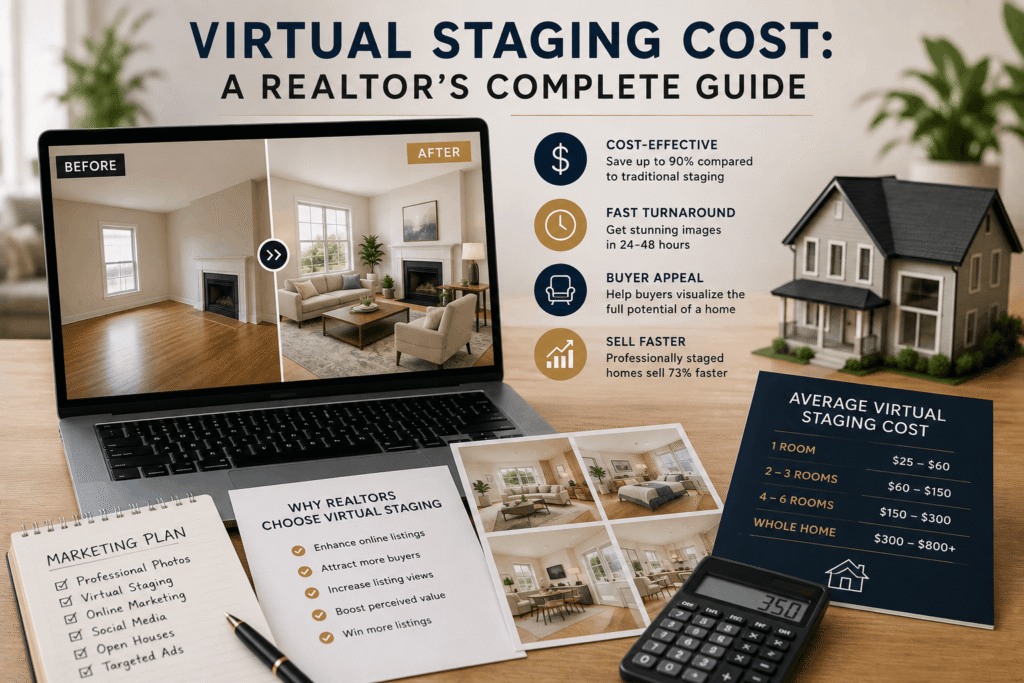
Every Realtor wants their listings to make a great first impression. In today’s digital-first real estate market, buyers often decide whether to schedule a showing within seconds of viewing a property’s photos. That’s why presentation has become just as important as pricing and location. Learn about virtual staging cost, pricing factors, benefits, and how Realtors can save money while creating stunning property listings that sell faster.
For vacant properties, however, creating an inviting first impression can be challenging. Empty rooms often appear smaller, colder, and less appealing than furnished spaces. This is where virtual staging has become one of the most valuable tools in modern real estate marketing.
Before investing in it, many agents ask the same question: How much does virtual staging cost, and is it worth the investment? The answer depends on several factors, but in most cases, virtual staging offers exceptional value compared to traditional home staging.
Why Virtual Staging Has Become So Popular
The way people buy homes has changed dramatically over the last decade. Buyers now browse listings on real estate websites, mobile apps, and social media before contacting an agent.
Professional listing photos have become one of the biggest factors influencing buyer interest.
When a property sits empty, buyers often struggle to understand how each room can be used. Virtual staging solves this problem by digitally adding realistic furniture, lighting, décor, and accessories that help buyers imagine themselves living in the space.
Unlike traditional staging, nothing is physically moved into the home. Everything is created digitally while maintaining a realistic appearance.
What Influences Virtual Staging Cost?
There isn’t a single price for every project because several factors affect the overall cost.
One important factor is the number of images that require staging. A single living room naturally costs less than staging an entire property with multiple bedrooms, bathrooms, dining spaces, and outdoor areas.
Image quality also plays a role. High-resolution professional photography produces better staging results than low-quality smartphone images.
The level of customization can also influence pricing. Some Realtors prefer standard furniture packages, while others request luxury interiors or designs that match a property’s architectural style.
Turnaround time is another consideration. Faster delivery often comes with premium pricing, especially when listings need to go live within a short timeframe.
Virtual Staging vs Traditional Home Staging
Many Realtors compare virtual staging cost with the expense of physically staging a property.
Traditional home staging usually involves furniture rental, delivery charges, storage, designer fees, setup, maintenance, and furniture removal after the home sells.
These costs can quickly become significant, especially if a property remains on the market for several weeks.
Virtual staging removes many of these expenses while still delivering visually attractive listing photos that capture buyer attention online.
For many vacant homes, it offers a practical balance between affordability and professional presentation.
Is Virtual Staging Worth the Investment?
For most agents, the answer is yes.
Buyers rarely fall in love with empty rooms. They connect with spaces that feel welcoming and functional.
Professionally staged listing photos often receive more online views, more inquiries, and more scheduled showings than vacant property images.
Since the majority of buyers begin their search online, improving the visual presentation of a listing can have a direct impact on marketing performance.
Even a modest investment in virtual staging can produce a much stronger first impression.
Benefits Beyond Cost Savings
While affordability is one of the biggest advantages, virtual staging offers several additional benefits.
It allows Realtors to market properties much faster because there’s no need to coordinate furniture delivery or schedule installation teams.
Design styles can also be customized for different buyer audiences. A downtown apartment might feature a modern interior, while a family home can showcase warm, traditional furnishings.
Digital staging also makes it easy to update colours, furniture layouts, and decorative elements without physically changing anything inside the property.
This flexibility gives agents more control over how a listing is presented.
Common Mistakes Realtors Should Avoid
Virtual staging is most effective when used responsibly.
Images should accurately represent the property’s dimensions and layout. Overcrowding rooms with oversized furniture or creating unrealistic interiors may disappoint buyers during in-person visits.
Using poor-quality original photographs can also reduce the realism of the final images.
Professional property photography remains the foundation of successful virtual staging cost.
Most importantly, agents should disclose when listing images have been virtually staged whenever required by local MLS rules or advertising guidelines.
Transparency helps build trust with buyers.
Technology Is Making Virtual Staging More Accessible
Artificial intelligence has made virtual staging faster, more realistic, and easier to integrate into everyday listing workflows.
Instead of relying on lengthy manual editing, Realtors can now create polished marketing visuals in far less time. Walktru help agents generate realistic virtually staged images, enhance listing photos, and prepare marketing-ready content efficiently, allowing them to focus more on serving clients and less on repetitive editing tasks.
How to Get the Best Value
Getting the most from virtual staging isn’t just about choosing the lowest price.
Work with high-quality listing photos whenever possible.
Stage only the rooms that influence buyer decisions the most, such as the living room, primary bedroom, kitchen, and dining area.
Choose furniture styles that match the property’s architecture and target audience.
Review staged images carefully before publishing to ensure they appear natural and accurately reflect the home’s layout.
A thoughtful approach delivers better results than simply staging every room.
Final Thoughts
Understanding virtual staging cost helps Realtors make smarter marketing decisions while keeping listing expenses under control. Compared to traditional staging, virtual staging offers a faster, more flexible, and cost-effective way to present vacant homes in their best light.
As buyers continue to rely on online listings when searching for their next home, professionally staged images have become an essential part of successful real estate marketing. Realtors who invest in quality virtual staging can create stronger first impressions, generate more buyer interest, and market properties with greater confidence. In today’s competitive housing market, it’s not just about reducing costs—it’s about creating listings that capture attention and inspire buyers to take the next step.
Read more article, Click here