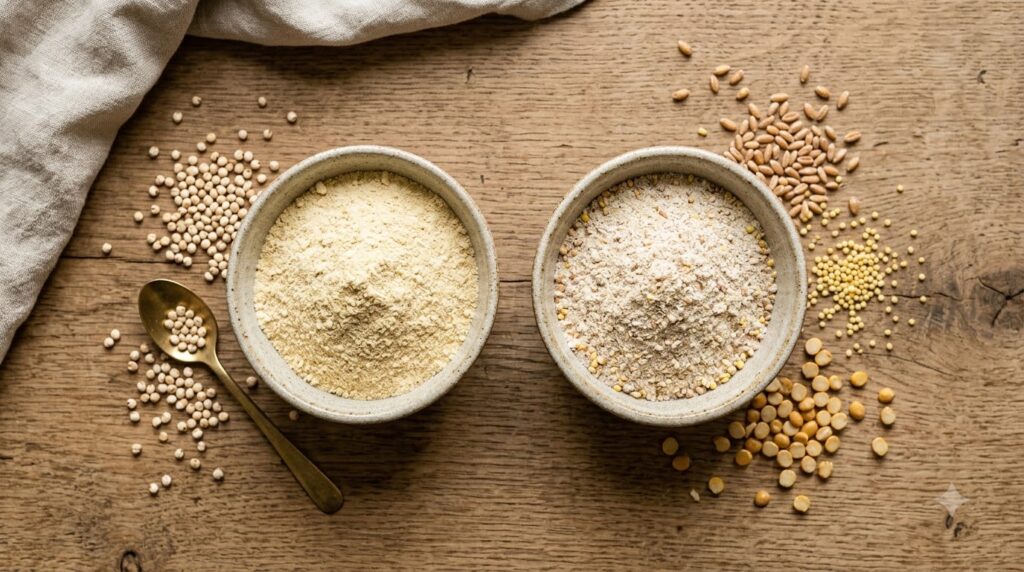
jowar atta vs multigrain atta
If you’ve ever stood in the flour aisle wondering whether to pick up jowar atta or multigrain atta, you’re not alone. Both have earned a reputation as “healthier” alternatives to regular wheat flour, but they’re built very differently — and that difference matters depending on your health goals, digestion, and even the season. This guide breaks down everything you need to know before you make the switch.
What Is Jowar Atta?
Jowar atta is flour made from ground sorghum, one of India’s oldest cultivated millets. It’s a single-grain flour, naturally gluten-free, and has been a staple in states like Maharashtra, Karnataka, and Telangana for generations — especially in the form of jowar roti or bhakri.
Key Benefits of Jowar Atta
- Gluten-free: Safe for people with celiac disease or gluten intolerance.
- Low glycemic index: Releases sugar into the bloodstream slowly, making it a solid choice for people managing blood sugar or diabetes.
- Rich in fiber: Supports digestion and helps you feel full longer.
- Good source of iron and antioxidants: Contributes to overall immunity and energy levels.
- Cooling effect: In Ayurveda, jowar is considered cooling for the body, which is why it’s traditionally eaten more in summer.
Downsides to Know
- Rotis made from pure jowar atta can be trickier to roll since there’s no gluten to bind the dough.
- They dry out and turn brittle quickly, so they’re best eaten hot, fresh off the tawa.
- The taste is earthier and denser compared to wheat-based flours, which may take some getting used to.
What Is Multigrain Atta?
Multigrain atta is a blend of multiple grains and, often, legumes — typically wheat as the base, combined with millets like jowar, bajra, or ragi, along with chana (chickpea) flour, oats, or soybean. The exact combination varies by brand, so it’s worth checking the label.
Key Benefits of Multigrain Atta
- Balanced nutrition: Combines fiber, protein, and micronutrients from several sources in one flour.
- Easier to cook with: Because most blends still contain wheat, the dough is easier to knead and the rotis stay soft.
- Convenient for everyday use: You get some of the benefits of millets without changing your usual cooking process.
- Wider nutrient variety: Different grains bring different vitamins and minerals to the table.
Downsides to Know
- Most multigrain blends still contain wheat, meaning they’re not suitable for anyone avoiding gluten.
- The glycemic index tends to be higher than pure millet flours like jowar, since wheat is often the dominant ingredient.
- Nutritional value depends heavily on the ratio of grains used — some “multigrain” products are mostly wheat with a small percentage of other grains added for marketing appeal.
Jowar Atta vs Multigrain Atta: Quick Comparison
| Factor | Jowar Atta | Multigrain Atta |
|---|---|---|
| Gluten | Gluten-free | Usually contains gluten (wheat-based) |
| Glycemic Index | Lower | Moderate to higher (depends on blend) |
| Fiber Content | High | Moderate to high |
| Ease of Cooking | Harder to roll, dries fast | Easier, softer rotis |
| Best For | Diabetics, gluten-free diets, weight management | Everyday convenience, balanced nutrition |
| Taste & Texture | Earthy, dense | Milder, closer to regular wheat roti |
Which One Should You Choose?
- Choose jowar atta if you need a gluten-free option, want a lower glycemic index for blood sugar control, or prefer eating a single whole grain in its purest form.
- Choose multigrain atta if you want convenience, softer rotis, and a broader mix of nutrients without changing your cooking routine.
- Can’t decide? Many households alternate between the two through the week, or mix jowar atta into their multigrain blend at home for a customized nutrient profile.
Final Thoughts
There’s no one-size-fits-all answer here — it comes down to your specific health goals. If diabetes management, weight loss, or gluten sensitivity are priorities, jowar atta usually comes out ahead. If you want an easy, everyday flour that still offers more nutrition than plain wheat, multigrain atta is a practical middle ground. Either way, checking the ingredient list and grain ratio on the pack will help you make a more informed choice — not all “multigrain” flours are created equal.