
It’s one of the most common questions off-plan investors ask partway through a project: can you actually exit before the keys are even handed over? The short answer is yes. Selling off-plan before handover is a well-established, legal practice in Dubai, but it comes with conditions, fees, and timing decisions worth understanding before you list. Here’s everything you need to know if you’re considering this route to sell property in Dubai.
Is It Actually Legal?
Yes. Off-plan units in Dubai are recorded on the Dubai Land Department’s Interim Property Register, known as Oqood, before the final title deed is issued at handover. Under Article 6 of Dubai Law No. 13 of 2008, units entered in this interim register can be sold, mortgaged, or otherwise disposed of before completion, provided the transaction is properly registered. If a disposition isn’t entered into the register, it’s considered void, so the paperwork side of this matters as much as finding a buyer.
In practice, what you’re doing isn’t quite a traditional resale. Since the unit isn’t complete yet, you’re assigning your rights and remaining obligations under the Sale and Purchase Agreement (SPA) to a new buyer, who then takes over the payment plan through to handover.
The Conditions That Actually Govern Your Sale
There’s no single rule that applies uniformly across every project in Dubai, what’s allowed in one development can differ from another, even within the same developer’s portfolio. That said, most developers apply two common thresholds before they’ll approve a resale:
- A minimum percentage of the purchase price paid. This commonly falls somewhere between 30% and 40%, though it varies by developer and project, and there’s no single legal percentage written into Dubai law
- Proper Oqood registration. Your contract needs to be correctly registered in the interim register before a transfer can proceed
If either condition isn’t met, the developer typically won’t issue the No Objection Certificate (NOC) required to move forward, and the transfer stalls. Because the actual threshold comes from your SPA and the developer’s own transfer policy rather than a universal rule, it’s worth getting written confirmation of your specific project’s requirements before you start marketing the unit.
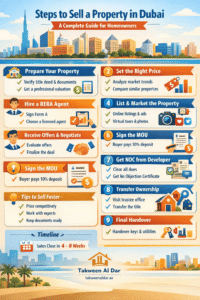
The Step-by-Step Process
- Check your payment status and SPA terms to confirm you’ve met the developer’s resale threshold
- Request the developer’s NOC, which confirms your payments are up to date and clears the way for the transfer. This typically takes anywhere from a few days to around two weeks, and developers usually charge a processing fee for it
- Find a buyer and agree terms, then sign the RERA-mandated sales contract (commonly known as Form F) covering the resale price and conditions
- Complete the Oqood-to-Oqood transfer at a DLD-approved trustee office, where the new buyer is formally recorded as the registered party on the project file
- Hand over responsibility for remaining instalments to the new buyer, who resumes the payment plan directly with the developer through to completion
What It Costs
A pre-handover resale carries a few layers of cost worth budgeting for:
- DLD registration fee: 4% of the sale value, officially split evenly between seller and buyer, though in practice the buyer often ends up covering the bulk of it, subject to negotiation
- Developer NOC fee, which varies significantly by developer and isn’t always published upfront
- A possible developer assignment fee to approve the pre-handover transfer, which some developers charge on top of the NOC, typically covered by the seller
Because reported fee levels vary and can change, always treat your specific developer’s transfer desk as the authoritative source before agreeing a resale price.
Why Investors Choose to Exit Early
Selling before handover appeals to different investors for different reasons:
- Locking in appreciation. Off-plan units often appreciate meaningfully between launch and the point where a developer allows resale, so an early exit can capture gains without waiting years for completion
- Freeing up capital. Rather than waiting two to three years for a project to complete, investors can redeploy funds into a new opportunity sooner
- Avoiding the final payment. Selling before handover means avoiding the typically large final instalment due at completion, along with the need to arrange a mortgage
- No capital gains tax. Dubai doesn’t apply capital gains tax on residential property sales, so profit from an early exit is kept in full
The Risks Worth Weighing
Early exits aren’t risk-free, and a few things commonly trip investors up:
- Selling too early. If you haven’t met the developer’s payment threshold, the deal simply won’t move forward
- Missing or incomplete Oqood registration, which weakens your position and can delay the transfer
- Market volatility. If prices dip before you sell, you could be forced to exit at a loss or hold on longer than planned
- Unclear fee responsibility, which tends to surface as a dispute at the worst possible moment if it isn’t agreed upfront
Sell Property in Dubai the Right Way with Takween Aldar
Exiting an off-plan investment before handover can be a smart move, but only when the timing, paperwork, and developer conditions are handled correctly. Takween Aldar helps investors looking to sell property in Dubai navigate developer NOCs, Oqood transfers, and pricing strategy from start to finish. To discuss your specific project or get a read on current resale conditions, visit Takween Aldar.