Every skyline tells a story, and in the UAE, that story is written in metal, glass, and precision engineering. From Downtown Dubai to the waterfront developments of Abu Dhabi, buildings here are judged not just on height but on finish. And more often than people realize, that finish comes down to one specialized trade: ACP cladding work.
This blog looks at what ACP cladding work actually involves, how it connects with other architectural upgrades like glass handrail and aluminum handrail installations, why bi folding door Abu Dhabi projects have become so popular, and how a well-placed glass sky light or aluminum glass skylight can transform a space. We’re Al Basira Aluminum & Glass, and this is essentially how we think through every project we take on across the UAE.
What Is ACP Cladding Work, Really?
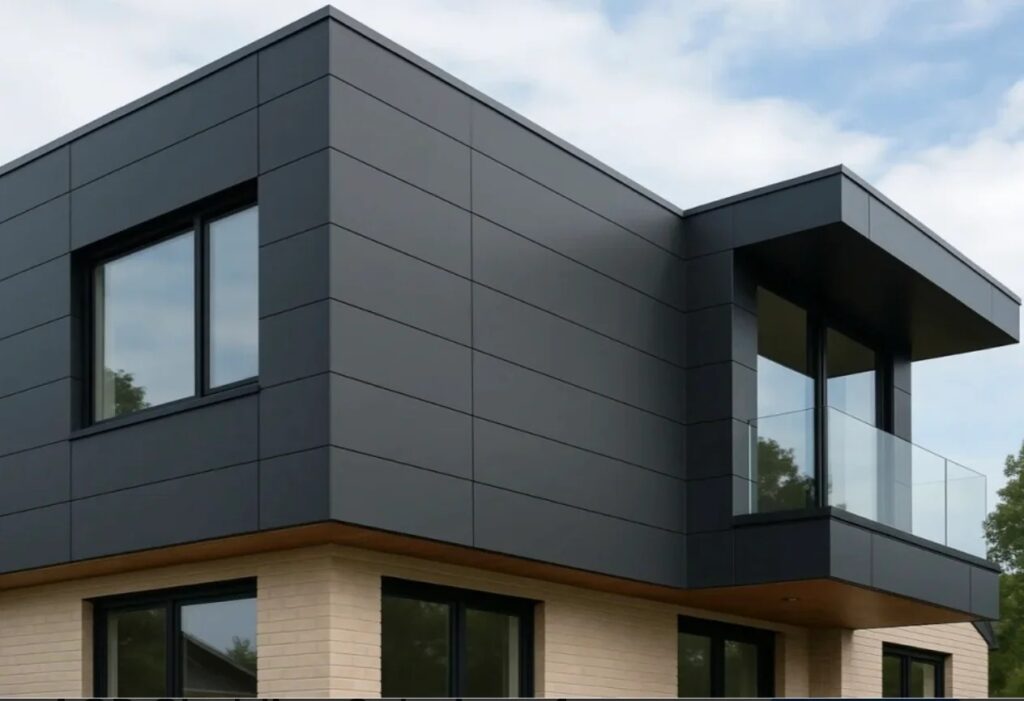
Let’s start plain. ACP cladding work refers to installing Aluminum Composite Panels onto a building’s exterior or sometimes interior surfaces. Each panel is built from two aluminum face sheets bonded to a core material, which could be a standard polyethylene core or a fire-retardant mineral-filled core, depending on local fire safety requirements.
People often think ACP cladding work is purely decorative. It isn’t. In the UAE’s climate, where surfaces face relentless sun, dust storms, and salt air near the coast, cladding acts as a protective shell. It shields the building envelope, reduces heat transfer into interior spaces, and gives architects the freedom to create sharp lines, curves, and color contrasts that raw concrete or brick simply can’t achieve.
How Reliable ACP Cladding Work Actually Comes Together
No two buildings are identical, but there’s a rhythm to how good ACP cladding work gets done, and it starts long before any panel goes up. Our team at Al Basira Aluminum & Glass begins by inspecting the existing facade or shell structure, because that tells us what kind of substructure the project will need, whether there are load-bearing concerns to work around, and which fixing method will actually hold up over the years rather than just look good on day one.
From there, it’s really a conversation with the client. Panel finishes, colors, and textures all get decided at this point matte, metallic, wood-grain, whatever fits the vision and we’re already thinking ahead to how the cladding will sit alongside other elements going into the same project, whether that’s an aluminum handrail on a neighboring balcony or a skylight cut into the roofline.
Once the design is locked in, the physical work starts with the substructure. An aluminum or galvanized steel frame gets built and anchored to the building, and this is the part that quietly determines everything else. If the frame isn’t precise, the panels sitting on top of it will never sit flush, no matter how well they’re cut. Speaking of which, panel cutting and routing comes next, measured directly against the real dimensions of the site rather than just the drawings, and folded cleanly at the edges. This is honestly where most poor-quality cladding jobs go wrong corners that don’t meet properly, gaps where dust and moisture can creep in over time.
Mounting the panels is where the building actually starts to transform in front of you. Depending on the design, we’ll use rivets, mechanical fasteners, or structural adhesive systems, and we always leave intentional ventilation gaps behind the panels so heat and moisture have somewhere to escape instead of building up behind the surface. Every joint then gets sealed with UV-resistant silicone, which isn’t optional in this climate skip it, and sand and moisture will find their way in within a season or two.
Before we ever call a job finished, we walk the whole site again, checking alignment, seam consistency, and overall finish with fresh eyes. That final look-over is often what separates ACP cladding work that ages well from work that starts showing problems within a year.
Handrails: Where Safety Meets Style
Cladding upgrades rarely stand alone. Balconies, staircases, and terraces usually get attention in the same renovation cycle, which is where glass handrail and aluminum handrail systems come into the conversation.
A glass handrail is the choice most clients lean toward when they want an unobstructed view think beachfront villas, rooftop terraces, or modern apartment balconies overlooking the city. We install these using toughened, impact-rated glass secured with either stainless steel spigots or aluminum channel systems, meeting UAE building safety codes without compromising the sightline anyone’s paying for in the first place.
An aluminum handrail, on the other hand, is the practical option. It’s tougher against daily wear, needs almost no maintenance, and resists the corrosion that coastal humidity can cause in lesser materials. A lot of our commercial clients specifically request an aluminum handrail finished in a powder coat that matches their building’s ACP cladding work, so the whole exterior reads as one cohesive design instead of a patchwork of different contractors’ choices stitched together.
Choosing between a glass handrail and an aluminum handrail usually comes down to one simple question: do you want visual openness, or do you want low-maintenance durability that you barely think about again? Most of the time, we just let clients compare samples on-site and decide from there.
Bi Folding Door Abu Dhabi: Opening Up Indoor-Outdoor Living
If you’ve toured newer villas in the capital, you’ve probably walked through a bi folding door Abu Dhabi homeowners installed to connect their living room to the garden or pool deck. These doors fold like an accordion, and when fully open, they essentially remove an entire wall between inside and outside.
They look simple, but the engineering behind a reliable bi folding door Abu Dhabi installation is anything but. The tracks need to handle daily opening and closing without grinding down from sand infiltration. The hinges need to be rated for heavy, repeated use. And the aluminum framing needs thermal breaks built in, otherwise heat quietly transfers into the cooled interior and your air conditioning bill climbs without you ever noticing why.
At Al Basira Aluminum & Glass, our bi folding door Abu Dhabi projects use reinforced frame systems and smooth-glide hardware chosen specifically to perform in this climate, not just to look good on the day it’s installed.
Letting the Light In: Glass Sky Light and Aluminum Glass Skylight Options
Even in a country known for scorching afternoons, homeowners and designers are leaning into natural light more than ever. A glass sky light brings daylight into stairwells, kitchens, or double-height living rooms that would otherwise depend entirely on artificial lighting.
The key is getting the specification right. A poorly chosen glass sky light turns a room into a greenhouse fast. We typically recommend double glazed, low-E coated glass with UV filtration, which lets daylight through while blocking a large portion of the solar heat that comes along with it.
For larger openings atriums, commercial lobbies, or flat-roof villas an aluminum glass skylight structure usually makes more sense. It combines a robust aluminum frame with insulated glazing units, giving you both structural strength and thermal performance in the same system. These come up often on projects where we’re also handling roofline ACP cladding work, since both trades tend to get scheduled into the same renovation window anyway.
Why Clients in the UAE Choose Al Basira Aluminum & Glass
There’s no shortage of companies offering ACP cladding work, glass handrail installation, or bi folding door Abu Dhabi services across the Emirates. What tends to bring clients back to us isn’t a gimmick it’s consistency. We manage every stage in-house, from survey through fabrication, installation, and final inspection, whether the job is a full commercial facade or a single rooftop aluminum glass skylight.
We understand UAE building codes, we’ve adapted our methods to the region’s climate extremes, and we know what a finished project actually needs to look like to meet both safety standards and the aesthetic expectations clients have here. That’s the foundation Al Basira Aluminum & Glass has been built on.
Frequently Asked Questions
How long does a typical ACP cladding work project take?
Timelines vary with facade size, but most residential or mid-sized commercial jobs run between two and six weeks from initial survey to final sealing.
Is a glass handrail strong enough for high-rise use?
Yes. When fitted with toughened, safety-rated glass and proper structural fixings, a glass handrail is fully compliant with UAE safety standards, even on upper floors.
What makes an aluminum handrail different from a glass handrail?
An aluminum handrail prioritizes durability and low maintenance, while a glass handrail prioritizes an open, unobstructed view. Both are structurally sound; the choice really comes down to your aesthetic preference and how much upkeep you’re willing to deal with.
Can a bi folding door in Abu Dhabi withstand sand and heat over time?
Yes, provided it’s built with reinforced aluminum framing and quality track hardware, which is standard on every bi folding door Abu Dhabi installation we complete.
Will a glass sky light overheat my room?
Not with the right glazing. Using low-E, UV-filtering glass on a glass sky light or aluminum glass skylight significantly cuts solar heat gain while still letting daylight in.
Should I combine ACP cladding work with skylight or handrail upgrades?
It’s often more efficient to. Bundling ACP cladding work with a glass handrail, aluminum handrail, or skylight project during one renovation phase usually saves time and creates a more unified final look.
Wrapping Up
Contemporary UAE architecture demands more than good looks it demands materials and installation methods that can survive the region’s climate year after year. Whether it’s precision ACP cladding work on a facade, a glass handrail framing a rooftop view, an aluminum handrail lining a busy stairwell, a bi folding door Abu Dhabi families rely on daily, or a glass sky light and aluminum glass skylight brightening up a home, the details matter just as much as the design vision.
That’s the approach Al Basira Aluminum & Glass brings to every project across the UAE practical engineering behind a polished finish, from the first site visit to the final walkthrough.