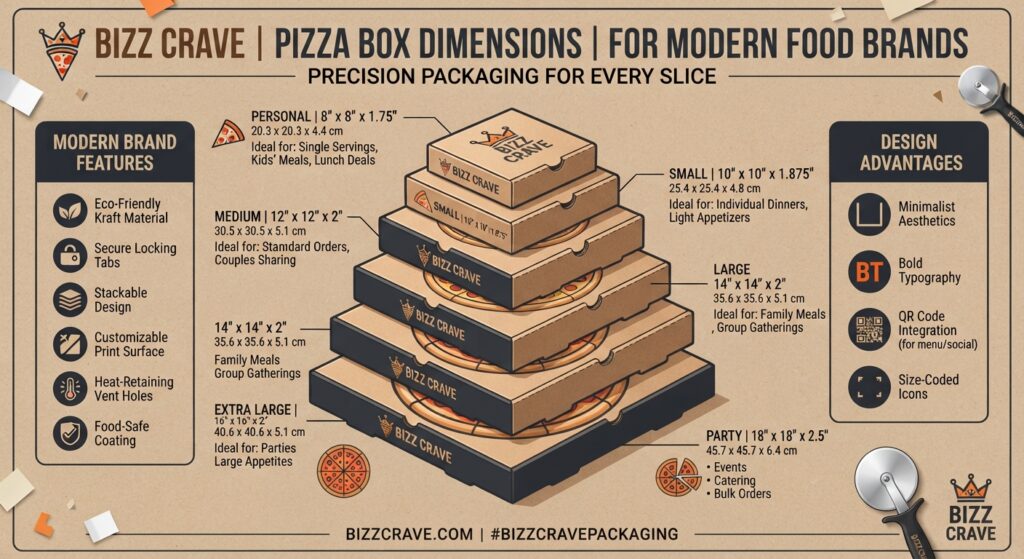
The packaging of a pizza is more important than simply covering the food during transportation. It plays a major role in maintaining freshness, protecting toppings, and creating a convenient experience for customers. Pizza Box Dimensions provide an interesting starting point for understanding how the right box measurements can support modern food businesses. Whether a restaurant serves individual pizzas or large sharing meals, choosing suitable packaging helps ensure that every order reaches customers in better condition.
Why Pizza Box Measurements Matter
Pizza boxes are designed to protect food while making storage and transportation easier. If a box is too small, the pizza may become squeezed against its sides. On the other hand, an unnecessarily large box can allow the pizza to move during delivery.
Suitable measurements help maintain the pizza’s position and reduce unwanted movement. They also make it easier for restaurants to organize different packaging options according to their menu.
The Connection Between Box Design and Food Safety
Food safety should always be considered when selecting pizza packaging. A suitable box helps protect food from dust, accidental contact, and external contamination during handling.
The material should be intended for food packaging and appropriate for contact with hot food. Restaurants should also consider ventilation because trapped steam can affect the crust’s texture.
A thoughtfully designed box supports both protection and presentation. However, packaging alone cannot guarantee food safety; proper food preparation, handling, and delivery practices remain essential.
Understanding the Role of Box Height
Many people focus only on the length and width of a pizza box, but its height is equally important. The depth should provide enough space for the pizza, toppings, and crust without allowing excessive movement.
For pizzas with extra cheese, thick crusts, or additional toppings, suitable internal height becomes particularly useful. A box with insufficient depth may press against the food and damage its appearance.
Restaurants should therefore evaluate all three measurements rather than choosing packaging based on diameter alone.
Sustainable Materials in Modern Pizza Packaging
Environmental awareness is changing the way food businesses think about packaging. Many restaurants are exploring recyclable paperboard and responsibly sourced materials to reduce unnecessary packaging waste.
When selecting sustainable pizza boxes, businesses should consider durability, food-contact suitability, recycling instructions, and local waste-management facilities.
A sustainable choice should also perform its main function effectively. Packaging that becomes weak during transportation may create more waste through damaged orders and replacements.
How Packaging Can Improve Customer Convenience
Customers interact with pizza packaging before they even taste the food. A practical box should be easy to carry, open, store, and dispose of.
Simple opening features can make takeaway orders more convenient. Secure closures help keep the lid in place, while a suitable structure makes handling easier for delivery riders and customers.
Restaurants can also consider boxes that are easier to stack. This can help customers store leftover pizza in the refrigerator without unnecessary difficulty.
Bizz Crave Box Dimensions and Packaging Innovation
Modern packaging is not limited to traditional cardboard designs. Food businesses can explore creative structural features that improve the overall experience. Bizz Crave highlights the importance of considering measurements alongside practical design choices.
For example, restaurants may evaluate stronger corners, convenient opening styles, improved stacking structures, and suitable ventilation features. These details can make packaging more functional without making it unnecessarily complicated.
A well-planned design should balance appearance, usability, and protection. Businesses can test different box structures with their actual menu items before selecting a final packaging option.
Testing Pizza Boxes Before Bulk Ordering
Ordering packaging in large quantities without testing can create avoidable problems. A sample-testing process allows restaurants to identify issues before making a major purchase.
Businesses can test boxes by checking:
- Whether the pizza fits without touching the sides.
- Whether the lid closes without pressing the toppings.
- Whether the base remains stable when lifted.
- Whether the box can be stacked safely.
- Whether the packaging maintains its structure during delivery.
Testing should also include different pizza varieties because crust thickness and toppings can affect the required internal space.
Packaging Mistakes Restaurants Should Avoid
Some packaging problems happen because businesses focus only on appearance or price. Choosing a box without checking its actual internal measurements can lead to poor fitting.
Other common mistakes include ignoring material quality, selecting unsuitable box heights, overlooking ventilation, and ordering large quantities before testing samples.
Restaurants should also avoid assuming that every pizza of the same diameter will fit perfectly in an identical box. The crust, toppings, and overall preparation style can influence the best packaging choice.
Building a Better Packaging Experience
An effective pizza box should support the complete customer journey, from restaurant preparation to final delivery. Its measurements, material, structure, and opening design all contribute to the experience.
Businesses that regularly review customer feedback can identify packaging improvements. For example, comments about damaged toppings, difficult opening, or soggy crust may indicate that the packaging design needs attention.
By testing practical solutions and selecting suitable dimensions, restaurants can create packaging that supports quality and customer satisfaction.
Conclusion
Pizza packaging is a combination of measurement, material selection, food protection, and thoughtful design. Understanding. Pizza Box Dimensions can help food businesses make better decisions when evaluating their packaging requirements. From selecting the correct height to exploring sustainable materials and testing samples, every step contributes to a more practical packaging solution. The right approach is to choose boxes that fit the menu, protect the product, and make the customer’s experience more convenient.
Frequently Asked Questions (FAQs)
1. Why are pizza box dimensions important?
They help provide a suitable fit, protect toppings, and reduce unnecessary movement during transportation.
2. What are the three main pizza box measurements?
The three main measurements are length, width, and height.
3. Does pizza box height affect food quality?
Yes. Suitable height helps prevent the lid from pressing against toppings and allows enough space for the pizza.
4. Which materials are commonly used for pizza boxes?
Paperboard and corrugated cardboard are commonly used, depending on the packaging requirements.
5. How can restaurants choose the right pizza box?
They should measure their pizzas, test packaging samples, check material quality, and evaluate performance during delivery.