Industrial packaging and fabric applications often require material that can be supplied in consistent widths, lengths, and specifications. Buying finished bags is not always the right solution when a business needs to convert fabric into its own products or requires a customised fabrication process.
Polypropylene rolls provide this flexibility. Made from woven polypropylene fabric, these rolls can be supplied for applications ranging from packaging and agriculture to construction, industrial covers, and material protection.
For manufacturers and procurement teams, the important consideration is not simply finding a roll of polypropylene fabric. The fabric needs to match the intended application, converting process, strength requirements, and environmental conditions.
What Are Polypropylene Rolls?
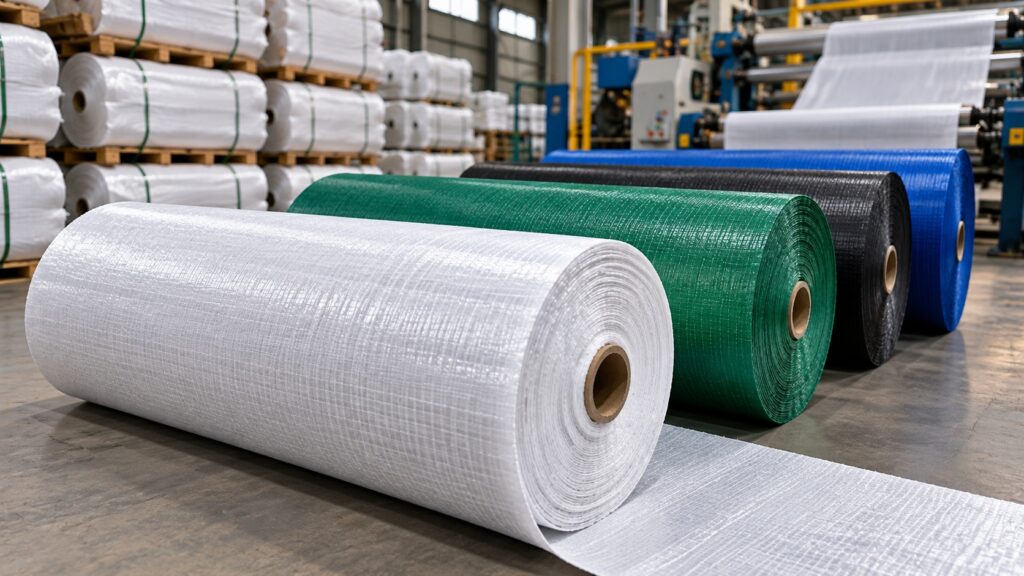
Polypropylene rolls are continuous rolls of woven polypropylene fabric produced for further processing or direct use in industrial applications.
Polypropylene resin is extruded into tapes, which are then woven together to create a fabric structure. The finished fabric can be wound into rolls in specified widths and lengths, allowing customers to convert it according to their own requirements.
Depending on the application, polypropylene fabric rolls may be supplied with different:
- GSM specifications
- Widths
- Weave constructions
- Surface finishes
- Lamination options
- Printing requirements
- UV stabilisation
- Colours
This makes rolls particularly useful for businesses that need flexibility in downstream manufacturing.
Why Use Woven Polypropylene in Roll Form?
Finished bags are suitable when the required packaging format is already known. However, manufacturers working with different products or customers may need greater flexibility.
Roll-form woven polypropylene allows a business to cut, sew, laminate, print, or otherwise convert the fabric according to its production requirements.
This can be useful for companies producing:
- Packaging bags
- Agricultural covers
- Ground covers
- Industrial sheets
- Protective materials
- Fabric-based components
- Custom woven products
Instead of maintaining multiple finished-product formats, a manufacturer can work with fabric that is converted according to the specific requirement.
Key Properties of Polypropylene Fabric Rolls
The performance of a polypropylene roll depends on the fabric specification and how it is produced.
Woven Construction
The interwoven polypropylene tapes create a structured fabric that can provide strength and durability for many industrial applications.
The weave can be selected according to the required balance between mechanical performance, flexibility, and application requirements.
GSM
GSM, or grams per square metre, is an important specification when purchasing woven polypropylene fabric.
Different applications require different fabric weights. A lightweight agricultural application may have different requirements from a heavy-duty industrial cover.
Buyers should therefore specify the required GSM based on the intended end use rather than selecting a roll solely by thickness or appearance.
Width
Roll width is particularly important for manufacturers because it affects material utilisation during conversion.
The appropriate width can help reduce unnecessary cutting and fabric waste when the roll is converted into finished products.
For landscape and related fabric applications, wider roll formats can also be useful where large areas need to be covered.
UV Stabilisation
Outdoor applications can expose polypropylene fabric to sunlight for extended periods.
Where the material will be used outdoors, UV stabilisation can be an important specification. The required level should be determined according to the expected exposure and application conditions.
Applications for Polypropylene Rolls
Polypropylene fabric rolls can be used across several industries because the fabric can be converted into different formats.
Agricultural Applications
Agricultural businesses use woven polypropylene fabric for various products and protective applications.
The fabric can be converted into covers, sheets, bags, and other products depending on the required construction.
For agricultural buyers, factors such as UV exposure, fabric weight, width, and durability can influence material selection.
Packaging Manufacturing
Manufacturers producing woven bags can purchase polypropylene fabric in roll form and convert it into bags according to their own production requirements.
This can be particularly useful for businesses supplying multiple customers with different bag sizes or specifications.
Fabric can be combined with printing, lamination, cutting, and sewing processes to create finished packaging products.
Construction and Industrial Applications
Construction and industrial operations may require woven fabric for covers, protective materials, barriers, and other applications.
In these environments, the fabric specification needs to account for expected handling, exposure, and mechanical stresses.
Landscape and Ground-Cover Applications
Woven polypropylene fabric is also used in certain landscape and ground-cover applications.
For outdoor ground coverage, roll width, UV resistance, fabric weight, and the intended installation environment are important considerations.
A suitable specification can help ensure the fabric performs as expected throughout its intended service period.
Laminated Polypropylene Rolls
Some applications require more than the base woven fabric.
Lamination adds another layer to the woven polypropylene structure and can provide additional surface characteristics depending on the material and construction.
Laminated rolls can be considered when buyers require:
- Additional protection
- Improved surface characteristics
- Reduced permeability
- A suitable surface for specific printing requirements
- A customised fabric structure
The need for lamination should be determined by the end-use requirements. It is not necessary for every polypropylene fabric application.
Customisation of Polypropylene Rolls
Industrial fabric requirements can vary considerably between customers. A standard roll may not always provide the right combination of width, GSM, weave, colour, or treatment.
Custom manufacturing can help buyers specify the material around their production process.
Common customisation considerations include:
Custom Widths
Roll widths can be selected around the requirements of the downstream conversion process.
Custom GSM
Fabric weight can be specified according to the required application and performance characteristics.
Colour
Different colours can be used for product identification, branding, or application-specific requirements.
Printing
Printed fabric can carry branding, product information, markings, or other required details.
Lamination
Lamination can be incorporated where the application calls for additional functional or surface characteristics.
UV Treatment
For outdoor applications, UV stabilisation can be considered based on the expected exposure conditions.
What Should Manufacturers Consider Before Ordering?
A clear technical specification makes it easier to compare polypropylene fabric suppliers and avoid receiving material that is unsuitable for the production process.
Before placing an order, manufacturers should define:
- End application: What will the fabric ultimately be used for?
- Required GSM: What fabric weight is appropriate for the application?
- Roll width: What width works efficiently with the converting equipment?
- Weave: What construction is required for the intended performance?
- Outdoor exposure: Will the fabric be exposed to sunlight or weather?
- Lamination: Is an additional layer required?
- Printing: Does the fabric need branding or product information?
- Quantity: What recurring volume is required for production?
Having these details ready can make supplier discussions more precise and reduce unnecessary specification changes later.
Choosing a PP Woven Roll Manufacturer
For businesses purchasing woven fabric in recurring volumes, manufacturer capability is an important part of supplier evaluation.
A suitable PP woven roll manufacturer should be able to produce fabric consistently against the agreed specification and support the requirements of the customer’s converting operation.
Procurement teams can evaluate suppliers based on:
- Manufacturing experience
- Production capacity
- Fabric consistency
- Available GSM and width options
- Customisation capabilities
- Lamination and printing options
- Quality-control processes
- Technical documentation
- Supply reliability
- Ability to support recurring requirements
This becomes especially important when the fabric is being converted into products for multiple customers or applications.
Polypropylene Rolls for Different Production Requirements
One of the main advantages of buying woven polypropylene in roll form is the control it gives manufacturers.
A packaging producer may convert the same general type of fabric into different bag sizes. An industrial manufacturer may cut the fabric into protective sheets. An agricultural business may use a wider roll for a particular coverage application.
The material can therefore become a common input across different production processes, provided the specification is appropriate for each use.
For companies with changing requirements, this flexibility can be more practical than sourcing a separate finished product for every application.
Quality and Supply Consistency Matter
When polypropylene fabric becomes part of a manufacturing process, consistency matters.
Variations in fabric weight, dimensions, weave, or other characteristics can affect cutting, sewing, lamination, printing, and final-product performance.
This is why buyers should evaluate the supplier’s manufacturing and quality processes rather than considering the fabric only as a commodity.
For recurring B2B requirements, reliable production and supply can also help manufacturers maintain consistent output and reduce disruptions caused by material shortages or specification changes.
Conclusion
Polypropylene rolls provide manufacturers and industrial buyers with a flexible way to source woven polypropylene fabric for further conversion and specialised applications.
Their versatility comes from the ability to customise factors such as GSM, width, weave, colour, lamination, printing, and UV stabilisation according to the intended use. This makes them suitable for applications across packaging, agriculture, landscaping, construction, and industrial manufacturing.
The right roll should always be selected around the end application and production requirements. By establishing a clear specification and evaluating suppliers for manufacturing consistency, customisation capability, quality processes, and supply reliability, businesses can source woven polypropylene fabric that fits their operational needs.