India has a strong saree-wearing culture, from everyday office wear to expensive silk sarees, designer collections and bridal outfits. While some sarees can be washed at home, others require specialist care because of their delicate fabrics, embroidery, zari work or construction.
This creates an interesting opportunity for entrepreneurs: starting a saree dry cleaning and professional garment-care business.
Instead of opening a general laundry shop, you could build a service focused on sarees, ethnic garments and occasion wear. With the right training, suitable cleaning processes, and a dry cleaning machine, the business could serve customers who want their valuable garments handled professionally.
But where should you begin? Do you need to purchase a machine immediately, and how can you attract your first customers?
Why Could a Saree Dry Cleaning Business Work in India?
Sarees are not ordinary garments for many customers. A silk saree purchased for a wedding or a heavily embroidered designer saree may have significant financial and sentimental value.
Customers often hesitate to clean these garments at home because incorrect washing, chemicals or handling can cause colour bleeding, shrinkage, damaged embellishments or changes in fabric appearance.
A professional saree-care business addresses this concern by offering inspection, suitable cleaning, careful finishing and protective packaging.
There are also several occasions when customers may need these services. Wedding seasons, festivals, family celebrations and special events can create demand for garment cleaning and finishing.
However, demand may fluctuate throughout the year. A sustainable business should therefore consider both occasional premium orders and recurring garment-care customers.
Your business opportunity is not simply removing stains. It is providing a dependable service for garments customers want to preserve.
This is why trust, handling standards and consistent service quality matter just as much as the equipment.
Who Could Become Your First Customers?
One advantage of a saree-focused business is that you can target specific customer groups rather than competing only on general laundry prices.
Individual Customers
Women who regularly wear sarees for work, social occasions or family events may require cleaning, pressing and garment-care services.
Bridal and Wedding Customers
Bridal sarees, reception outfits and other occasion wear may require specialist cleaning after events. These garments should be inspected individually because embellishments and delicate construction can limit the available cleaning methods.
Saree Boutiques and Designers
Boutiques may need professional finishing, cleaning or garment-care support for suitable inventory and customer garments. A reliable service arrangement could generate repeat business.
Ethnic Wear Rental Businesses
Businesses renting sarees and other occasion wear may require inspection, cleaning and finishing between rentals.
Customers With Premium Saree Collections
Owners of silk, handloom and designer sarees may seek specialist garment-care advice and suitable cleaning services.
A practical starting strategy is to identify two or three customer groups in your area and understand their current cleaning problems before investing in equipment.
Should You Start With a Collection Store or Buy a Dry Cleaning Machine?
One of the biggest decisions for a new entrepreneur is whether to process garments independently or outsource the cleaning.
You can begin with a collection-based saree-care service. Customers drop off garments at your store or arrange pickup, and a qualified processing partner handles the cleaning.
This approach allows you to test local demand without immediately purchasing expensive equipment. However, your reputation will depend heavily on the quality and reliability of your processing partner.
The alternative is to establish an in-house facility with a suitable dry cleaning machine, trained operators and finishing equipment.
This gives you more direct control over scheduling, garment handling and quality checks, but it also requires greater investment, technical knowledge and operational responsibility.
For example, imagine your store initially receives five saree-care orders daily. Before buying machinery, you should determine how many of those garments can actually be processed using the proposed machine, how frequently orders arrive and whether the workload justifies operating your own facility.
As demand becomes more predictable, you can compare the cost of outsourcing against the investment and operating expenses of in-house processing.
The right time to buy a machine is when your expected workload and service requirements support the investment—not simply because you want to open a dry cleaning store.
What Dry Cleaning Machine and Equipment Would You Need?
Once you decide to process garments in-house, equipment selection becomes one of the most important parts of your business plan.
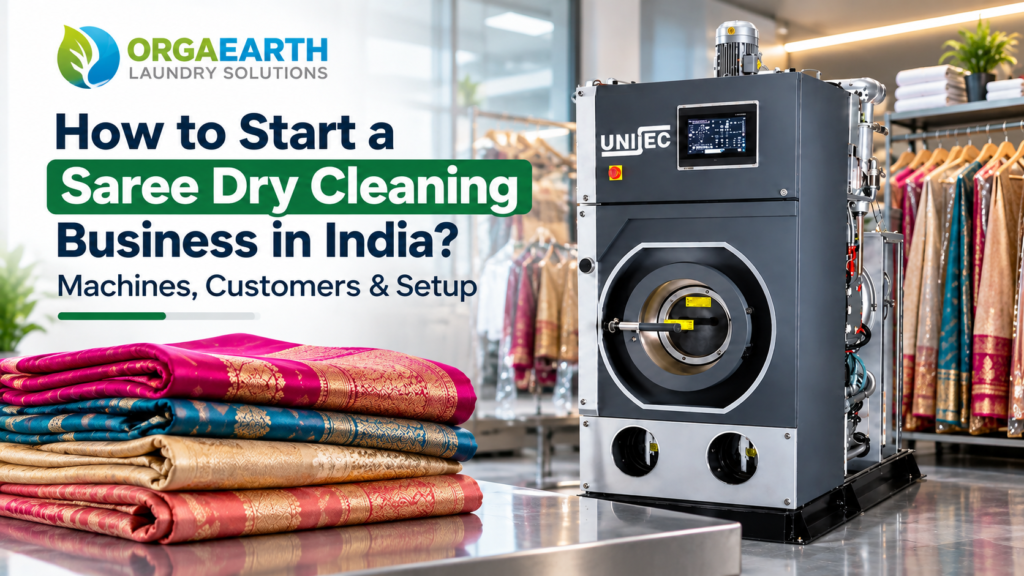
A commercial dry cleaning machine uses an approved solvent-based cleaning process for garments suitable for that method. However, no single machine or solvent is appropriate for every saree.
Silk, handloom fabrics, metallic zari, adhesives, dyes, sequins and other decorative elements can react differently to cleaning processes.
Before accepting a garment, your team should inspect its care label, fabric construction, colorfastness, embellishments, and existing damage. Where necessary, appropriate testing or specialist referral is essential.
Choosing a Suitable Dry Cleaning Machine
When comparing dry cleaning machines, consider the following factors:
- Processing capacity: Match the machine to realistic garment volumes and suitable load sizes.
- Approved solvent system: Check the manufacturer’s specifications and the garments you intend to process.
- Available space and utilities: Understand installation, electrical, ventilation and other facility requirements.
- Operating requirements: Review solvent management, maintenance and operator training needs.
- Technical support: Evaluate installation assistance, spare parts availability and after-sales service.
A multi-solvent machine may support different manufacturer-approved solvent options, depending on its design. This does not mean every solvent can be used interchangeably or every saree can be processed safely.
Other Equipment You May Need
A complete saree-care facility requires more than the cleaning machine.
You may need a spotting table, suitable stain-treatment products, professional steam ironing or finishing equipment, garment racks, inspection tables and protective packaging materials.
Proper garment identification is equally important. Each saree should be tagged and tracked from collection through cleaning, finishing and delivery.
For delicate or expensive garments, document existing stains, damage and special handling instructions before processing.
The quality of the finished saree depends on the entire workflow, not just the cleaning cycle.
How Much Investment Is Needed, and How Should You Price Services?
The investment required to start a saree dry cleaning business depends on your chosen operating model.
A small collection counter may primarily require shop space, order-management arrangements, packaging and a reliable processing partner.
An in-house facility will require additional spending on machinery, installation, utilities, solvent handling, finishing equipment, trained staff and working capital.
Instead of relying on a general startup-cost estimate, request a complete quotation based on your proposed services and facility requirements.
You should also understand how much each garment costs to process.
For example, your cost calculation should include cleaning materials, labour, finishing, packaging, utilities, transport where applicable and a share of business overheads.
Selling Price − Variable Processing Cost = Contribution per Order
That contribution must be sufficient to cover fixed expenses and eventually generate profit.
Saree-care pricing can vary according to fabric, embellishments, cleaning requirements and finishing complexity.
A simple synthetic saree and a heavily embroidered bridal saree should not automatically have the same service price.
Consider offering clearly defined categories such as standard saree care, silk saree care, occasion-wear cleaning and specialist garment assessment.
Avoid promising complete stain removal or guaranteed restoration. Some stains and fabric damage cannot be corrected without risking further harm.
How Can You Attract Customers and Build Repeat Business?
A saree-care business needs more than a good location. Customers must feel confident handing over garments that may be expensive or difficult to replace.
Start by building relationships with local saree boutiques, ethnic-wear stores and bridal studios. These businesses already interact with people who may require professional garment care.
You can also promote your services through Google Business Profile, local search, social media and residential communities.
Rather than advertising only low prices, explain your inspection process, fabric-care approach, finishing standards and garment-tracking system.
Clear service descriptions help customers understand what they are paying for.
Another opportunity is offering convenient pickup and delivery for regular customers. However, delivery charges and travel time must be included in your pricing.
Customer retention should be a priority. A customer satisfied with the cleaning and handling of one saree may return with additional garments or recommend your business to family members.
As demand grows, you could expand into suitable ethnic-wear cleaning, professional pressing and other specialist garment-care services.
How Can Orgaearth Help You Set Up the Business?
If you plan to invest in an in-house dry cleaning facility, OrgaEarth Laundry Solutions can help you explore commercial dry cleaning equipment suited to your proposed business requirements.
Support can include machine selection, capacity planning, installation considerations, suitable chemical options and technical service arrangements.
Before investing, discuss the garment types you intend to process, expected order volume, available utilities and operator-training requirements.
The goal is to choose equipment that supports your actual services and business growth plans.
Frequently Asked Questions
Can I start a saree dry cleaning business without purchasing a machine?
Yes. You can begin with a collection-based model and outsource processing to a qualified specialist. This can help you understand demand before investing in your own facility.
Can all silk and designer sarees be dry cleaned?
No. Cleaning suitability depends on the fabric, dyes, embellishments, construction and care instructions. Some garments require specialist methods or may not be suitable for conventional dry cleaning.
Is a saree dry cleaning business profitable?
It can be commercially viable when customer demand, service pricing and processing efficiency cover operating expenses. Profitability depends on local competition, order volume, garment mix and investment costs.
Conclusion
Starting a saree dry cleaning business in India could be an opportunity for entrepreneurs interested in premium garment-care services.
The key is to understand your customers, establish reliable cleaning procedures and choose an operating model that matches your budget and expected demand.
You can begin with a collection service or gradually build an in-house facility as the business develops.
A suitable dry cleaning machine can support professional garment processing, but long-term success depends on trained handling, consistent quality and customer trust.
Planning to start a saree dry cleaning business? Connect with OrgaEarth Laundry Solutions to explore suitable equipment and setup requirements.
Contact Us:
Orgaearth Laundry Solutions
Plot no. 774, Udyog Vihar, Phase 5, Gurugram, Haryana, India-122016
Email: marketing@orgaearth.com
Contact No. +91 7042912777
Dry Cleaning Machine, Saree Dry Cleaning Business, Dry Cleaning Business in India
Commercial Dry Cleaning Equipment, Saree Cleaning Service