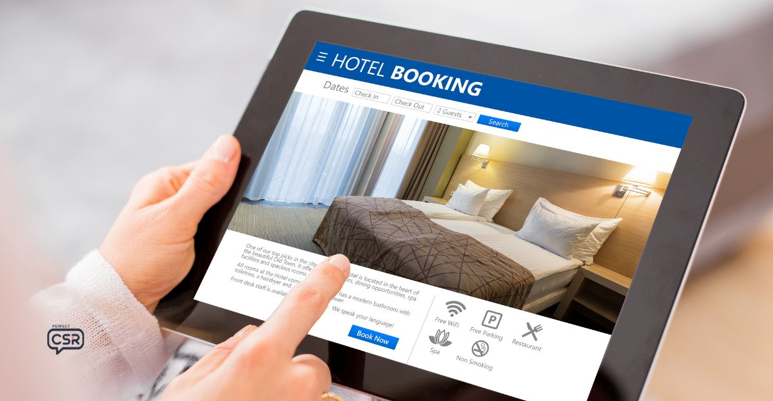
A hotel chatbot should do more than answer a few FAQs. The best setup helps a hotel respond instantly to pre-booking questions, capture high-intent inquiries, guide visitors toward the right next step, and hand complex requests to staff with full context. For hotels, that means faster service without asking the front desk to monitor website chat all day.
That matters because hotel teams are already stretched. AHLA’s 2026 Front Desk Feedback survey found that more than half of responding hotels were somewhat or severely understaffed, while 65% named labor costs as a major financial pressure. An AI chatbot for hotels can absorb repeat digital questions so staff can spend more time with guests who actually need a person.
How Can an AI Chatbot for Hotels Increase Direct Bookings?
An AI chatbot for hotels can support direct bookings by removing the small delays that make visitors abandon a hotel website. It can answer questions about room features, check-in times, parking, breakfast, cancellation rules, family policies, pet rules, spa services, and other details before a prospect leaves to search elsewhere.
The goal is not to pretend the chatbot is a property management system. For PerfectCSR, the more accurate role is to support the booking journey. It answers from hotel-approved content, captures the visitor’s name, email, phone number, and custom details, then moves the conversation toward the appropriate next step or a member of staff.
This fits a wider change in hotel technology. AHLA’s June 2026 guidance says AI agents and conversational travel planning are reshaping hotel search and booking. It specifically recommends that hotels improve data quality, structure first-party content, and prepare booking flows for AI-driven discovery and commerce.
Which Guest Questions Should a Hotel Chatbot Handle First?
Start with questions that are frequent, easy to verify, and important to a booking decision. These are also the conversations most likely to create unnecessary front-desk work when they remain unanswered online.
| Guest stage | Typical question | Best chatbot action |
| Before booking | “Is parking free?” | Answer from approved hotel content |
| Before booking | “Do you have family rooms?” | Explain the available room information |
| Before booking | “What is your cancellation policy?” | Provide the current published policy |
| Before arrival | “What time is check-in?” | Answer instantly and capture a special request |
| During stay | “Can I speak to someone about a problem?” | Transfer the conversation to a person |
| After stay | “I need help with an invoice.” | Capture the details and create a follow-up ticket |
Oracle and Skift research involving 5,266 consumers and 633 hotel executives found that 77% of travelers were interested in automated messaging or chatbots for hotel customer-service requests. The survey was conducted in 2022, so it is best treated as historical evidence of traveler interest rather than a 2026 adoption figure.
The strongest hotel chatbot strategy starts with these predictable questions instead of trying to automate every part of the guest journey from day one.
How Does a Hotel Chatbot Reduce Front-Desk Work Without Replacing Staff?
The best automation removes repetitive work while making human help easier to reach. A hotel chatbot can handle predictable website questions first, then transfer the conversation when the request becomes sensitive, unusual, or operationally complex.
PerfectCSR’s human handover transfers the conversation, visitor details, and source page to staff. An automatic ticket can retain the chat history, which means the guest does not need to explain the same problem again. Staff can also enter an active conversation from the dashboard when a person is needed.
That balance matters in hospitality. A billing dispute, accessibility request, complaint, safety concern, or unusual reservation problem may need human judgment. Questions about amenities, policies, opening times, or general hotel information are easier to automate safely.
The staffing pressure is current. AHLA reported in 2026 that 42% of surveyed hotel owners cited workforce shortages as a business pressure, while more than half said their properties were understaffed to some degree.
Automation works best when it protects staff time instead of creating another inbox staff must constantly monitor.
What Should Hotels Automate, and What Should Stay Human?
Hotels should automate high-volume, low-risk conversations while keeping people in control of exceptions. A useful operating rule is simple: automate information, capture intent, and escalate judgment.
Good starting points include:
- Room and amenity questions
- Check-in and checkout information
- Parking and breakfast details
- Pet and cancellation policies
- Location and local information already approved by the hotel
- Contact-detail and booking-inquiry capture
- Routing requests to the right person
- Creating tickets when the AI cannot confidently resolve a request
Complaints, payment disputes, unusual booking changes, accessibility needs, emergencies, and questions that are not covered by approved hotel information should move to staff.
Traveler attitudes also support a combined AI and human approach. AHLA’s 2025 State of the Industry report cited research showing that 79% of travelers wanted AI to manage tasks such as resolving queries, while more than 87% wanted AI advisors available anytime and anywhere.
The opportunity is not AI instead of hospitality. It is faster access to basic information, with an obvious route to a person when the conversation needs one.
How Should Hotels Train an AI Chatbot to Keep Answers Accurate?
Accuracy starts with the hotel’s own content. PerfectCSR can train from website URLs, documents, pasted text, YouTube videos, and voice notes. For a hotel, that might include room pages, amenity details, dining information, check-in policies, cancellation rules, parking information, guest guides, and approved FAQs.
During one crawl, PerfectCSR can scan up to 500 pages, after which the business selects up to 25 pages for training. That keeps the hotel in control of which information becomes part of the agent’s knowledge rather than allowing it to depend on arbitrary information from the open web.
PerfectCSR also records unanswered questions. If several prospective guests keep asking whether airport transfers are available and the chatbot cannot answer, the hotel now knows exactly what information is missing from its website or training material.
That continuous feedback loop is important because guest expectations keep changing. Booking.com’s 2026 Travel Predictions research covered 29,733 travelers across 33 countries and territories, including 2,010 people in the United States. It found 56% were interested in host-to-guest interactions with service robots in vacation rentals. That is not a hotel-chatbot adoption rate, but it shows growing familiarity with technology-assisted hospitality.
How Fast Can a Hotel Launch PerfectCSR?
A small or independent hotel does not need a long software implementation just to test AI support on its website. PerfectCSR reports an average setup time of 3 minutes and 48 seconds, with deployment in under 10 minutes and no coding required.
The practical flow is straightforward. Create the agent, train it on approved hotel content, preview conversations on desktop and mobile, add the single embed script before the closing head tag, and test the questions guests ask most often.
For hotel support, the Helpful CSR persona is the most relevant starting point. It is designed for clear, professional customer support conversations. Hotels can change personas later or use different personas on different pages where appropriate.
PerfectCSR also reports that 500+ businesses already use the platform. That is first-party company data rather than an independent hospitality benchmark, so it should be presented that way.
The wider hotel market is moving in the same direction. Hilton launched its generative AI-powered Hilton AI Planner in March 2026 to provide conversational travel discovery and real-time answers to prospective guests.
What Should a Hotel Measure After Launch?
A hotel should measure whether its chatbot makes guest communication faster and more useful, not simply how many conversations it starts.
PerfectCSR’s analytics include chats, messages, response rate, unresolved questions, storage, and date filtering. Lead capture, tickets, handoffs, and conversation history also help a hotel understand what happens after a guest begins chatting.
The unresolved-question log can be especially valuable. If prospects repeatedly ask about parking charges, late checkout, airport transportation, adjoining rooms, or breakfast options and the agent cannot answer, the hotel has found a content gap it can fix.
PerfectCSR reports that 97% of questions are answered instantly across its platform and that 35% more visitors buy when they receive an immediate answer. These are PerfectCSR first-party statistics, not independent hotel-industry benchmarks. A hotel should therefore compare its own inquiry volume, handoff rate, direct-booking activity, and conversion data before and after launch.
What Does Real-World PerfectCSR Proof Look Like?
PerfectCSR does not currently have an approved hotel-specific customer case study in the project proof library. It is better to state that clearly than turn a result from another industry into a hotel claim.
One useful cross-industry example is AQ Lighting Group. PerfectCSR reports that the company handled 486 customer conversations with zero additional hires, with service costing under $100 per month. Cynthia, President of AQ Lighting Group, described the experience this way:
“It just did its job and the bounce rate drop was amazing.”
That result should not be presented as a hospitality benchmark. It does show the operating model that can matter to hotels: routine questions handled automatically, staff protected from unnecessary workload, and human attention reserved for conversations where it adds the most value.
Hotels can test the approach without committing to a long contract. PerfectCSR offers a 30-day free trial with no credit card required and cancellation at any time. Start with a narrow set of guest questions, monitor what goes unanswered, review the handoffs, and expand the agent only where the data shows it is helping.
FAQs
Can an AI chatbot for hotels take direct reservations?
A chatbot can help a traveler move toward a direct reservation by answering questions, capturing booking intent, and removing uncertainty. PerfectCSR should not currently be described as a native hotel booking engine or PMS that confirms room inventory unless that capability is separately verified.
Can a hotel chatbot transfer a guest to a real person?
Yes. PerfectCSR can hand a live conversation to a human and pass the chat history, visitor information, and source page along with it. It can also create a ticket for unresolved conversations.
What information should a hotel use to train its AI chatbot?
Hotels should prioritize current first-party information such as room descriptions, amenities, check-in rules, parking, dining details, cancellation policies, FAQs, and guest guides. PerfectCSR supports website URLs, documents, pasted text, YouTube videos, and voice notes as training sources.
How long does it take to add PerfectCSR to a hotel website?
PerfectCSR reports an average setup time of 3 minutes and 48 seconds and deployment in under 10 minutes. It uses a single website embed script and does not require coding for the standard setup.
Should hotel staff still monitor chatbot conversations?
Yes. Hotels should review unresolved questions, tickets, human handoffs, and recurring guest concerns. AI works best for repeatable information, while staff should remain available for exceptions, complaints, sensitive issues, and requests requiring judgment.