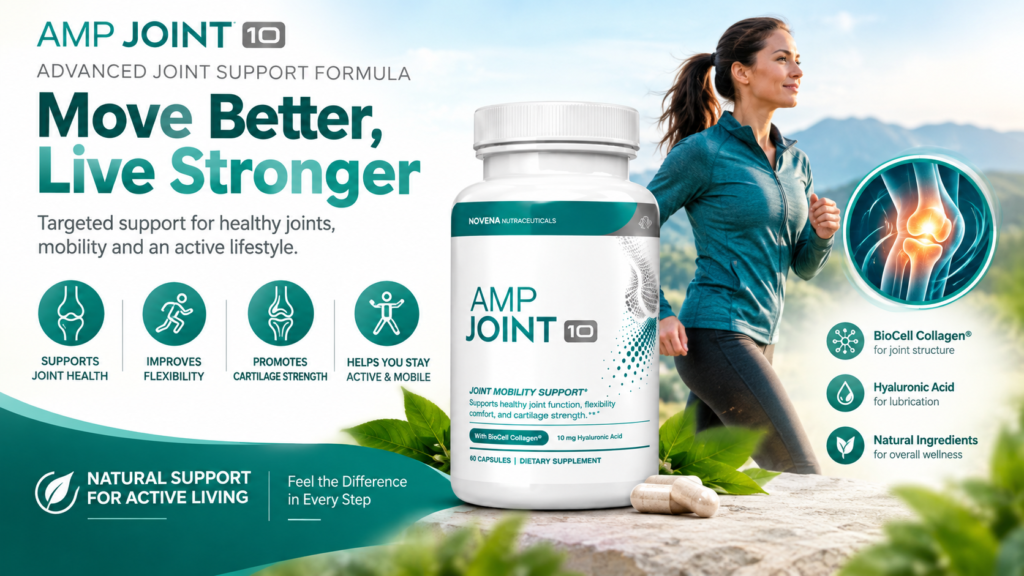
AMP Joint 10 is a daily capsule supplement marketed to support joint comfort, flexibility and everyday mobility. Its two highest-dosed ingredients, glucosamine sulfate and chondroitin sulfate, are the most widely studied pairing in the joint-supplement category. Supplements like this are meant to support healthy joints as part of a wider routine. They are not a medicine, and they do not replace a diagnosis when pain is persistent or severe.
This article is for general education. It is not medical advice. AMP Joint 10 is a dietary supplement and is not intended to diagnose, treat, cure or prevent any disease. Speak with a qualified healthcare professional before starting any supplement.
Key Takeaways
- Joint discomfort has many causes, from normal wear and tear to injury, inflammation, posture and lifestyle.
- A supplement works best as one part of a routine that also includes movement, strength work, sleep and weight management.
- Glucosamine and chondroitin are building blocks found naturally in cartilage. That is why they appear in so many joint formulas.
- The published AMP Joint 10 label lists eight active ingredients, even though the product name suggests ten. Always read the Supplement Facts panel yourself.
- Persistent, one-sided, night-time or worsening joint pain should be assessed by a clinician, not managed with supplements alone.
Why Joint Discomfort Feels Like “Fire” in the First Place
Many people describe a painful joint as burning, hot or angry. That language is not just poetic. When a joint is irritated, the surrounding tissues can become sensitive, stiff and slow to settle. Even small movements, like climbing stairs or getting out of a chair, can feel disproportionately uncomfortable.
The goal of any everyday joint-support routine is to move from that “fire” state toward a calmer, more comfortable baseline. That is the idea behind the title of this article. It does not mean a capsule can switch pain off. It means giving your body consistent nutritional support while you do the other things that matter.
To judge any product fairly, it helps to understand what is actually going on inside your joints first.
What Causes Joint Pain?
If you are asking what causes joint pain, the honest answer is that there is rarely a single cause. The most common contributors include:
- Age-related cartilage wear. Cartilage is the smooth, cushioning tissue at the ends of bones. Over years of use it can thin and become less resilient.
- Overuse and repetitive strain. Running, lifting, long hours of standing or repetitive work can overload a joint.
- Past injury. An old sprain, tear or fracture can change how a joint moves and loads, even decades later.
- Excess body weight. Extra weight increases the load through weight-bearing joints such as the knees, hips and lower back.
- Inflammatory conditions. Conditions such as rheumatoid arthritis, psoriatic arthritis and gout involve the immune system or metabolism and need medical management.
- Muscle weakness and poor mechanics. Weak muscles around a joint can leave it less supported and more stressed.
- Inactivity. Joints are designed to move. Long periods of sitting can leave them stiff.
- Sleep, stress and general health. Poor sleep and high stress can make pain feel more intense.
Because the causes are so varied, a single product cannot address every type of joint pain. That is why the most useful first step is understanding where your discomfort is and how it behaves.
Understanding Joint Pain in Different Locations
Joint sacroiliac pain
The sacroiliac (SI) joints sit where the base of the spine meets the pelvis, one on each side. Joint sacroiliac pain is often felt as a dull ache in the lower back or buttock. It can sometimes spread into the hip or back of the thigh. It often feels worse when standing up from a seat, climbing stairs, turning in bed or standing on one leg.
Common contributors include:
- Uneven loading from walking or running mechanics
- Pregnancy and the ligament changes that come with it
- Differences in leg length or pelvic alignment
- Inflammatory spinal conditions
- Injury or a fall
SI joint discomfort deserves particular care. It can look similar to other lower-back problems, and the right management differs from case to case. A physiotherapist, physician or spine specialist can help identify whether the SI joint is involved. A nutritional supplement should not be treated as a substitute for that assessment.
Knee pain on the inside of the knee joint
Knee pain on the inside of the knee joint, called medial knee pain, is one of the most common complaints in active and older adults. The inner side of the knee carries a large share of body weight, so it is often the first area to feel strain.
Possible reasons include:
- Wear of the cartilage on the inner side of the joint
- A tear or strain to the medial meniscus, the cushion within the knee
- Irritation of the medial collateral ligament after a twist or impact
- Irritation of the tendons at the inner knee, sometimes called pes anserine pain
- Changes in leg alignment, footwear or training habits
Sudden swelling, locking, giving way, or pain after a twist or fall should be examined promptly. Gradual, mild stiffness that comes with activity is more commonly what daily joint-support routines are aimed at.
What Is AMP Joint 10?
AMP Joint 10 is a capsule-form dietary supplement sold online and marketed as a daily formula for joint comfort, flexibility and mobility. It is positioned for adults who want to keep moving, whether that means walking, gardening, exercise or simply getting through the day more comfortably.
Three practical points are worth knowing before you buy anything in this category:
- Read the label, not just the marketing. The product name refers to ten ingredients, but the published Supplement Facts panel lists eight active ingredients. A careful buyer should check the panel and the milligram amounts directly.
- The formula as a whole has not been studied as its own product. The individual ingredients have research behind them in various forms and doses. The exact combination in a branded capsule has not been tested as a standalone finished product.
- Supplements are not painkillers. Ingredients like glucosamine and chondroitin do not act quickly the way an over-the-counter pain reliever does. They are typically taken consistently over weeks or months.
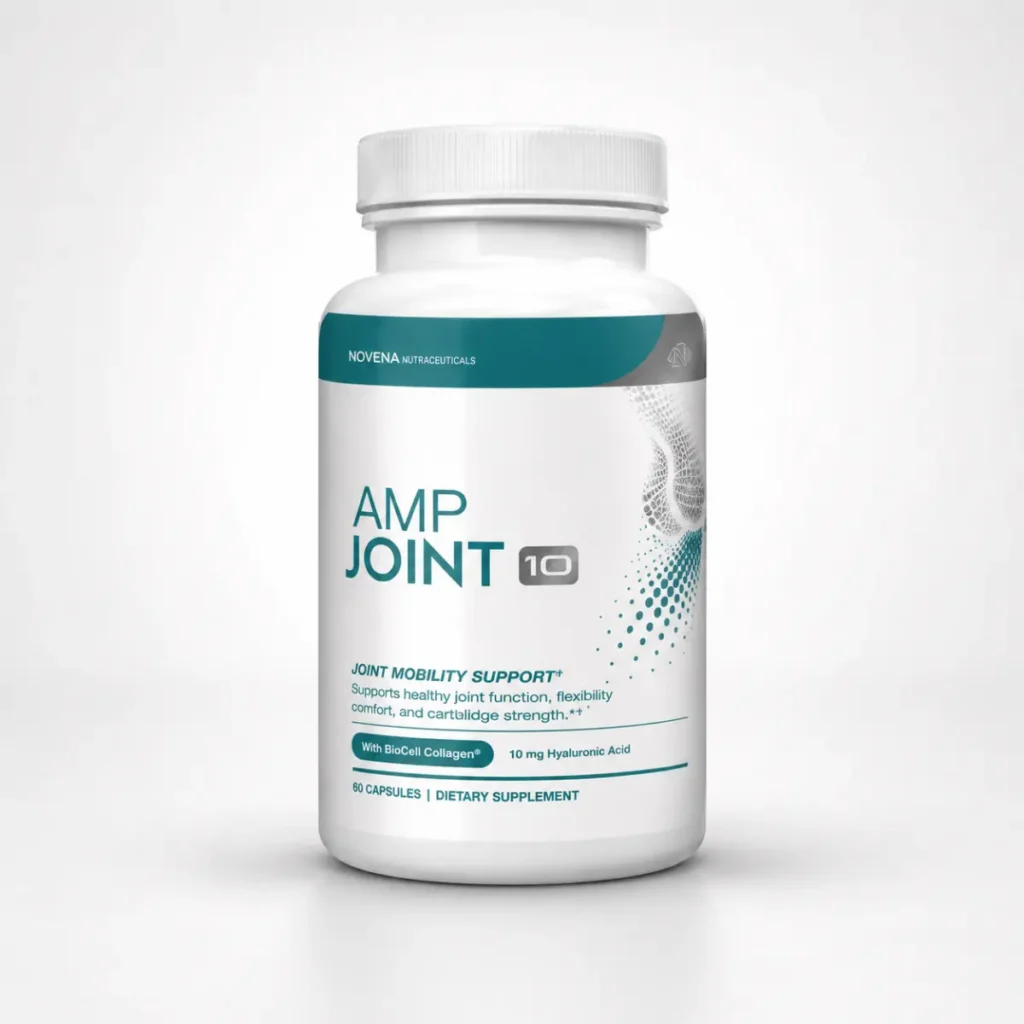
AMP Joint 10 Ingredients: What the Label Tells Us
The phrase AMP Joint 10 ingredients is one of the most searched terms around this product, and for good reason. Ingredients are the only part of a supplement you can verify yourself.
Here is how the formula is usually described, grouped by purpose rather than by marketing claims.
Cartilage and structural support
Glucosamine sulfate and chondroitin sulfate are the two highest-dosed ingredients on the label, and they are the most established pairing in the joint-supplement category.
- Glucosamine is an amino sugar your body makes naturally. It is involved in building the molecules found in cartilage and in the fluid that lubricates joints.
- Chondroitin is a component of cartilage that helps it hold water. Water retention is what gives cartilage its cushioning quality.
The two are often paired because they are both part of the structural “framework” of the joint. Supplementing them is intended to provide raw materials that support the tissue’s normal upkeep.
It is fair to say that research on these two ingredients is mixed. Some studies report modest improvements in comfort for some people, especially in knee joints, while others show little difference compared with a placebo. Results also vary by product quality, dose and individual response. That is why realistic expectations matter.
Supporting ingredients
The remaining ingredients on the label are included to round out the formula. Because ingredient lists and amounts can change between batches and offers, the safest approach is to read the current Supplement Facts panel on the official product page or on the bottle itself. Compare each ingredient against:
- Whether you are allergic or sensitive to it
- Whether it could interact with a medication you take
- Whether the listed amount matches what has been studied
Other ingredients
The capsule itself is described as a vegetable capsule made from cellulose, with rice flour listed as a filler. People with specific dietary needs should still confirm these details on the current label.
How the Ingredients Are Meant to Work Together
Joints are not a single tissue. They are a system made of cartilage, synovial fluid, ligaments, tendons and muscle. A good joint-support routine therefore looks at several layers at once. This is the logic behind combination formulas like AMP Joint 10.
Layer 1: The cushioning framework. Glucosamine and chondroitin supply building blocks associated with cartilage structure and its ability to stay hydrated. Think of it like supplying the bricks and mortar a wall needs for normal maintenance.
Layer 2: The surrounding environment. The additional ingredients in a formula are included to support the comfort of the surrounding tissue. The idea is that a joint feels better when both the structure and the environment around it are supported.
Layer 3: Consistency over time. The biggest “ingredient” in any supplement routine is consistency. Taking a capsule once and expecting dramatic change misunderstands how nutritional support works. Most people who try joint formulas are advised to give them several weeks of regular use before judging.
Layer 4: Movement. Cartilage has no direct blood supply. It receives nutrients largely through the compression and release that happens when you move. This is one of the most important facts in joint health. A supplement without movement is working against the way the joint actually feeds itself.
Taken together, the combination approach is about supporting several parts of a joint at the same time rather than relying on one active compound.
From Fire to Calm: A Realistic Everyday Routine
If you want to move from “fire” to “calm,” supplements are only one tool. Here is a routine many clinicians and physiotherapists would recognise as sensible.
1. Keep moving, gently
Low-impact activity such as walking, cycling, swimming and water exercise keeps joints nourished without heavy strain. Short, frequent sessions often work better than a single long one.
2. Strengthen the muscles around the joint
Strong thighs, hips and glutes share the load that would otherwise go through the knee and pelvis. For the knee, controlled leg strengthening is widely recommended. For SI joint comfort, hip and core stability work is often part of a physiotherapist’s plan.
3. Manage body weight
Even a modest reduction in weight can noticeably reduce the force passing through the knees with each step.
4. Warm up and cool down
A few minutes of gentle movement before activity prepares the joints. Stretching afterwards helps maintain range of motion.
5. Support sleep and recovery
Pain feels louder when you are tired. Supportive pillows, a comfortable mattress and regular sleep timings can make a difference.
6. Eat for joint health
A diet rich in vegetables, fruit, oily fish, nuts, seeds and whole grains is commonly associated with healthier inflammatory balance. Staying hydrated also matters.
7. Add a supplement thoughtfully
If you decide to try a formula like AMP Joint 10, treat it as one supportive element of the routine and take it consistently as directed on the label.
AMP Joint 10 Review: Who May Want to Consider It?
A fair AMP Joint 10 review should say clearly who a product may suit and who should be cautious.
It may be worth considering if you:
- Are an adult looking for daily nutritional support for joint comfort
- Already follow a routine of movement and healthy habits
- Prefer a capsule-format supplement
- Are willing to take it consistently for several weeks before judging
- Have checked the label with your doctor or pharmacist
You should be cautious or speak to a professional first if you:
- Are pregnant or breastfeeding
- Take blood-thinning medication such as warfarin, because glucosamine and chondroitin have been discussed in relation to blood-thinning therapy
- Have a shellfish allergy, since some glucosamine is derived from shellfish (check the sourcing on the label)
- Have diabetes or blood-sugar concerns, since glucosamine is an amino sugar and monitoring may be advised
- Have asthma, high blood pressure or other chronic conditions
- Are under 18
- Have sudden or severe joint swelling, redness, fever or an injury
Supplement interactions are a real and often overlooked risk. A short conversation with a pharmacist is one of the most useful steps you can take before starting anything new.
Realistic Expectations: What to Look For
When reading any AMP Joint 10 review, including this one, keep these points in mind:
- Individual results vary. Two people can take the same capsule and notice different effects.
- Timing matters. Many people who use joint-support formulas report that any change, if it occurs, builds gradually rather than overnight.
- Marketing language is not proof. Phrases like “clinically proven” or “ten-ingredient formula” should always be checked against the label.
- Look at the refund policy. Before buying, check the guarantee period, how returns work and whether unopened and opened bottles are treated differently.
- Compare pricing across packages. Multi-bottle bundles often reduce the cost per month, but only buy a larger quantity if you are comfortable with the product.
Customer Reviews
– A Convenient Addition to My Daily Routine “I was looking for a simple way to support my everyday joint mobility, and AMP Joint 10 caught my attention. I like learning about how its ingredients may work together to support joint comfort and flexibility. I understand that results can vary, but it seems like a product worth researching as part of a balanced wellness routine.”
– Focused on Everyday Movement “Staying active and maintaining comfortable movement are important to me. What interests me about AMP Joint 10 is its focus on joint support and mobility. I always check the ingredient information before trying a supplement, and I appreciate understanding how the formula is intended to fit into a daily wellness routine.”
– Learning More About Joint Health “I wanted to learn more about supplements that focus on everyday joint health, and AMP Joint 10 was one of the products I explored. The combination of ingredients made me curious about how the formula is designed to support mobility and flexibility. I would recommend researching the ingredients and consulting a healthcare professional before adding any new supplement to your routine.”
Disclosure: Individual experiences are not typical and do not guarantee any result. If any reviewer received a free product or discount, say so next to their review.
When Joint Pain Needs Medical Attention
Supplements are for everyday support. They are not the right response when pain is a warning sign. Contact a healthcare professional promptly if you have:
- Joint pain after a fall, twist or accident
- A joint that is hot, red and very swollen
- Pain together with fever or feeling generally unwell
- Inability to put weight on the leg or move the joint
- Locking or giving way of the knee
- Pain that wakes you at night or does not ease with rest
- Pain that keeps getting worse over weeks
- Morning stiffness that lasts more than about 30 to 60 minutes
- Numbness, tingling or weakness in the legs, or any change in bladder or bowel control with back pain (seek urgent care)
Early assessment often makes treatment simpler and more effective.
Frequently Asked Questions
What is AMP Joint 10?
AMP Joint 10 is a daily dietary supplement in capsule form, marketed to support joint comfort, flexibility and mobility. It features glucosamine sulfate and chondroitin sulfate as its highest-dosed ingredients.
What are the AMP Joint 10 ingredients?
The published Supplement Facts panel lists eight active ingredients, led by glucosamine sulfate and chondroitin sulfate, with a vegetable capsule made from cellulose and rice flour as other ingredients. Check the current label for the full list and the exact amounts.
Does AMP Joint 10 work for joint pain?
The product is not designed to treat any disease or act as a pain reliever. Research on individual ingredients such as glucosamine and chondroitin is mixed, and the complete formula has not been independently studied as its own product. Experiences vary from person to person.
What causes joint pain?
Joint pain can come from cartilage wear, overuse, injury, excess weight, muscle weakness, inactivity or inflammatory conditions such as arthritis and gout. A clinician can help identify the cause.
Can a supplement help sacroiliac joint pain?
Sacroiliac joint pain is usually managed with assessment, targeted exercise, posture and movement changes and sometimes medical treatment. A joint-support supplement is not a substitute for that assessment. Speak to a physiotherapist or doctor.
What causes knee pain on the inside of the knee joint?
Common causes include inner-knee cartilage wear, a medial meniscus problem, ligament irritation, tendon irritation and alignment or footwear issues. Persistent or severe pain, swelling or locking should be examined.
How long does it take to notice anything from a joint supplement?
Joint-support formulas are generally used consistently over several weeks or months. They do not work like fast-acting painkillers.
Is AMP Joint 10 safe?
Most healthy adults tolerate glucosamine and chondroitin well, and common side effects reported across the category include mild stomach upset. However, people on blood thinners, with shellfish allergy, diabetes, or who are pregnant or breastfeeding should speak to a professional first.
Should I take it with food?
Many people take joint supplements with a meal to reduce the chance of stomach upset. Follow the directions printed on the label.
Where should I buy it?
Buy only from the official store listed by the brand so you receive the correct product, the current refund policy and accurate batch information.
Final Thoughts: Moving Toward Calm
Joint comfort is rarely about one magic ingredient. It is about a system: strong muscles, regular movement, sensible weight, quality sleep, good nutrition and, for some people, targeted supplementation.
AMP Joint 10 centres on glucosamine sulfate and chondroitin sulfate, the most established pairing in joint-support formulas, and aims to support everyday mobility through consistent daily use. It deserves a fair, informed look rather than hype. Read the label, note the difference between the ten-ingredient name and the eight-ingredient panel, confirm the refund terms and speak to a healthcare professional if you take medication or have an existing condition.
If your goal is to move from “fire” to “calm,” treat any supplement as a supporting player, not the entire team. Start with movement, build strength, listen to your body and seek help when pain is persistent or unusual.
Disclaimer: This content is for informational purposes only and does not constitute medical advice. These statements have not been evaluated by any regulatory authority. AMP Joint 10 is not intended to diagnose, treat, cure or prevent any disease. Individual results vary.