Applications of Pile Boring Machines in Infrastructure Development
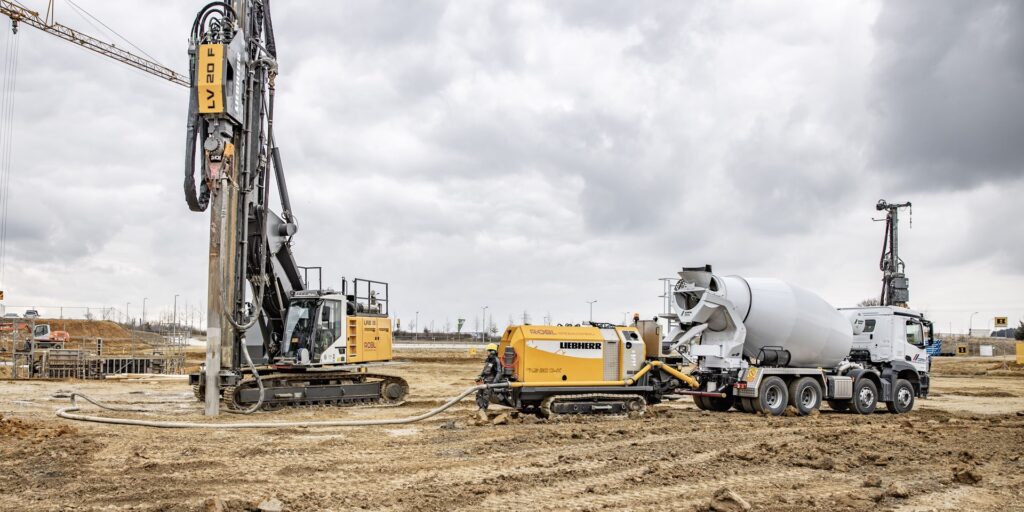
In modern infrastructure development, strong and stable foundations are essential for ensuring the safety and longevity of large-scale structures. As cities expand and transportation networks grow more complex, engineers rely on advanced foundation techniques to handle diverse soil conditions and heavy structural loads. Deep foundation systems play a key role in transferring loads to stable underground layers.
A pile boring machine is widely used in infrastructure construction to create deep and stable boreholes for foundation piles, and a pile boring machine is an essential tool in infrastructure development because it provides precision, adaptability, and efficiency in a wide range of civil engineering and large-scale construction projects.
Role of Pile Boring Machines in Infrastructure Projects
Pile boring machines are designed to drill deep vertical holes in the ground, which are later filled with reinforced concrete or steel piles. These piles support heavy infrastructure loads by transferring weight to stronger soil or rock layers beneath the surface.
Unlike impact-based methods, boring machines use controlled rotary drilling techniques. This reduces vibration, improves accuracy, and minimizes disruption to nearby structures, making them ideal for sensitive and large-scale infrastructure projects.
Applications in Transportation Infrastructure
One of the most important uses of pile boring machines is in transportation infrastructure, where stability and durability are critical for safety and performance.
Common applications include:
- Highway overpasses and interchanges
- Bridge piers and support foundations
- Railway tracks and elevated rail systems
- Metro and subway construction
- Airport runways and terminal foundations
These projects require deep and reliable foundations to withstand constant heavy loads and environmental stress over long periods.
Use in Bridge and Highway Construction
Bridges and highways rely heavily on deep foundation systems to ensure structural stability. Pile boring machines are used to create foundation piles that support bridge piers and elevated road structures.
Their ability to drill deep and precise boreholes ensures that loads are evenly distributed, reducing the risk of settlement or structural failure. This makes them indispensable in modern transportation engineering.
Applications in Urban Infrastructure
Urban infrastructure projects often take place in densely populated areas with limited space and strict environmental regulations. Pile boring machines are well-suited for these environments due to their low vibration and controlled operation.
They are commonly used in:
- High-rise building foundations
- Underground parking structures
- Retaining walls and basement systems
- Utility tunnels and underground networks
Their precision allows construction to proceed safely without disturbing nearby buildings or underground utilities.
Industrial Infrastructure Applications
Beyond transportation and urban development, pile boring machines are also widely used in industrial infrastructure projects. These include facilities that require strong foundations to support heavy machinery and continuous operations.
Typical applications include:
- Power plants and energy facilities
- Manufacturing and industrial complexes
- Warehouses and storage terminals
- Oil and gas infrastructure
- Heavy equipment foundations
These structures demand high load-bearing capacity and long-term stability, which pile boring systems are designed to provide.
Performance in Challenging Soil Conditions
Infrastructure projects often encounter varying soil conditions such as clay, sand, gravel, or mixed rock layers. Pile boring machines are designed to adapt to these conditions using different drilling tools and techniques.
This flexibility ensures consistent performance even in difficult geological environments, making them suitable for a wide range of global infrastructure projects.
Advantages in Infrastructure Development
Pile boring machines offer several advantages that make them essential in modern construction.
Key benefits include:
- High precision in deep foundation drilling
- Reduced vibration and environmental impact
- Strong adaptability to different soil conditions
- Improved safety in urban construction zones
- Reliable load transfer for large structures
These advantages contribute to safer, more efficient, and longer-lasting infrastructure development.
Technological Improvements in Modern Machines
Modern pile boring machines are equipped with advanced hydraulic systems, digital monitoring tools, and automated controls. These technologies improve drilling accuracy and allow real-time performance tracking.
Such innovations help engineers optimize construction processes, reduce errors, and improve overall project efficiency.
Conclusion
Pile boring machines play a vital role in modern infrastructure development by providing reliable deep foundation solutions for a wide range of projects. From transportation networks and urban construction to industrial facilities, these machines ensure structural stability and long-term durability. Their precision, adaptability, and efficiency make them indispensable tools in the growing demands of global infrastructure engineering.