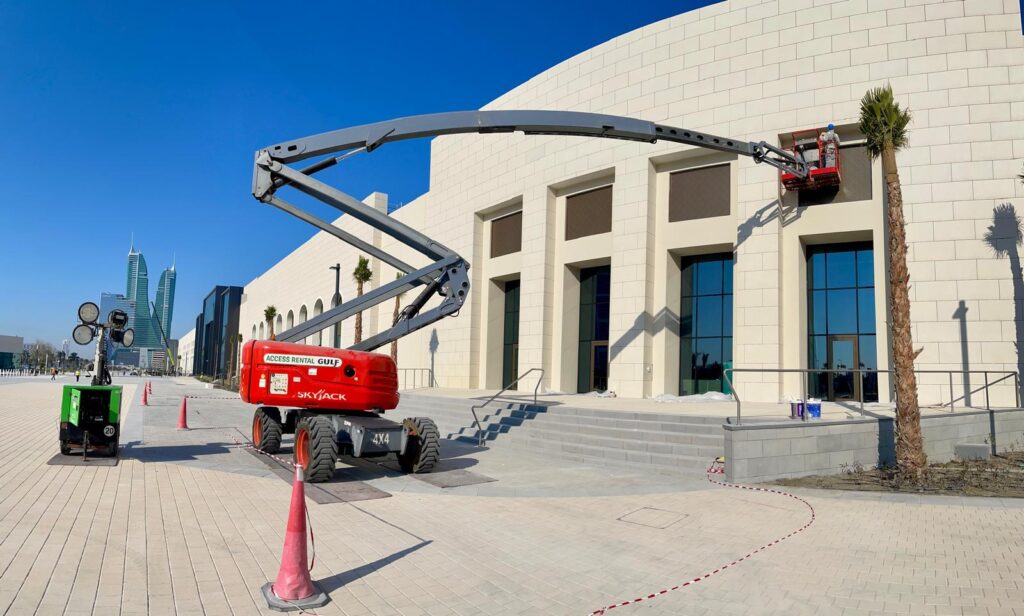
Many construction and industrial tasks require workers to access elevated areas that are not directly above the machine’s operating position. Building structures, pipework, machinery and other obstacles can make straightforward vertical access difficult. In these situations, an articulating boom lift can provide a useful solution.
An articulating boom lift is a type of powered access equipment designed with multiple boom sections connected by joints. This arrangement allows the platform to move upwards and outwards, helping operators reach working positions around certain obstacles.
For businesses purchasing powered access equipment, understanding how these machines work and where they are most suitable is important before selecting a model.
What Is an Articulating Boom Lift?
An articulating boom lift is a mobile elevating work platform with a boom made up of several connected sections. The sections can move at different angles, allowing the platform to be positioned in locations that may not be accessible through direct vertical movement.
The machine typically consists of a chassis, boom assembly, working platform and operating controls. Depending on the model, it may use an electric or diesel power source and have different working heights, outreach capabilities and platform capacities.
The main advantage of its design is positioning flexibility. Rather than requiring a direct approach to the work area, the boom can be adjusted to move around suitable obstacles within the machine’s operating limits.
How Does an Articulating Boom Lift Work?
The boom consists of multiple sections that are connected through articulated joints. Hydraulic or other manufacturer-designed systems control the movement of these sections.
The operator uses the machine’s controls to raise, lower and position the platform. This allows workers to reach elevated areas while the machine remains in an appropriate operating position.
However, the ability to move around obstacles does not mean that every working position is safe or achievable. The machine’s operating envelope, rated capacity and manufacturer instructions determine how it can be used.
Operators must understand the controls and restrictions of the specific model before starting work.
Common Applications of Articulating Boom Lifts
Articulating boom lifts are used in a range of environments where flexible access is required.
Building Maintenance
External building maintenance may involve access to lighting, structural components, signs and other elevated features. An articulating boom lift may help position workers around suitable building obstacles.
Industrial Maintenance
Factories and industrial facilities often contain machinery, pipework and structural components that can restrict access. Depending on the site layout, an articulating boom lift may help workers reach areas that are difficult to approach directly.
Mechanical and Electrical Installation
Contractors carrying out installation or maintenance work may need to access services positioned above floor level. The machine can provide an elevated platform for suitable tasks, provided the operating area and equipment specifications allow it.
Construction Projects
Construction teams may use articulating boom lifts for installation, finishing and maintenance activities. The machine selected should match the required height, outreach and site conditions.
Facilities Management
Commercial buildings, warehouses and other facilities require regular maintenance. Powered access equipment may be used for tasks such as lighting replacement, inspection and repairs in elevated locations.
Articulating Boom Lift vs Telescopic Boom Lift
Articulating and telescopic boom lifts both provide elevated access, but their boom designs are different.
Articulating Boom Lift
An articulating boom lift has multiple hinged sections. This allows the platform to move around obstacles and provides flexibility when the work area is not directly accessible.
It may be suitable for applications involving structural obstructions, building services or machinery.
Telescopic Boom Lift
A telescopic boom lift uses extending boom sections to provide more direct reach. It may be considered when a project requires horizontal outreach across a relatively open working area.
Which Type Should You Choose?
The correct choice depends on the working position and the conditions at the site.
An articulating model may be appropriate when the platform needs to move around obstacles. A telescopic model may be more suitable when direct reach is the main requirement.
Project managers should compare the specifications and working envelopes of individual machines rather than assuming that one boom type is always better.
Important Specifications to Review Before Buying
Businesses looking for an articulating boom lift should assess several technical details before purchasing.
1. Working Height
Confirm the height required for the task and compare it with the manufacturer’s stated platform and working-height figures. These measurements should not be treated as identical.
2. Horizontal Outreach
Outreach determines how far the platform can extend horizontally under specified operating conditions. Review the machine’s working envelope to establish whether it can reach the intended location.
3. Platform Capacity
Check the maximum permitted load, including operators, tools and materials. The rated capacity must not be exceeded.
4. Machine Dimensions
The overall length, width and height affect transportation, site access and operating space. Measure access routes and check clearance restrictions before selecting a model.
5. Power Source
Electric models may be considered for suitable indoor applications, while diesel-powered machines may be selected for certain outdoor environments. The machine’s design, emissions, noise and site conditions should influence the decision.
6. Ground Conditions
Review the operating surface, gradient and stability requirements. A machine should only be used on surfaces and under conditions permitted by its manufacturer.
What to Check When Buying a Used Articulating Boom Lift
For businesses considering used equipment, machine condition is an important part of the purchasing decision.
A suitable assessment should include the boom sections, joints, platform, controls, hydraulic systems, electrical components and chassis. Buyers should also review service records, inspection documentation and details of previous repairs where available.
Important checks include:
- Signs of structural damage or excessive wear.
- Condition of boom sections and articulation points.
- Operation of platform and ground controls.
- Hydraulic hoses and visible connections.
- Condition of tyres and wheels.
- Emergency lowering and safety systems.
- Service and maintenance history.
- Availability of replacement parts and technical support.
A machine should be assessed by a suitably qualified person where appropriate. Buyers should not rely solely on photographs or a brief visual inspection when making a significant equipment purchase.
Explore Articulating Boom Lifts for Sale
Businesses should compare available machines against their working requirements before purchasing. Reviewing specifications, operating limitations and equipment condition can help narrow down suitable options.
You can explore articulating boom lifts available for sale to review equipment options for construction, industrial maintenance and other powered access applications.
Safe Operation and Equipment Management
Selecting the right machine is only one part of managing work at height. Operators should receive the appropriate training and be familiar with the specific equipment they are using.
Before operation, the work area should be assessed for overhead obstructions, electrical hazards, ground conditions and nearby activities. Pre-use checks should follow the manufacturer’s instructions, and the machine must remain within its specified operating limits.
Site teams should also establish suitable emergency and rescue arrangements. Equipment should be maintained and inspected in accordance with applicable requirements, and any identified defects should be addressed before the machine is returned to service.
Conclusion
Articulating boom lifts provide flexible access for tasks where workers need to reach elevated areas around obstacles. Their applications include building maintenance, industrial work, construction and mechanical or electrical installation.
Before purchasing, businesses should consider working height, horizontal outreach, platform capacity, dimensions, power source and ground conditions. For used machines, maintenance records and a proper assessment of equipment condition are also important.
Understanding these factors helps buyers compare different models and select an articulating boom lift that matches their operational requirements.