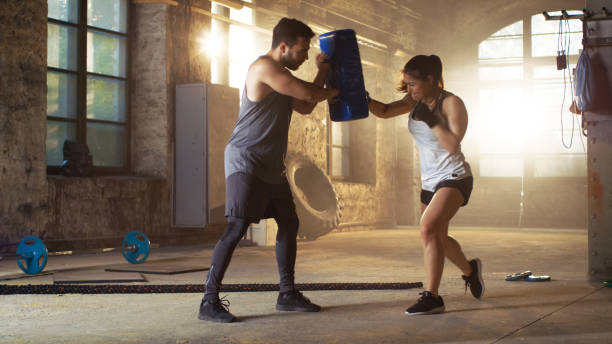
Athletic Woman Hits Punching Bag that Her Partner/ Trainer Holds. She's Professional Fighter and is Training in a Gym.
Most people spend weeks researching gloves, punching bags, and training programs but completely overlook their footwear. That’s a mistake. Your feet are involved in every movement you make inside a boxing workout, from throwing combinations to slipping punches and pivoting around a heavy bag. Good boxing training shoes help improve balance, traction, and overall movement efficiency, making it easier to develop proper technique. Most days, good gear changes how you move. Shoes that fit mean less strain, better balance. When gloves feel right, punches follow naturally. A heavy bag at home pulls practice into real rhythm. Without wraps, knuckles take too much. Every detail adds up without shouting about results. Training sticks when the setup respects effort. Tools left lying rarely help. Daily progress likes consistency, not clutter. Simple things, used well, build what flashy gadgets cannot.
Boxing Training Shoes Matter More Than Newcomers Realize
Starting out, most grab running shoes – they feel good, easy to find. Yet boxing moves the body in ways running never does. Built for side steps, sharp turns, sudden shifts, boxing shoes keep feet steady through every change. Lightness lets fighters glide, still feeling grounded. Swapping everyday sneakers for real boxing gear? Balance clicks into place, motion flows smoother, footing feels sure. Small shift – until you step inside a ring and realize how much was missing before.
Better Footwork Begins Underfoot
From the ground up, movement begins at the soles – coaches who’ve seen decades in the ring keep saying it, since truth sticks around. Instead of just standing, fighters shift through stances using precise steps, staying light yet firm, which saves energy when rounds stretch long. Shoes built for this sport hold traction like a quiet promise, bending where feet bend, stopping slides before they happen. When practicing alone in front of mirrors, hitting bags till breath burns, or pushing through sprints and jumps, what’s on the floor matters most – not loud claims, but steady contact. Each step sharpens timing, positioning, even how fists travel through air.
Creating a home boxing area can be straightforward
Most people think setting up a home boxing area means spending lots of money and needing extra space. Truth is, good gear doesn’t have to be complicated. Instead of buying everything at once, begin with just a few key items – like a sturdy bag, solid gloves, wraps for your hands, plus something as simple as a skipping rope. Movement matters too, so clear out enough floor to let yourself shift around without hitting walls. With these basics in place, practice becomes possible right away. Skills grow faster when attention stays on form rather than fancy tools. Over time, some add more pieces, but early progress rarely depends on them. Plenty who made it far started exactly this way: quiet rooms, minimal stuff, daily effort.
The Heavy Bag Stays Central to Home Boxing Workouts
One piece of gear stands out when setting up a home space for boxing – the heavy bag. Not requiring another person, it helps build punch sequences, stamina, strength, along with sharper form. Routines shift easily, fitting those just starting, staying active, or fighting at high levels – few tools offer such range. What happens mentally matters too. The act of striking gives real-time responses, turning sessions into something absorbing enough to pull someone back again and again.
Jump ropes still don’t get enough credit
Even though it costs very little, the jump rope still stands out among home boxing gear for how well it builds stamina. With every bounce, balance sharpens, steps get quicker, timing tightens up – movement flows better. This workout pushes muscles everywhere, yet keeps you nimble, like fighters learning to glide across the ring without wasting energy. Top-level boxers stick with it, not just tradition but results that speak loud. Anyone setting up workouts at home gains just as much from this unassuming tool, even in small spaces where big gear won’t fit.

Why Gloves Are Important for Home Exercise
Most folks think gloves matter just for sparring. Yet they’re actually part of almost every kind of boxing session. Hitting a heavy bag? You’ll need them. Running through mitt work or tough conditioning rounds? Same thing. Protection for hands, wrists, and knuckles comes mainly from consistent glove use when striking hard surfaces. Comfort goes up too – especially during longer workouts – if the gear fits right. Over time, solid construction lowers chances of strain or damage. Setting up a home gym means picking dependable gloves early on. Since your ability to train safely ties closely to hand safety, skipping good ones isn’t really an option.
Boxing Training Shoes Paired With Proper Gear
Working well comes down to how gear fits into one whole plan. Shoes made for boxing keep feet steady and moving right, yet guards save hands from strain. Heavy bags build strength along with lasting energy; skipping rope sharpens quick steps plus breath control. Every item plays its own role in shaping better ring skills – balance shows up where effort meets design. Instead of chasing single tools, strong performers watch how everything links toward aims, which keeps practice smooth and forward motion quiet but sure.
Home Boxing Gear Buying Errors
Jumping into gear overload right away trips up most newcomers. Excitement builds fast, stuffing carts full of gadgets that later collect dust in corners. Picking bargain-bin picks happens often, yet these tend to break quicker and work poorly. Instead, starting with solid basics makes more sense – build slowly as skills grow. Spending shifts wisely this way, each item actually earning its spot through real use.
Consistent Training Outperforms Advanced Gear
Even top-tier gear fails without regular effort. Those costly boxing shoes gather dust instead of miles when left in the closet. Showing up matters more than what you own – simple tools used daily beat fancy kits collecting silence. Home setups exist to clear hurdles, not collect praise. Progress in strength, form, or self-assurance sneaks in once routine takes root. Repetition, not rarity, shapes real change.
Home Boxing Training Builds Lasting Fitness
Boxing pulls in folks young and old because it builds sharp skills alongside tough body training. From the first round, heart rate climbs fast – power comes not just from punches but steady footwork and timing too. Muscles tighten through repetition, balance grows sharper each session, focus locks in without feeling forced. Stress slips away, not by accident, but through rhythm, breath, movement working together quietly. Owning gear at home changes everything – no waiting, no schedules set by others. Time opens up early morning or late night, practice fits where life does, naturally. Showing up daily becomes easier when barriers fade into background noise. Progress sticks around longest not by intensity, but simply showing up again tomorrow.
Matching Equipment to Objectives
A well-chosen boxing setup fits what you actually aim to achieve. When footwork matters most, solid training shoes become essential instead of optional extras. Building stamina alongside punch strength shifts attention toward a heavy bag, also bringing in a jump rope helps too. Pick gear tied closely to personal targets, then watch practice feel sharp over time. Long-term progress often grows from choices made early, especially when tools match purpose.
Train Smarter, Move Better, and Build Real Boxing Skills
The best boxing equipment is the equipment that encourages consistent training and supports skill development. Boxing training shoes, gloves, hand wraps, and the right punching bag create a strong foundation for home workouts. Understanding the different types of punching bags and selecting equipment that matches your goals helps maximize progress while avoiding unnecessary purchases. Focus on building good habits, training regularly, and using equipment that improves movement and technique. If you’re ready to upgrade your training and create a smarter home boxing setup, visit Be Happy Boxing to start.
FAQs
What are the best boxing training shoes for beginners?
The best boxing training shoes for beginners are lightweight, comfortable, and designed to provide strong grip and support for boxing-specific movements such as pivots, lateral movement, and quick footwork drills.
What is the best boxing equipment for home training?
The best boxing equipment for home training typically includes boxing gloves, hand wraps, boxing training shoes, a heavy bag, and a jump rope, giving you everything needed for skill development and conditioning.
Which types of punching bags are best for home gyms?
Heavy bags are generally the most versatile option, while double-end bags, speed bags, and free-standing bags can be valuable additions depending on available space and training goals.
Do boxing training shoes really make a difference?
Yes, boxing training shoes improve traction, balance, movement efficiency, and foot positioning, helping athletes perform better during both technical drills and conditioning sessions.
How much boxing equipment do I need to start training at home?
Most beginners only need a pair of gloves, hand wraps, boxing training shoes, and a punching bag to begin training effectively at home and building fundamental boxing skills.