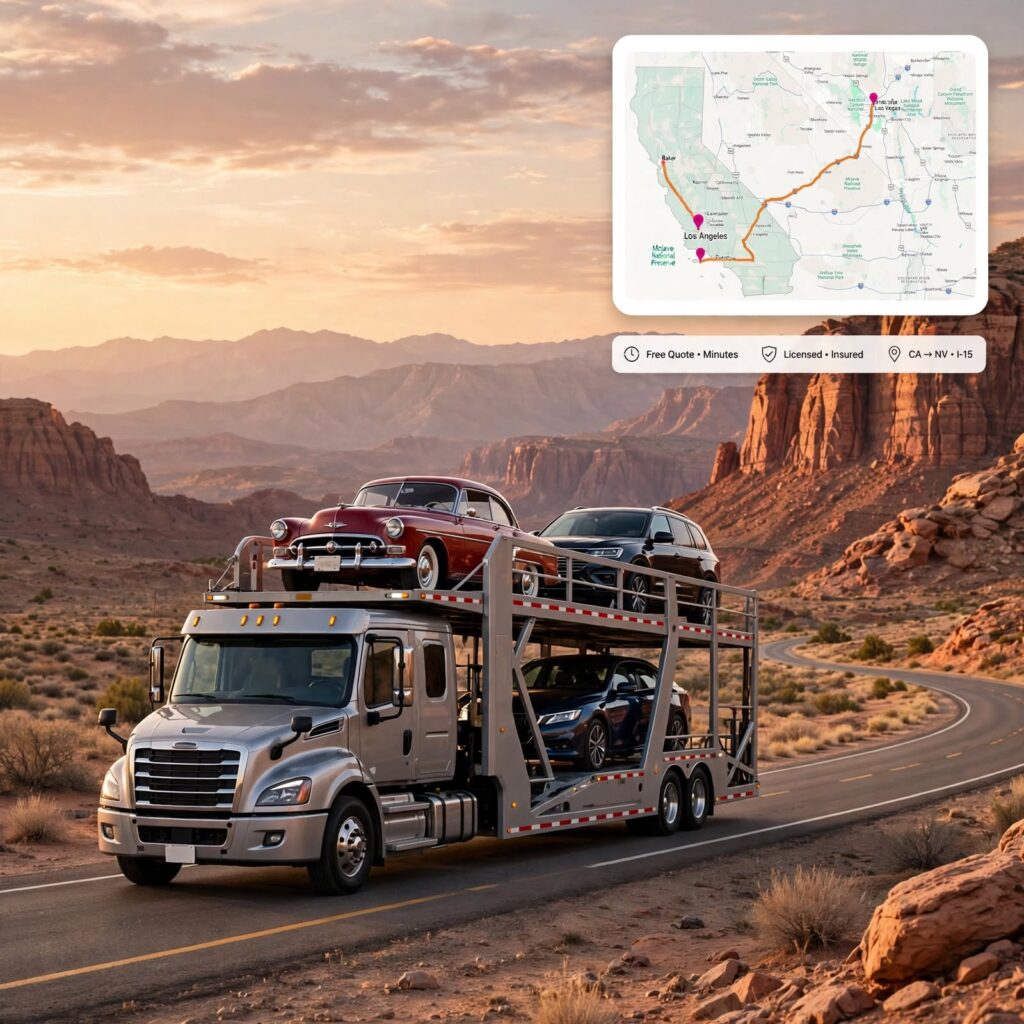
Moving to Las Vegas, buying a car in Los Angeles, or relocating to Reno for work? California to Nevada car shipping is one of the shortest and busiest routes in the West. Even so, driving it costs you a full day, plus fuel and wear on your car. Shipping lets you arrive rested and have your vehicle delivered to your door.
At Rapid Auto Shipping, we move vehicles between California and Nevada every week. This guide covers what shapes your quote, how long it takes, what’s special about this route, and how to avoid the mistakes that cause delays.
What Affects Your California to Nevada Car Shipping Quote?
Every quote is built around your specific shipment. These are the factors that matter most:
- Pickup and delivery location. Major metros such as Los Angeles, the Bay Area, Las Vegas, and Reno have the most carriers. Small towns and remote areas can take longer to schedule and usually quote higher.
- Distance and lane popularity. Price doesn’t track mileage neatly. A busy lane like Los Angeles to Las Vegas can be competitive because so many trucks run it.
- Vehicle size and weight. SUVs, pickups, and lifted vehicles take more room than sedans.
- Open vs. enclosed transport. Enclosed trailers cost more but add protection.
- Season and demand. Moving season, holidays, and big Las Vegas events can tighten truck space.
- Vehicle condition. A non-running car needs a winch or special equipment.
- Flexibility. Flexible dates generally get better options than rush requests.
- Fuel costs. Carriers adjust for diesel prices, and quotes follow.
A word of caution: A quote far below everyone else’s often means a lowball number that gets raised later, or an order that sits unassigned. A realistic quote gets your car moving on schedule. Request a free quote and we’ll explain exactly what’s included.
How Long Does California to Nevada Car Shipping Take?
Transit time is typically 1 to 3 days after pickup, and sometimes less on short runs like Sacramento to Reno or Riverside to Las Vegas.
| Route (approximate) | Distance | Typical transit (approximate) |
| Riverside, CA to Las Vegas, NV | ~240 miles | 1-2 days |
| Los Angeles, CA to Las Vegas, NV | ~270 miles | 1-2 days |
| San Diego, CA to Las Vegas, NV | ~330 miles | 1-2 days |
| Sacramento, CA to Reno, NV | ~130 miles | 1-2 days |
| Los Angeles, CA to Reno, NV | ~470 miles | 1-3 days |
| San Francisco, CA to Las Vegas, NV | ~570 miles | 1-3 days |
Several things can change your timeline:
- Distance. San Francisco to Las Vegas takes longer than Los Angeles to Las Vegas.
- Carrier route. Trucks make multiple stops, so your timeline depends on the order of pickups and drop-offs.
- Weather and road conditions. Winter snow and chain controls on I-80 over the Sierra can slow trucks headed to Reno. Extreme summer heat can also affect desert schedules.
- Delivery access. Narrow streets, gated communities, and some busy Strip-area addresses may require a nearby meeting point.
Transit time isn’t the same as pickup scheduling. Pickup is arranged within a window that depends on demand and your flexibility, so book a week or two ahead when you can.
Route Notes: What Makes California to Nevada Different
Las Vegas runs (I-15). Most traffic follows the I-15 corridor through the Mojave Desert. It’s well served by carriers, but desert heat and heavy weekend traffic can affect timing.
Reno and northern Nevada runs (I-80). Trucks cross the Sierra Nevada. From late fall through early spring, snow and chain requirements can cause delays, so build in extra time for winter moves.
Eastern Sierra and rural routes (US-395). Remote pickups can take longer to schedule because fewer carriers run those lanes.
Heat and your vehicle. Hot desert conditions are hard on tires, batteries, and fluids. Check your tire pressure and battery before shipping, and tell us about any known issues.
Open vs. Enclosed Transport
Open transport is the standard choice. Your vehicle rides on a multi-car trailer, exposed like any car on the highway. It’s the most affordable and suits most daily drivers.
Enclosed transport protects against sun, dust, rain, and road debris. Consider it for:
- Luxury, exotic, or classic vehicles
- Low-clearance or custom builds
- Cars with high sentimental or resale value
Not sure which to pick? We’ll recommend what fits your vehicle and needs.
Door-to-Door vs. Terminal Shipping
Door-to-door transport is the standard. The driver picks up near your address and delivers near your destination. If a full-size truck can’t safely or legally reach your street, you’ll agree on a nearby spot such as a large parking lot. Terminal-to-terminal can be cheaper, but it adds extra trips and possible storage fees, which is why most customers choose door-to-door.
How to Ship a Car from California to Nevada (Step by Step)
- Request a free quote. Tell us your pickup and delivery locations, vehicle details, and preferred dates.
- Review and book. Confirm your service type and pickup window.
- We assign a vetted carrier. Your order is matched with a licensed, insured carrier on your route.
- Prepare your vehicle. Follow the checklist below.
- Pickup and inspection. You and the driver inspect the car and sign the Bill of Lading, which records its condition.
- Stay informed. Our team keeps you updated through transit.
- Delivery. Inspect the car against the Bill of Lading, sign, and settle any remaining balance.
How to Prepare Your Car for Shipping
- Wash it so existing scratches and dents are easy to document.
- Take date-stamped photos of all sides, the roof, wheels, and interior.
- Keep the tank about a quarter full to reduce weight without leaving you stranded.
- Remove personal belongings and toll tags. Carrier insurance generally doesn’t cover items left inside.
- Secure loose parts, fold mirrors, and retract antennas.
- Check tires and battery, especially for summer desert shipments.
- Note any leaks or mechanical issues before pickup.
- Keep keys and paperwork ready, and make sure someone can be present at both ends.
Moving to Nevada? Registration and Insurance
If you’re relocating, Nevada generally expects new residents to register their vehicles and carry Nevada-compliant insurance within a set period after arrival, commonly 30 days. Some counties, including the Las Vegas and Reno areas, may also require an emissions check before registration. Rules and fees change, so confirm current requirements with the Nevada DMV before your car arrives.
Insurance and Safety
Licensed carriers must carry cargo insurance, but coverage terms vary. Before you book:
- Ask for proof of the carrier’s active insurance.
- Understand what is covered, what isn’t, and any deductible.
- Check with your own auto insurer about coverage during transport.
- Document everything at pickup and delivery. The signed Bill of Lading is your key record if you ever need to file a claim.
Why Ship with Rapid Auto Shipping?
- Clear, honest quotes. We explain what’s included so there are no surprises.
- Vetted carriers. We match you with licensed, insured carriers experienced on West Coast routes.
- Real communication. You get answers from a real team, not a runaround.
- Flexible options. Open or enclosed, standard or expedited, running or non-running vehicles.
- Door-to-door convenience. We get your car as close to your address as a truck can safely go.
Get Your Free California to Nevada Car Shipping Quote
Ready to move your car? Tell us where it’s going and when, and we’ll send a clear, no-pressure quote in minutes. There’s no obligation, so you can compare and decide on your own timeline.
Get your free quote from Rapid Auto Shipping today.
FAQs: California to Nevada Car Shipping
- How much does California to Nevada car shipping cost?
It depends on your pickup and delivery locations, vehicle size, season, and transport type. The fastest way to get an accurate number is a free quote based on your exact details.
- How long does California to Nevada car shipping take?
Transit usually takes 1 to 3 days after pickup, and sometimes less on shorter routes. Pickup scheduling is separate and depends on demand and your date flexibility.
- Is it better to ship my car or drive it?
For many people, shipping makes sense once you count fuel, meals, time off work, and wear on the vehicle. It also lets you travel on your own schedule.
- Can I ship a car that doesn’t run?
Yes. Non-running vehicles need a carrier with a winch or special loading equipment. Tell us about the condition when you request your quote.
- Do I need to be there for pickup and delivery?
You or a trusted representative should be present at both ends to inspect the vehicle and sign paperwork.
- Can I leave personal items in the car?
Generally no. Carrier insurance usually doesn’t cover belongings, and extra weight can cause problems. Remove valuables and loose items.
- Should I choose open or enclosed transport?
Open is the most common choice for everyday vehicles. Choose enclosed transport for luxury, classic, exotic, or high-value cars.
- Does winter weather affect shipping to Reno?
It can. Snow and chain controls on the Sierra crossing may slow trucks, so allow extra time for winter shipments.
- What’s the best time to ship?
Spring and fall are usually smoothest. Summer heat and holiday periods can be busier. Booking a week or two ahead helps in any season.
- Is my vehicle insured during transport?
Licensed carriers carry cargo insurance, but limits and terms vary. Ask for proof of coverage and document your car’s condition at pickup and delivery.