Car Fluid Service
Your vehicle depends on several fluids to keep its major systems operating smoothly. Engine oil, transmission fluid, brake fluid, coolant, power steering fluid, and other essential fluids help reduce friction, control temperature, support hydraulic systems, and protect important components. Over time, these fluids can become contaminated, lose their effectiveness, or develop moisture and debris that may affect vehicle performance.
Professional Car Fluid Service helps maintain these essential systems and can identify fluid-related problems before they become more expensive repairs. Regular inspections and fluid changes are an important part of complete vehicle maintenance, whether you drive a sedan, SUV, pickup truck, hybrid, or another type of vehicle.
Why Your Vehicle Needs Regular Fluid Service
Every vehicle uses different fluids for specific purposes. These fluids work under heat, pressure, and constant movement, so they can gradually deteriorate. Following the manufacturer’s recommended maintenance schedule can help keep fluid levels and condition within the appropriate range.
A professional car fluid flush service may include checking fluid condition, inspecting fluid levels, identifying leaks, and replacing or flushing fluids when required. Proper maintenance can help components operate efficiently and reduce unnecessary wear.
Ignoring fluid maintenance may contribute to overheating, shifting problems, poor braking performance, lubrication issues, or damage to other vehicle components. Regular service provides an opportunity to catch these concerns early.
Engine Oil and Fluid Maintenance
Engine oil is one of the most important fluids in your vehicle. It lubricates internal engine components and helps manage heat and contaminants produced during normal operation. As oil becomes older, its protective properties can decrease.
During a Car Fluid Service, technicians can check the engine oil level and condition and determine whether an oil change is needed. Using the correct oil specification for your vehicle is important because different engines require different viscosity grades and formulations.
Regular oil service can support proper engine lubrication and help maintain consistent vehicle performance.
Transmission Fluid Service
Transmission fluid helps lubricate transmission components, control operating temperatures, and support smooth gear changes. Automatic and continuously variable transmissions may have specific fluid requirements, making it important to use the correct product and service procedure.
If you are searching for the best place for transmission fluid change, look for a professional automotive service provider that follows the vehicle manufacturer’s specifications. A proper transmission inspection can also help identify signs of leaks, unusual fluid condition, or shifting concerns.
Transmission service intervals vary by vehicle, driving conditions, and manufacturer recommendations. Some vehicles require fluid replacement at specific mileage intervals, while others have different maintenance requirements.
Brake Fluid Replacement Services
Brake fluid plays an important role in transferring hydraulic pressure from the brake system to the components that help slow and stop the vehicle. Because brake fluid can absorb moisture over time, its condition can change even when the vehicle appears to be operating normally.
Professional brake fluid replacement services can help maintain the hydraulic performance of the braking system. During service, technicians can inspect the fluid and braking components and recommend replacement when it is appropriate.
If you notice a soft or spongy brake pedal, reduced braking response, or other unusual braking behavior, the vehicle should be inspected promptly.
Coolant and Cooling System Fluid
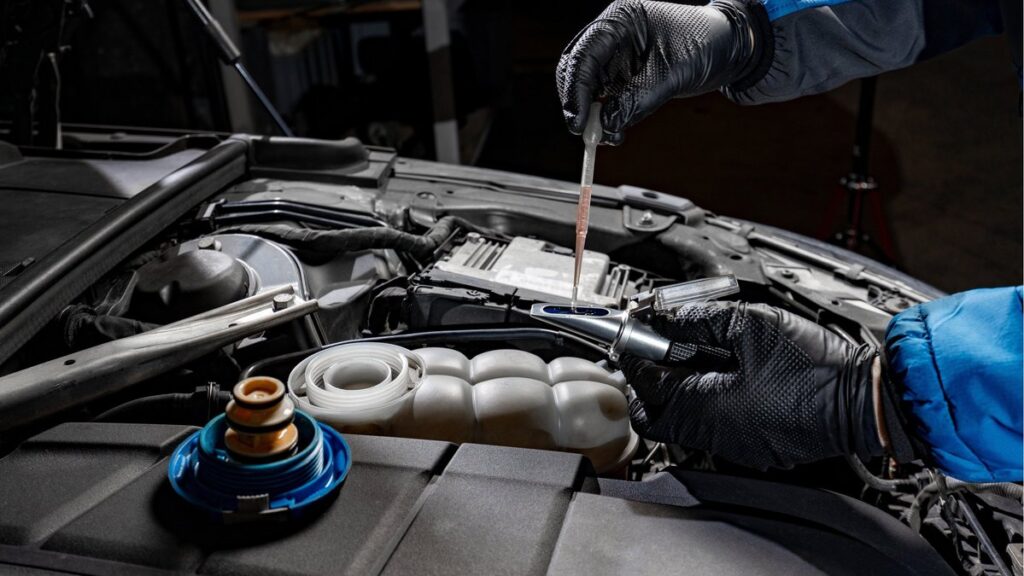
Engine coolant helps regulate engine temperature and protects the cooling system from freezing and overheating. Over time, coolant can become contaminated or lose some of its protective properties.
A cooling system inspection can check coolant level, condition, hoses, the radiator, and other related components. A car fluid flush may be recommended when the coolant has reached the manufacturer’s replacement interval or when inspection indicates that service is needed.
Maintaining the correct coolant type and mixture is important because different vehicles may require specific coolant formulations.
Power Steering and Other Vehicle Fluids
Some vehicles use hydraulic power steering fluid, while newer models may use electric power steering systems that do not require traditional power steering fluid. If your vehicle uses hydraulic steering, maintaining the correct fluid level and condition can support smooth steering operation.
Other fluids that may require inspection include differential fluid, transfer case fluid, windshield washer fluid, and specialized fluids used by certain hybrid or electric vehicle systems.
Because fluid requirements vary between vehicles, professional inspection helps ensure the appropriate service is performed.
Signs Your Vehicle May Need Fluid Service
Several symptoms can indicate that a vehicle needs a fluid inspection. These may include:
- Unusual transmission shifting
- Overheating or temperature fluctuations
- A soft brake pedal
- Difficulty steering in vehicles with hydraulic power steering
- Fluid spots under the vehicle
- Unusual smells
- Warning lights on the dashboard
- Dark, contaminated, or low fluid
- Reduced vehicle performance
These symptoms do not always mean that a fluid problem is the cause. A proper inspection can determine whether the issue is related to fluid condition, a leak, or another mechanical component.
Benefits of Professional Car Fluid Flush Services
Professional car fluid flush services provide more than simply replacing old fluid. A technician can inspect the associated system, check for leaks, verify fluid levels, and identify components that may require additional attention.
Regular maintenance may help:
- Support smooth vehicle operation
- Protect important mechanical components
- Maintain appropriate operating temperatures
- Support proper braking performance
- Reduce contamination within fluid systems
- Identify leaks earlier
- Follow manufacturer-recommended maintenance intervals
The exact service required depends on your vehicle’s age, mileage, driving conditions, and maintenance history.
Fluid Services for Every Type of Vehicle
Modern automotive technology includes a wide range of vehicle designs, from conventional gasoline vehicles to diesel models, hybrids, and electric vehicles. Each vehicle can have different fluid requirements and maintenance procedures.
Professional fluid services for car maintenance should therefore be based on the specific make, model, year, engine, transmission, and manufacturer recommendations. Using the correct fluid and following the appropriate service procedure can help protect the vehicle’s systems.
A qualified technician can review your maintenance schedule and explain which fluids should be inspected, changed, or flushed based on your vehicle’s needs.
Schedule Reliable Car Fluid Service
Keeping your vehicle’s fluids in good condition is an important part of preventive maintenance. From engine oil and transmission fluid to brake fluid and coolant, each fluid has a specific job that supports safe and dependable vehicle operation.
If your vehicle is due for maintenance, experiencing unusual symptoms, or has an unknown service history, scheduling a professional Car Fluid Service can provide a useful inspection of its essential fluid systems. Regular maintenance can help you address developing problems early and keep your vehicle ready for everyday driving.
Choose a professional automotive service provider that understands the fluid requirements of different vehicle types and follows appropriate manufacturer service recommendations. With routine inspections and timely car fluid flush service, you can support the long-term performance and reliability of your vehicle.