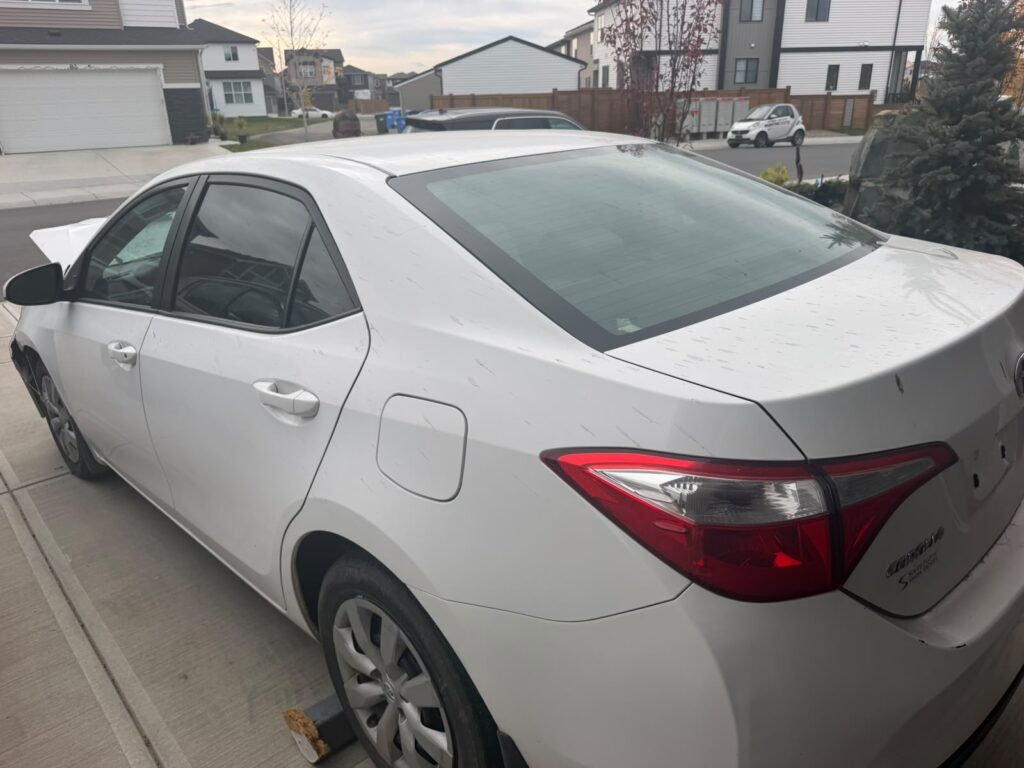
For a rideshare or delivery driver, the car is not just transportation. It is the business. Every kilometre earns money, and every breakdown costs it. That is why this decision is different from an ordinary driver’s: when the car is old, the question is not “Can I keep driving it?” but “Is it still earning more than it costs?”
Most drivers answer that question by feel. A new repair bill arrives, they grumble, they pay it, and they keep going. This guide replaces feel with math. You will calculate your true cost per kilometre, learn the signs that a work car has crossed the line, and see how a cash for cars edmonton sale can fit between shifts when it is time to move on.
Why Work Cars Age Differently
A personal car might cover 15,000 kilometres a year. A full-time rideshare or delivery car can cover two or three times that. In a few years, the wear of a decade compresses into a fraction of the time.
- Constant stop-and-go driving strains brakes, transmissions, and suspension.
- Idle time in traffic adds engine hours that the odometer does not show.
- Winter driving adds cold starts, salt exposure, and slippery-road stress.
- Passenger and parcel loading wears seats, doors, and cargo areas.
- Tight schedules mean small problems often get ignored until they become large.
The result is a car that can look fine and still be on the edge of a costly failure.
The True Cost-Per-Kilometre Formula
Here is how to calculate what your car really costs. Use a month of honest numbers.
Step 1: Add up fixed monthly costs.
| Fixed cost | Your number |
| Insurance (commercial or rideshare coverage) | |
| Registration (annual divided by 12) | |
| Loan or lease payment | |
| Licences, permits, and app fees | |
| Depreciation (estimated per month) | |
| Fixed total |
Step 2: Add up variable monthly costs.
| Variable cost | Your number |
| Fuel | |
| Oil changes and routine maintenance | |
| Tires | |
| Repairs (average per month over the last year) | |
| Car washes and cleaning | |
| Variable total |
Step 3: Add the totals and divide by the kilometres driven that month.
Cost per kilometre = (fixed + variable) divided by kilometres driven
Step 4: Compare to your earnings per kilometre. Take your gross earnings for the month, divide by the same kilometres.
If your cost per kilometre is close to or above your earnings per kilometre, the car is no longer paying for itself. That is the red line.
Five Warning Signs That the Line Is Close
- Repairs are rising every quarter. One big bill is bad luck. A pattern means the car is wearing out.
- You are losing shifts to breakdowns. Lost time is lost income.
- A single repair costs more than half of the car’s value. That is the standard rule of thumb for repair-or-replace decisions.
- The car fails inspections or safety checks. Platform or local rules may require condition standards.
- You worry about the car during every shift. Stress is a cost too.
If three or more of these are true, it is time to get serious about a plan.
Repair, Replace, or Sell: A Decision Framework
Repair if:
- The repair is small compared with the car’s value
- The car is otherwise solid, with no rust or other pending problems
- You have a plan to replace it within a year
- Downtime is manageable
Replace if:
- Cost per kilometre has crossed your earnings per kilometre
- Repairs are frequent and expensive
- Reliability is hurting your income
- You can access financing or savings for a better vehicle
Sell if:
- The car is not worth fixing
- You are done driving for a while
- You need cash to fund the next car
- The car is not allowed on your platform anymore
Often the best answer is “replace and sell,” using the sale money to reduce what you need to finance.
Planning the Switch Without Losing Income
For a working driver, downtime is the real danger. A good plan keeps you earning.
- Line up the replacement first. Know what you are buying and when you can take possession.
- Check what your platform requires of the new vehicle: age, condition, inspection, and insurance.
- Get quotes for the old car early. Buyers can often arrange pickup within a day or two, according to many services, but confirm the timing.
- Schedule pickup for a slow day. Pick a time when you will not lose a prime shift.
- Drive the old car as long as it is safe, then hand it over the day the new one arrives.
- Update your insurance and platform records at the right moment.
If the old car dies before the new one is ready, you need a bridge: a short rental, a borrowed car, or transit while you finish the transition.
What a High-Mileage Work Car Is Worth
A car with 300,000 kilometres and a tired transmission can still carry real value.
- Metal sets a floor under the price
- Parts such as catalytic converters, wheels, and electronics often have demand
- Completeness matters, so keep all parts attached
- Weight and the current scrap market influence scrap-based pricing
- Condition and whether it runs affect the offer
Do not assume a work car is worth nothing. Get a quote. Services that buy junk cars accept vehicles in many conditions and can give you a number in minutes.
How a Quick Sale Fits a Driver’s Schedule
Drivers have unusual schedules, and the right buyer works around them.
- Quotes by text or phone, so you can handle them between rides
- Flexible pickup windows, including evenings
- Payment at pickup, according to many services’ terms, so you leave with cash in hand
- Towing included, so a dead car does not cost extra. Many local services advertise free towing around Edmonton, but confirm for your address.
- Clear paperwork, including a bill of sale
Ask each buyer whether they can schedule around your shifts.
Taxes and Records
If you use the car for business, your records matter. In general, drivers who earn self-employment income may need to track expenses, vehicle costs, and the sale of a business vehicle. The rules are specific to your situation, so speak to an accountant or the Canada Revenue Agency before selling. Keep:
- Purchase and sale documents
- A bill of sale
- Maintenance and repair receipts
- Kilometre logs
- Insurance records
This is general information, not tax advice.
Preparing the Car for Sale
- Remove personal and business items: phone mounts, dash cameras, signs, and decals
- Remove platform stickers and permits
- Clear every compartment
- Gather registration and photo ID
- Get a payout letter if the car is financed
- Take photos, including the odometer
- Be honest about the problems
Mistakes to Avoid
Waiting until the car dies in the middle of a shift.
Paying for a big repair on a car with other problems waiting.
Ignoring your own cost-per-kilometre number.
Selling before the replacement is ready.
Forgetting to update insurance and platform records.
Skipping the bill of sale.
Frequently Asked Questions
How do I know when to stop repairing?
When repairs exceed about half the car’s value, or your cost per kilometre approaches your earnings per kilometre.
Can I sell a car that still runs?
Yes. Many buyers take running and non-running vehicles.
Will selling hurt my taxes?
It depends on how the car was used. Ask an accountant.
What if I need a car immediately?
Line up the replacement first, or arrange a short-term option.
For a working driver, a quick cash for cars edmonton sale between shifts beats weeks of listing and haggling.
The Bottom Line
A work car should be judged by one question: does it still earn more than it costs? Calculate your cost per kilometre, watch for the warning signs, and plan the switch so you keep earning while you change vehicles.
When the answer is that it is time, contact YEG Cash For Cars, share your car’s details, and ask for a firm quote. A cash for cars edmonton sale can turn a tired work car into the down payment on a better one.