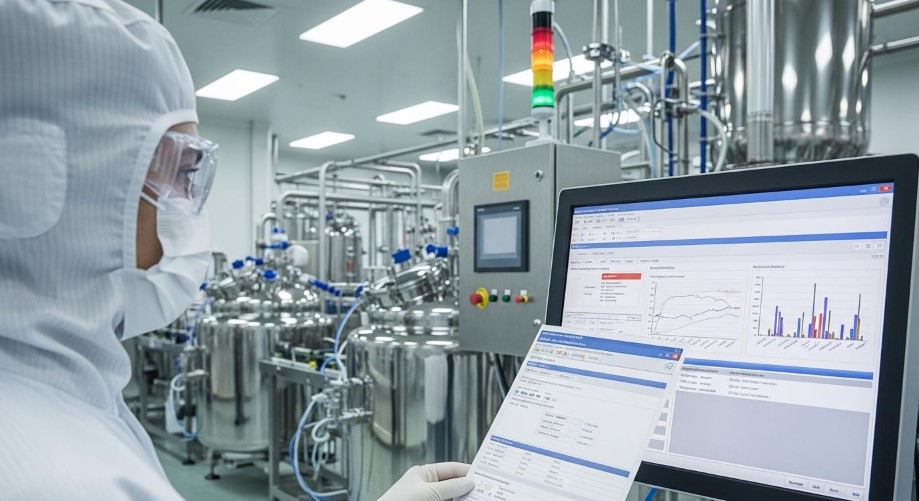
Cell therapies offer new possibilities for treating complex diseases by using living cells to restore, replace, or improve biological functions. However, moving a promising therapy from laboratory research into Good Manufacturing Practice (GMP) manufacturing requires more than demonstrating biological activity. Developers must establish a reproducible process, define critical quality attributes, control manufacturing risks, and generate reliable evidence that supports consistent product quality.
A therapy that performs well in a research laboratory may encounter new challenges when developers increase production scale, introduce controlled manufacturing environments, or prepare for clinical use. Variations in starting materials, cell handling, culture conditions, and processing times can influence the final product.
Effective cell therapy process development helps teams address these challenges before GMP manufacturing begins. By building a well-characterized, controlled, and scalable process, developers can improve manufacturing consistency, strengthen quality assurance, and prepare their therapies for the next stage of development.
Understanding GMP Manufacturing Readiness for Cell Therapies
GMP manufacturing readiness describes how well a cell therapy process meets the technical, operational, and quality requirements needed for controlled production. It involves demonstrating that the process can consistently produce a product with predefined characteristics while maintaining appropriate controls over materials, equipment, personnel, and manufacturing conditions.
Cell therapies require particular attention because living cells can respond to environmental changes and handling procedures. Their viability, identity, purity, potency, and other quality attributes may change during processing, storage, and transportation.
Manufacturing readiness therefore requires developers to understand both the biological characteristics of their product and the practical demands of producing it under controlled conditions. Teams must also establish suitable documentation, analytical methods, and procedures for investigating unexpected results.
Importantly, readiness does not mean eliminating every uncertainty. It means identifying significant risks, understanding process variability, and implementing controls appropriate to the product’s development stage and intended use.
Establishing a Robust Cell Therapy Manufacturing Process
A reliable manufacturing process begins with a clearly defined workflow. Developers should map each major operation, from starting-material collection and preparation to cell processing, formulation, storage, and final product release.
Defining Critical Process Parameters
Critical process parameters are variables that can influence critical quality attributes. Depending on the cell therapy, these may include culture temperature, incubation duration, media composition, cell density, mixing conditions, and exposure to processing reagents.
Developers should evaluate which parameters have the greatest influence on product quality rather than treating every operating variable equally. Structured experimentation, process characterization studies, and historical data can help teams identify important relationships between manufacturing conditions and product performance.
Once developers understand these relationships, they can establish operating ranges, monitoring requirements, and response procedures for process deviations.
Improving Reproducibility and Process Control
Reproducibility remains a central requirement for GMP readiness. A process should produce consistent results across representative runs, operators, equipment configurations, and relevant material lots.
Teams can improve reproducibility by standardizing operating procedures, defining acceptance criteria, qualifying equipment, and training personnel. They should also investigate unexpected variation instead of relying on average results to demonstrate process performance.
These activities help developers distinguish normal biological variability from process failures and determine whether additional optimization is necessary before transferring the process into a GMP environment.
Defining Critical Quality Attributes
Critical quality attributes (CQAs) are measurable properties that must remain within appropriate limits to help ensure product quality. For cell therapies, these attributes depend on the product’s mechanism of action, cell type, manufacturing approach, and intended clinical application.
Common considerations include cell identity, viability, purity, potency, and microbiological safety. Developers may also need to evaluate cell composition, phenotype, genetic stability, residual processing materials, or other product-specific characteristics.
Developing Suitable Analytical Methods
Analytical methods provide the evidence needed to evaluate these attributes. Developers should establish methods that are appropriate for the intended use, sufficiently sensitive to detect relevant changes, and reliable across representative samples.
For example, flow cytometry may help characterize cell populations, while cell-based potency assays can assess biological activity. Additional methods may evaluate viability, identity, impurities, or microbiological quality.
Potency testing deserves particular attention because cell therapies often rely on complex biological mechanisms. Developers should select an assay or combination of assays that reflects relevant functional activity and supports meaningful product comparisons.
Analytical methods also need appropriate controls, documented procedures, and evidence of performance. Where full validation is not yet appropriate for the development stage, method qualification may provide the necessary level of confidence.
Ensuring Raw Material and Starting Material Control
Cell therapy manufacturing depends heavily on the quality and consistency of its starting materials. These may include donor-derived cells, patient-derived cells, culture media, cytokines, reagents, and other materials used during processing.
Developers should define material specifications, supplier qualification requirements, acceptance criteria, storage conditions, and traceability procedures. They should also assess how variability between donors, collection sites, or material lots could affect process performance.
For autologous therapies, where each product is prepared for an individual patient, maintaining the identity of each patient’s material throughout manufacturing is especially important. For allogeneic therapies, developers must understand donor variability and its potential effects on product characteristics.
A documented material-control strategy helps reduce avoidable variability and supports investigations when incoming materials do not meet established requirements.
Preparing Facilities, Equipment, and Personnel for GMP Production
A promising process cannot achieve consistent results without suitable manufacturing infrastructure. Facilities, equipment, environmental controls, and personnel practices must support the product’s specific processing requirements.
Depending on the manufacturing model, developers may require controlled cleanroom environments, closed processing systems, specialized cell culture equipment, cryogenic storage, and qualified monitoring systems.
Assessing Facility and Equipment Readiness
Teams should confirm that the selected facility can accommodate the process workflow, material movement, contamination-control strategy, and required production capacity. Equipment should be appropriate for its intended use, with qualification and maintenance activities documented.
Developers should also assess whether open processing steps introduce contamination risks and whether closed or automated systems could improve process control. Automation may reduce manual handling and operator-dependent variability, but it requires appropriate qualification and control.
Facility readiness should include a review of cleaning procedures, environmental monitoring, material segregation, waste handling, and procedures for responding to equipment failures or environmental excursions.
Building Manufacturing Documentation
Standard operating procedures, batch records, equipment logs, training records, and material traceability documents create a consistent framework for GMP execution.
Documentation should reflect the actual process rather than an idealized workflow. Clear instructions help operators perform each step consistently and enable quality teams to reconstruct manufacturing activities during investigations.
Demonstrating Process Performance and Managing Risk
Before moving into routine GMP production, developers should generate evidence that the proposed process performs as expected. The amount and type of evidence will depend on the product, manufacturing complexity, development stage, and applicable regulatory expectations.
Engineering runs or representative manufacturing studies can help teams evaluate process flow, equipment suitability, operator readiness, sampling procedures, and potential bottlenecks. These activities can reveal problems that laboratory-scale experiments may not expose.
A structured risk assessment can identify failure modes involving contamination, cell loss, process interruptions, material variability, or inadequate product testing. Teams can then prioritize controls according to the likelihood and potential impact of each risk.
Developers should also establish procedures for deviations, corrective and preventive actions, change control, and out-of-specification results. These systems support a controlled response when manufacturing outcomes differ from expectations.
Importantly, successful engineering runs do not automatically establish process validation. Developers should distinguish between early process characterization, readiness assessments, and formal validation activities required at the appropriate stage.
Scaling Up and Transferring the Process to GMP Manufacturing
Scaling a cell therapy process can introduce changes in mixing, oxygen transfer, nutrient availability, heat transfer, and cell handling. These factors may influence cell growth, phenotype, viability, and potency, even when operators attempt to preserve the original process conditions.
Effective technology transfer helps ensure that process knowledge moves from development teams to GMP manufacturing personnel. Transfer packages should include process descriptions, critical parameters, material specifications, analytical methods, known risks, acceptance criteria, and relevant development data.
During transfer, both teams should review differences in equipment, facility layout, operating procedures, and analytical capabilities. They should resolve important gaps before executing GMP batches.
A structured transfer process reduces ambiguity, improves communication, and helps manufacturing personnel understand not only what each step requires but also why it matters for product quality.
Conclusion
Preparing a cell therapy for GMP manufacturing requires coordinated work across process development, analytical testing, material control, facility readiness, documentation, and risk management. Developers must understand how manufacturing variables influence product characteristics and establish appropriate controls before moving into regulated production.
A robust cell therapy process development strategy connects laboratory findings with practical manufacturing requirements. By defining critical quality attributes, improving reproducibility, qualifying analytical methods, and addressing process risks early, teams can build a stronger foundation for consistent production.
GMP readiness is ultimately demonstrated through documented evidence, suitable controls, and a clear understanding of the process. Taking a systematic approach helps cell therapy developers identify gaps, improve manufacturing reliability, and prepare for the demands of clinical and commercial development.