Clinical research plays an important role in developing safe and effective pharmaceutical products and medical devices. Before a new product reaches the market, companies must address regulatory requirements, clinical trial documentation, safety assessments, and health authority expectations. Managing these activities requires careful planning, scientific knowledge, and an understanding of international regulatory frameworks.
RABT Global provides specialised Clinical Regulatory Services to pharmaceutical companies, biotechnology organisations, and medical device manufacturers. These services support clinical development programmes through regulatory strategy, submission preparation, clinical documentation, and lifecycle regulatory support.
Understanding Clinical Regulatory Services
Clinical regulatory services involve professional activities that help organisations meet regulatory requirements throughout clinical development. These activities cover clinical trial planning, regulatory submissions, scientific documentation, and compliance with applicable health authority guidelines.
Depending on the product and target market, clinical regulatory requirements may involve the US Food and Drug Administration (FDA), European Medicines Agency (EMA), Medicines and Healthcare products Regulatory Agency (MHRA), and Central Drugs Standard Control Organisation (CDSCO).
Professional Clinical Regulatory Consulting helps organisations understand these requirements and establish suitable regulatory pathways before starting clinical development activities.
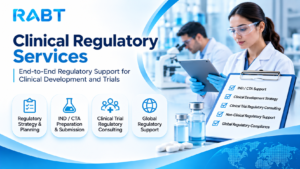
Why Do Pharmaceutical Companies Need Clinical Regulatory Consulting?
Pharmaceutical and biotechnology companies face different regulatory challenges depending on product classification, clinical development phase, and geographical market. Incomplete submissions, insufficient supporting documentation, or gaps in regulatory planning can result in additional questions and delays.
Working with an experienced regulatory partner can help businesses:
- Identify applicable regulatory requirements.
- Develop clinical development strategies.
- Prepare IND and CTA submissions.
- Review clinical trial protocols.
- Support regulatory documentation.
- Evaluate non-clinical safety information.
- Address regulatory compliance requirements.
- Plan post-approval clinical activities.
Effective regulatory planning helps companies establish a more organised approach to clinical development and submission management.
Major Clinical Regulatory Services for Life Sciences Companies
1. IND and CTA Preparation and Submission
An Investigational New Drug (IND) application is submitted to the FDA to support the initiation of certain clinical investigations involving investigational drugs in the United States.
A Clinical Trial Application (CTA) is required under applicable regulatory frameworks before conducting clinical trials in relevant jurisdictions.
These submissions generally include information about the investigational product, preclinical safety findings, clinical protocols, and investigator details.
RABT Global supports IND and CTA preparation and submission activities for pharmaceutical and biotechnology organisations targeting international markets.
2. Clinical Development Regulatory Strategy
A well-defined regulatory strategy helps companies plan clinical development activities from early research through later clinical phases.
Regulatory planning considers product characteristics, intended indications, target populations, development objectives, and health authority expectations.
Clinical Regulatory Services in this area may include Phase I, Phase II, and Phase III programme planning, First-in-Human (FIH) study strategy, and regulatory pathway assessments.
3. Clinical Trial Regulatory Consulting
Clinical trials require appropriate regulatory documentation and coordination before, during, and after study initiation.
Professional Clinical Trial Regulatory Consulting supports sponsors with activities such as:
- Clinical trial protocol review.
- Clinical Trial Application documentation.
- Investigational Medicinal Product Dossier (IMPD) preparation.
- Ethics committee submission support.
- Good Clinical Practice (GCP) compliance support.
- Clinical trial registration management.
- Regulatory documentation review.
These activities help sponsors address applicable regulatory and ethical requirements throughout clinical research.
4. Non-Clinical Regulatory Services
Non-clinical studies provide essential information about the safety characteristics of investigational products before and during clinical development.
These studies may include toxicology, pharmacology, pharmacokinetics, and safety pharmacology assessments.
Regulatory support can include CTD Module 4 documentation, non-clinical study protocol review, toxicology package assessment, and alignment with relevant International Council for Harmonisation (ICH) guidelines.
5. Clinical Lifecycle Regulatory Support
Regulatory responsibilities continue after initial clinical development and product approval. Companies must manage ongoing clinical obligations and evaluate new safety and performance information.
Clinical lifecycle support may include Post-Market Clinical Follow-Up (PMCF) planning for applicable medical devices, post-authorisation safety studies (PASS), registry studies, and other relevant post-market clinical activities.
Important Global Regulatory Requirements
Clinical trial requirements vary between countries. Companies planning international clinical programmes must understand the relevant regulatory authority expectations.
United States – FDA: Investigational drug development generally requires an IND application before applicable clinical investigations begin.
European Union – EMA and National Authorities: Clinical trials are governed by the EU Clinical Trials Regulation (EU) No. 536/2014, with applications submitted through the Clinical Trials Information System (CTIS).
United Kingdom – MHRA: Clinical trial applications must follow applicable UK clinical trial legislation and regulatory procedures.
India – CDSCO: Clinical trial applications and related requirements are governed by applicable Indian regulations, including the New Drugs and Clinical Trials Rules, 2019.
Understanding these frameworks helps sponsors prepare appropriate documentation for their intended clinical trial locations.
How to Select a Clinical Regulatory Services Provider
Choosing the right Clinical Regulatory Services Provider can make a significant difference in managing regulatory activities effectively.
Before selecting a regulatory partner, organisations should evaluate the following factors:
Regulatory Knowledge: Assess experience with FDA, EMA, MHRA, CDSCO, and other relevant regulatory frameworks.
Scientific Expertise: Look for professionals familiar with clinical development, toxicology, clinical documentation, and pharmaceutical regulations.
Documentation Quality: Ensure that regulatory documents undergo structured review and quality checks.
Global Capabilities: Consider experience supporting regulatory programmes across multiple international markets.
Ongoing Support: Select a provider capable of supporting regulatory requirements throughout the product development lifecycle.
Why Choose RABT Global for Clinical Regulatory Consulting?
RABT Global supports pharmaceutical, biotechnology, and medical device companies with specialised clinical and non-clinical regulatory activities.
Our service capabilities include:
- IND and CTA preparation and submission.
- Clinical development regulatory strategy.
- Clinical Trial Regulatory Consulting.
- Clinical trial protocol review.
- IMPD preparation support.
- Non-clinical regulatory documentation.
- Toxicology package review.
- Early-phase regulatory consulting.
- Clinical lifecycle regulatory support.
- PMCF planning and post-market clinical activities.
Our delivery approach includes initial requirements assessment, regulatory strategy development, documentation execution, independent quality assurance, and ongoing client support.
We focus on providing scientifically supported regulatory documentation aligned with applicable market requirements.
Conclusion
Clinical development requires a coordinated approach to regulatory planning, clinical documentation, and compliance with international health authority requirements. From early-phase clinical studies and IND applications to clinical trial submissions and post-market obligations, every stage requires appropriate regulatory oversight.
Partnering with an experienced Clinical Regulatory Services Provider can help organisations manage complex regulatory activities and strengthen their clinical development programmes.
RABT Global delivers professional Clinical Regulatory Services, Clinical Regulatory Consulting, and Clinical Trial Regulatory Consulting to support life sciences organisations throughout their product development journey.
Contact RABT Global today to discuss your clinical regulatory requirements and explore solutions for your pharmaceutical or medical device development programme.