Cybersecurity teams face a growing challenge: organizations are generating more security findings than they can realistically investigate and fix. Vulnerabilities, misconfigurations, exposed assets, identity risks, cloud weaknesses, and third-party exposures can create pathways for attackers. Traditional vulnerability management can identify many of these issues, but it does not always provide enough context to determine which ones pose the greatest real-world threat.
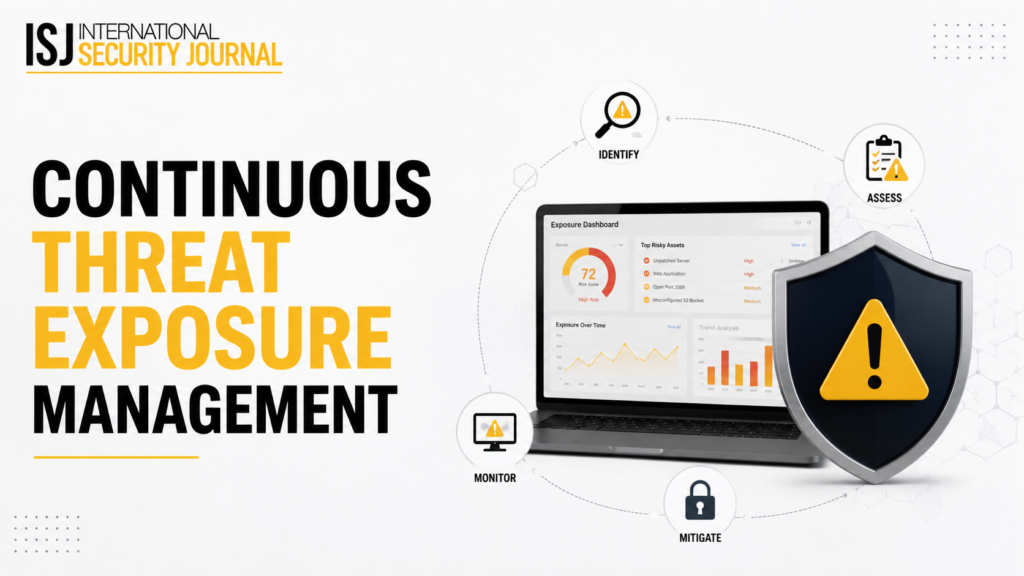
This is where Continuous Threat Exposure Management (CTEM) comes in. CTEM is a proactive cybersecurity approach that continuously identifies, evaluates, validates, prioritizes, and helps remediate security exposures based on their potential impact on the organization.
Rather than treating every vulnerability equally, CTEM helps security teams focus their limited resources on exposures that attackers are most likely to exploit and that could cause the greatest business damage.
What Is Continuous Threat Exposure Management (CTEM)?
Continuous Threat Exposure Management is a structured approach for continuously identifying and reducing an organization’s exposure to cyber threats. It goes beyond vulnerability scanning by considering factors such as asset importance, exploitability, attack paths, threat intelligence, and existing security controls.
The goal is not simply to eliminate every vulnerability. That is often unrealistic in complex IT environments. Instead, CTEM aims to determine which weaknesses create meaningful security risks and address them according to their business impact.
CTEM typically brings together capabilities such as:
- Attack surface management
- Vulnerability management
- Cloud security
- Identity security
- Threat intelligence
- Security validation
- Breach and attack simulation
- Attack-path analysis
- Remediation workflows
This allows organizations to maintain a more realistic and continuously updated view of their security exposure.
How Does CTEM Work?
CTEM follows a continuous cycle rather than a one-time assessment. Security teams identify their most important assets, discover potential exposures, determine which risks deserve immediate attention, validate whether those exposures are actually exploitable, and mobilize the appropriate teams to remediate them.
Once changes are made, the environment is reassessed. New assets, vulnerabilities, misconfigurations, and attack techniques can introduce additional exposure, so the process continues.
What Are the Five Stages of CTEM?
Gartner’s CTEM model is generally organized around five key stages: scoping, discovery, prioritization, validation, and mobilization.
1. Scoping
The process starts by defining what needs to be protected and which areas represent the greatest business risk. Organizations identify critical applications, infrastructure, data, identities, and externally exposed assets.
Scoping ensures that CTEM efforts are connected to business priorities rather than attempting to assess everything equally.
2. Discovery
During discovery, security teams identify vulnerabilities and other potential exposures across the defined scope. This can include exposed services, outdated software, cloud misconfigurations, excessive permissions, weak authentication controls, and unknown internet-facing assets.
The objective is to create a comprehensive picture of the organization’s attack surface.
3. Prioritization
Not every security finding presents the same level of danger. CTEM prioritizes exposures using factors such as exploitability, asset criticality, threat activity, attack paths, and potential business impact.
For example, a medium-severity weakness affecting a business-critical internet-facing system could deserve more attention than a higher-severity vulnerability on an isolated, non-critical asset.
4. Validation
Validation determines whether prioritized exposures can realistically be exploited or whether existing security controls can prevent exploitation.
Organizations may use penetration testing, breach and attack simulation, automated security validation, attack-path analysis, or other testing techniques.
This helps security teams distinguish theoretical vulnerabilities from exposures that represent credible attack opportunities.
5. Mobilization
The final stage focuses on action. Security teams work with IT, cloud, infrastructure, application, and other relevant teams to remediate or mitigate validated exposures.
Actions may include patching systems, changing configurations, removing unnecessary access, implementing additional controls, isolating assets, or applying compensating measures.
After remediation, the environment should be reassessed to confirm that exposure has actually been reduced.
Key Benefits of Continuous Threat Exposure Management
Reduces the Attack Surface
CTEM provides a structured way to identify and address weaknesses across an organization’s digital environment. Continuous assessment can help reduce unnecessary exposure before attackers can take advantage of it.
Improves Risk-Based Prioritization
Security teams often deal with thousands of vulnerability findings. CTEM helps move the focus from vulnerability volume to actual business risk by considering exploitability, asset importance, and attack context.
Strengthens Vulnerability Management
CTEM does not replace vulnerability management. Instead, it adds greater context around vulnerability findings, helping teams determine which vulnerabilities should receive immediate attention.
Validates Security Controls
Identifying a vulnerability does not necessarily mean an attacker can successfully exploit it. CTEM incorporates validation to determine whether security controls can prevent, detect, or contain potential attacks.
Improves Security Team Efficiency
By focusing resources on the exposures that matter most, security teams can reduce time spent investigating low-impact findings and concentrate on high-priority risks.
Supports Continuous Risk Reduction
Traditional security assessments may provide only a snapshot of an environment. CTEM establishes an ongoing process that accounts for new assets, changing configurations, emerging threats, and newly discovered vulnerabilities.
CTEM vs. Traditional Vulnerability Management
| Factor | Traditional Vulnerability Management | CTEM |
|---|---|---|
| Primary focus | Vulnerabilities | Overall exposure |
| Prioritization | Often severity-based | Risk and business impact |
| Assessment | Frequently periodic | Continuous |
| Attack paths | Limited focus | Strong consideration |
| Validation | May be separate | Integrated into the process |
| Business context | Often limited | Central to prioritization |
| Objective | Reduce vulnerabilities | Reduce exploitable exposure |
The key distinction is that vulnerability management asks, “What vulnerabilities exist?” CTEM takes the question further: “Which exposures could realistically be exploited, and which ones matter most to the business?”
CTEM Best Practices
Start With Critical Assets
Identify systems, applications, data, identities, and services that would have the greatest business impact if compromised. These should receive appropriate priority during exposure management.
Maintain Accurate Asset Visibility
You cannot manage exposures you do not know about. Maintain an updated inventory of internal, cloud, internet-facing, and third-party assets.
Prioritize Exploitability and Impact
Avoid relying solely on vulnerability severity scores. Consider whether an exposure is reachable, exploitable, associated with active threats, and connected to a critical business asset.
Validate High-Risk Findings
Use security validation techniques to determine whether prioritized exposures can actually be exploited and whether existing controls provide adequate protection.
Connect Security With Remediation Teams
CTEM requires collaboration between security, IT, infrastructure, application development, cloud, and other teams. Assign clear ownership for remediation and establish appropriate timelines.
Automate Where Practical
Automation can support asset discovery, exposure correlation, risk prioritization, validation, reporting, and remediation workflows. This allows security teams to handle large and constantly changing environments more efficiently.
Measure Exposure Reduction
Track meaningful metrics such as critical exposures, mean time to remediate, remediation rates, attack-path reduction, internet-facing exposure, and recurring findings.
How AI and Automation Can Support CTEM
AI and automation can make CTEM programs more scalable. AI-assisted analysis can help correlate security findings, identify relationships between assets, prioritize potential attack paths, and generate remediation recommendations.
Automation can also continuously monitor environments for newly exposed assets, configuration changes, vulnerabilities, and other risk factors.
However, AI should complement security expertise rather than replace human decision-making. Business context, risk tolerance, and remediation priorities still require appropriate human oversight.
Common CTEM Implementation Challenges
Organizations may encounter several challenges when implementing CTEM, including incomplete asset inventories, large volumes of security findings, disconnected security tools, limited remediation resources, and difficulty translating technical findings into business risk.
These challenges can be addressed by establishing clear risk criteria, integrating security data sources, defining remediation ownership, automating repetitive processes, and continuously measuring exposure reduction.
How to Build an Effective CTEM Strategy
Organizations can build a CTEM program by following a structured approach:
- Identify critical business assets and processes.
- Map internal and external attack surfaces.
- Continuously discover security exposures.
- Prioritize exposures according to risk and business impact.
- Validate high-priority exposures.
- Assign remediation ownership.
- Track remediation and mitigation.
- Reassess the environment continuously.
- Measure whether overall exposure is decreasing.
The most important principle is continuity. CTEM should become part of the organization’s ongoing security operations rather than a one-time assessment.
Conclusion
Continuous Threat Exposure Management provides a more practical way to manage cybersecurity risk in complex and constantly changing environments. By combining scoping, discovery, prioritization, validation, and mobilization, organizations can move beyond simply counting vulnerabilities and focus on exposures that attackers can realistically exploit.
An effective CTEM strategy requires accurate asset visibility, risk-based prioritization, continuous validation, coordinated remediation, and measurable outcomes. As attack surfaces continue to expand across cloud, applications, identities, and connected infrastructure, this continuous approach can help security teams make better decisions about where to focus their resources.
For ongoing insights into cybersecurity, risk management, and evolving security practices, International Security Journal provides a valuable industry perspective for security professionals and organizations navigating today’s changing threat landscape.
FAQs About Continuous Threat Exposure Management
1. What is Continuous Threat Exposure Management (CTEM)?
CTEM is a proactive cybersecurity approach that continuously identifies, prioritizes, validates, and helps remediate security exposures based on their exploitability and potential business impact.
2. What are the five stages of CTEM?
The five stages are scoping, discovery, prioritization, validation, and mobilization. Together, they help organizations identify important exposures, determine which pose the greatest risk, validate them, and coordinate remediation.
3. What is the difference between CTEM and vulnerability management?
Vulnerability management primarily focuses on identifying and addressing vulnerabilities, while CTEM takes a broader, risk-based approach. It considers exploitability, asset criticality, attack paths, security controls, and business impact when prioritizing exposures.
4. What are the main benefits of CTEM?
CTEM can reduce attack surface exposure, improve risk prioritization, validate security controls, optimize security resources, strengthen vulnerability management, and support continuous cyber risk reduction.