In today’s competitive food industry, packaging plays an important role in attracting customers and building brand recognition. Cereal is a popular breakfast product enjoyed by people of all ages, which makes the market highly competitive. With so many brands offering similar products, businesses need creative packaging designs that make their products stand out on supermarket shelves. Attractive colors, unique graphics, innovative shapes, and high-quality printing can help a cereal brand capture customers’ attention and create a lasting impression.
Custom Cereal Packaging Boxes provide businesses with an excellent opportunity to showcase their brand identity while protecting their products. From eye-catching illustrations to memorable logos and informative product details, customized packaging can communicate a brand’s personality and values. A well-designed cereal box does more than hold a product; it becomes a powerful marketing tool that influences purchasing decisions and encourages customer loyalty.
In this article, we will explore creative cereal packaging ideas, important design elements, and effective strategies that can help businesses increase brand recognition through innovative packaging solutions.
1. Use Bright and Attractive Colors
Color is one of the most important elements of successful cereal packaging design. Customers often notice colors before reading product descriptions or brand names. Therefore, choosing the right color combination can make a cereal product more recognizable and appealing.
For example, bright yellow, orange, and red can communicate energy and excitement, making them suitable for children’s breakfast cereals. Green and earthy colors can create a natural appearance for organic, whole-grain, or healthy cereal products. Blue and white can communicate freshness and simplicity.
Brands should select colors that match their target audience and product identity. Consistent color combinations across different packaging designs also help customers recognize products quickly. When customers repeatedly see the same colors associated with a particular brand, they are more likely to remember it.
2. Create a Memorable Brand Logo
A logo is an essential part of brand recognition. It helps customers identify a product and distinguish it from competing brands. A cereal packaging design should display the company logo in a clear and noticeable position.
Businesses should choose a logo that is simple, attractive, and easy to remember. Complicated designs may become difficult to recognize when printed on packaging. Using consistent typography, colors, and logo placement across different cereal products can also strengthen brand identity.
For better visibility, the logo should be positioned on the front panel of the cereal box. This allows customers to identify the brand without having to turn the package around. A recognizable logo can gradually build customer trust and make a cereal brand more memorable.
3. Incorporate Creative Illustrations and Graphics
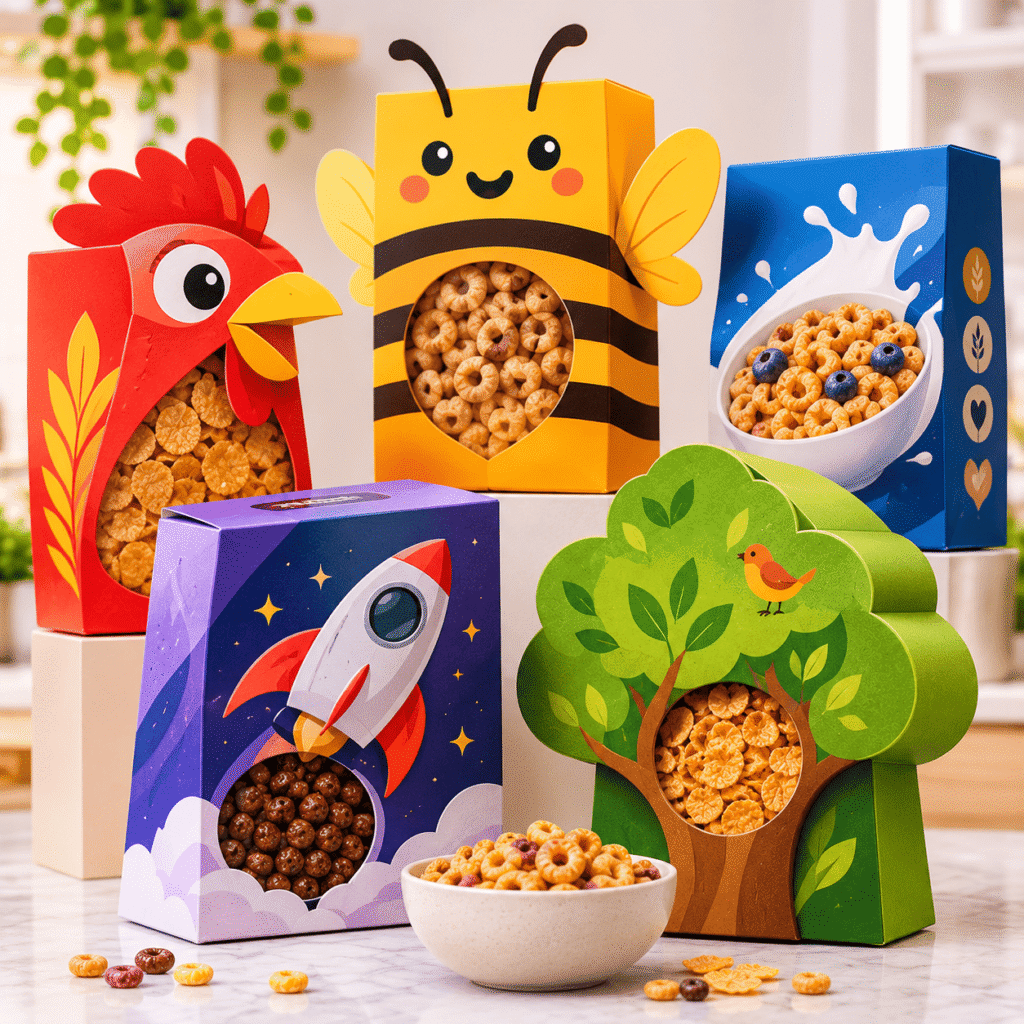
Creative illustrations can make cereal packaging more attractive and engaging. Brands can use cartoon characters, fruit illustrations, grain patterns, and lifestyle graphics to communicate the product’s features.
For children’s cereals, colorful characters and playful illustrations can create excitement. For health-conscious customers, images of fresh fruits, oats, nuts, and whole grains can communicate natural ingredients and nutritional benefits.
Graphics should always support the brand message rather than make the packaging look overcrowded. A balanced design with attractive illustrations and readable text creates a professional appearance.
Unique visual elements can also help customers remember a product. When a cereal brand consistently uses distinctive illustrations, customers may begin associating those graphics with the company.
4. Choose Unique Packaging Shapes and Structures
Traditional rectangular cereal boxes are widely used, but businesses can experiment with different packaging structures to create a distinctive appearance. Innovative shapes, creative opening styles, and functional designs can improve the customer experience.
For example, cereal boxes with easy-open tops, resealable closures, or convenient pouring features can provide additional value. These features make packaging more practical while helping products stand out from competitors.
Structural creativity should not compromise product safety. Cereal products need packaging that protects them from moisture, contamination, and physical damage. A suitable inner food-grade liner can help maintain freshness while the outer box provides branding and product information.
5. Focus on High-Quality Printing
Printing quality directly influences how customers perceive a cereal brand. Blurry graphics, faded colors, and poorly printed text can make even an attractive design look unprofessional.
High-quality printing helps businesses present vibrant colors, sharp images, and clear product information. Modern printing technologies allow brands to create detailed artwork and attractive finishes that enhance packaging appearance.
Matte and glossy finishes are popular choices for cereal packaging. Glossy coatings can make colors appear brighter, while matte finishes provide a sophisticated and premium look. Spot UV and other finishing techniques can also highlight specific design elements, such as logos or product names.
Selecting suitable printing methods and materials ensures that the final packaging reflects the quality of the product inside.
6. Use Custom Cereal Boxes Wholesale for Cost-Effective Branding
Packaging expenses are an important consideration for cereal manufacturers, retailers, and food businesses. Companies that need large quantities of packaging often look for solutions that combine affordability, quality, and attractive design.
Custom Cereal Boxes Wholesale allow businesses to purchase packaging in larger quantities while maintaining consistent branding across their product lines. Wholesale purchasing can help reduce per-unit packaging costs, depending on order volume, printing requirements, and material selection.
Businesses can also customize their wholesale orders according to their marketing needs. They can select different box dimensions, colors, graphics, and finishes to create packaging that matches their product identity.
For growing cereal brands, wholesale packaging is a practical option because it supports consistent product presentation and helps businesses manage their packaging budgets. However, companies should always consider storage requirements, minimum order quantities, and production timelines before placing bulk orders.
7. Select Durable and Eco-Friendly Materials
Consumers are becoming increasingly interested in sustainable packaging. Many customers prefer brands that demonstrate environmental responsibility through recyclable materials and reduced packaging waste.
Cardboard is a popular material for cereal packaging because it is lightweight, printable, and suitable for retail display. Businesses can explore responsibly sourced paperboard and recyclable packaging options to support their sustainability goals.
Custom Cereal Cardboard Boxes offer a practical way to combine product protection with attractive branding. Their printable surfaces allow businesses to display colorful designs, nutritional information, brand logos, and promotional messages.
Companies can also consider minimizing unnecessary packaging components and choosing materials that are easier to recycle. If sustainability claims are included on the packaging, they should be accurate and supported by the actual materials and manufacturing processes used.
Eco-friendly packaging can strengthen a brand’s reputation and appeal to environmentally conscious consumers while maintaining an attractive shelf presentation.
8. Make Nutritional Information Easy to Read
Cereal customers often check nutritional information before purchasing a product. They may want to know about calories, sugar, fiber, protein, ingredients, and allergens.
Therefore, packaging should present essential product information in a clear and organized way. Small or difficult-to-read text can create a negative customer experience and reduce consumer confidence.
Brands should use readable fonts, appropriate spacing, and well-organized information panels. Nutritional details should follow applicable food labeling regulations in the markets where the product is sold.
Front-of-package messaging can highlight important product features, such as whole grains, added vitamins, or high fiber, provided these claims are accurate and legally permitted.
When customers can easily understand a product’s benefits, they may feel more confident about choosing it.
9. Design Packaging According to Your Target Audience
Understanding the target audience is essential for creating effective cereal packaging. Different customer groups respond to different design styles, colors, and messages.
For example, children’s cereals often feature playful graphics, bright colors, and entertaining characters. Adult-oriented cereal products may use minimal layouts, sophisticated typography, and natural color combinations. Fitness-focused products can highlight protein content, whole grains, and nutritional benefits.
Family-sized cereal packaging may emphasize value and convenience, while premium cereal products can use elegant finishes and refined design elements.
Businesses should research customer preferences before finalizing their packaging. Understanding what customers expect can help brands create designs that attract attention and communicate the right message.
10. Add Interactive Packaging Elements
Interactive packaging is another creative way to increase brand recognition. Instead of using packaging only for product protection and information, businesses can turn it into an engaging experience.
Cereal boxes can include QR codes that direct customers to recipes, promotional offers, nutritional information, or brand websites. Children’s cereal packaging can feature puzzles, games, and fun activities printed on the reverse side.
Some brands may also introduce limited-edition artwork or seasonal packaging to encourage customer interest. These creative features can make the product more memorable and encourage customers to interact with the brand beyond the purchase.
Interactive elements should be simple, relevant, and easy to use. They should enhance the customer experience without distracting from the main product information.
11. Maintain Consistency Across Product Lines
Consistency is one of the most effective ways to build long-term brand recognition. When a company sells multiple cereal varieties, each package should maintain recognizable brand elements.
For example, businesses can use the same logo, typography, and basic layout across their entire product range while changing accent colors and illustrations to distinguish different flavors.
This approach creates a unified brand appearance and makes it easier for customers to identify products belonging to the same company.
Consistent packaging also supports brand awareness across different retail locations and marketing platforms. Whether customers see a cereal product in a supermarket, online store, or promotional advertisement, recognizable design elements help establish a stronger connection with the brand.
12. Partner with a Reliable Packaging Company
Choosing the right packaging supplier is an important step in creating successful cereal packaging. A reliable manufacturer can help businesses select suitable materials, develop creative designs, and achieve consistent printing quality.
Betec Packaging is a relevant brand keyword for businesses exploring customized packaging solutions. When evaluating a packaging provider, companies should consider factors such as material quality, customization options, printing capabilities, production capacity, and customer support.
A professional packaging partner can help transform creative ideas into practical packaging designs that meet business requirements. It is also important to request samples, review available finishing options, and confirm production specifications before approving a large order.
Working with an experienced packaging supplier can make the packaging development process more efficient and help businesses maintain a consistent brand image.
13. Make Packaging Stand Out on Retail Shelves
Supermarket shelves contain numerous competing products, so cereal packaging needs to communicate its message quickly. Customers often make purchasing decisions within a short period, which means the front panel should be visually appealing and easy to understand.
Brands can improve shelf visibility by using distinctive color combinations, bold product names, attractive graphics, and clear logos. The most important information should be visible without requiring customers to examine every side of the box.
It is also useful to study competitor packaging and identify opportunities to create a different visual identity. A cereal brand does not necessarily need the brightest or most complicated design to stand out. Sometimes a clean, minimal, and well-organized layout can be more memorable than an overcrowded package.
Testing different design concepts with potential customers can help businesses identify which packaging elements attract the most attention.
Conclusion
Creative cereal packaging is much more than an attractive outer covering. It is an essential branding tool that helps businesses communicate product quality, attract customers, and build long-term recognition. From selecting vibrant colors and memorable logos to incorporating interactive elements and sustainable materials, every packaging decision can influence how customers perceive a cereal brand.
Businesses should focus on creating packaging that combines visual appeal, functionality, product protection, and clear communication. Consistent branding across different product lines can further strengthen customer recognition and encourage repeat purchases.
By investing in thoughtful packaging design and working with a reliable packaging supplier, cereal manufacturers can create products that stand out in competitive retail environments. Ultimately, well-designed cereal packaging helps transform an ordinary breakfast product into a recognizable and memorable brand experience.