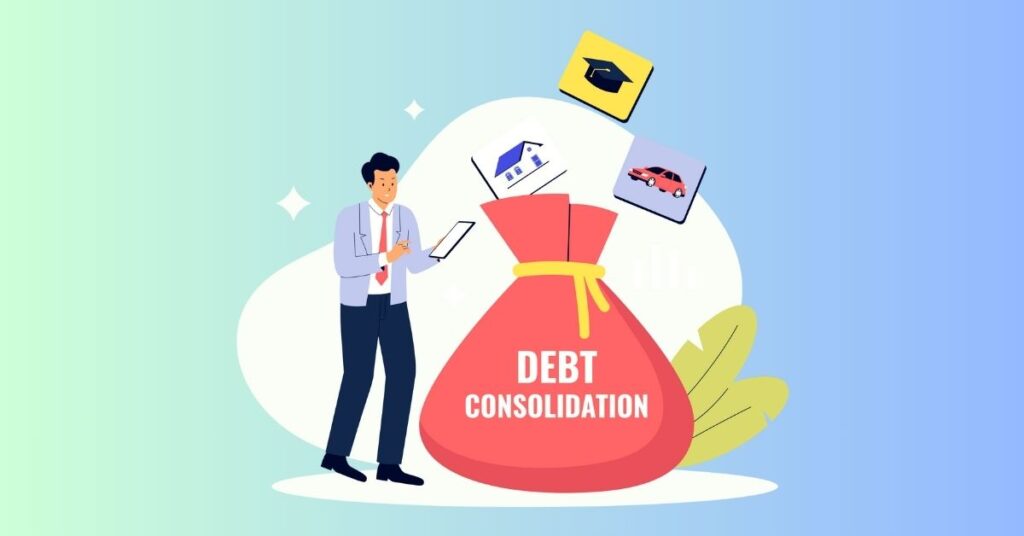
Debt Consolidation in India
Managing multiple loans, credit card bills, and EMIs can quickly become overwhelming. When repayments are spread across different due dates, interest rates, and lenders, staying financially organized becomes a challenge. This is where Debt Consolidation in India comes into play—a financial strategy that allows borrowers to combine multiple debts into a single loan with one monthly EMI. In India, this option is gaining popularity among salaried professionals and credit card users who are looking for better control and simplicity in managing their finances.
In this article, we’ll break down how Debt Consolidation in India works, along with its key benefits, potential risks, and eligibility criteria.
What is Debt Consolidation?
Debt consolidation is the process of combining multiple existing debts—such as personal loans, credit card dues, and consumer loans—into one new loan. The borrower uses this new loan to pay off all existing debts and then repays only the consolidated loan in fixed monthly installments.
For example, instead of managing three EMIs of ₹8,000, ₹5,000, and ₹7,000 separately, you could consolidate them into a single EMI of ₹18,000 (or less, depending on interest rates and tenure).
In India, banks, NBFCs, and digital lending platforms offer personal loans specifically used for debt consolidation.
Benefits of Debt Consolidation in India
1. Simplified Repayments
One of the biggest advantages is convenience. Instead of tracking multiple due dates and lenders, you only have one EMI to manage. This reduces the chances of missing payments and incurring penalties.
2. Lower Interest Rates (in some cases)
If you have high-interest credit card debt, consolidating it into a personal loan with a lower interest rate can significantly reduce your overall repayment burden. This can help you save money over time.
3. Improved Credit Score Management
Timely repayment of a consolidated loan can help improve your credit score. It reduces the risk of missed payments and shows disciplined financial behavior.
4. Fixed Repayment Tenure
Debt consolidation loans usually come with a fixed repayment schedule. This gives borrowers a clear end date for becoming debt-free, which can be motivating and structured.
5. Better Financial Planning
With only one EMI, it becomes easier to plan monthly expenses and savings without juggling multiple liabilities.
Risks of Debt Consolidation
While debt consolidation can be helpful, it is not a one-size-fits-all solution. There are some risks to consider:
1. Longer Repayment Tenure
A lower EMI may seem attractive, but it often comes with a longer repayment period. This can increase the total interest paid over time.
2. Not Always Cheaper
If the interest rate on the consolidation loan is not significantly lower than your existing debts, you may end up paying more in the long run.
3. Risk of Fresh Debt
Some borrowers clear their credit cards through consolidation but then start using them again, leading to a cycle of debt accumulation.
4. Processing Fees and Charges
Banks and NBFCs may charge processing fees, prepayment penalties, or other hidden costs that affect overall savings.
Eligibility for Debt Consolidation Loans in India
Eligibility criteria can vary slightly across lenders, but generally include:
- Age: Usually between 21 and 60 years
- Employment: Salaried employees or self-employed individuals with stable income
- Minimum Income: Varies by lender (often ₹15,000–₹30,000 per month for salaried individuals)
- Credit Score: A good CIBIL score (typically 700+) improves approval chances and interest rates
- Existing Debt Profile: Lenders assess your current EMI burden and repayment history
- Employment Stability: At least 6–12 months of stable employment is often preferred
Banks may also require documents such as PAN card, Aadhaar card, salary slips, bank statements, and existing loan statements.
Final Thoughts
Debt consolidation in India can be a powerful tool for regaining control over finances, especially for those struggling with multiple high-interest debts. However, it should be approached carefully after evaluating interest rates, repayment terms, and personal financial discipline.