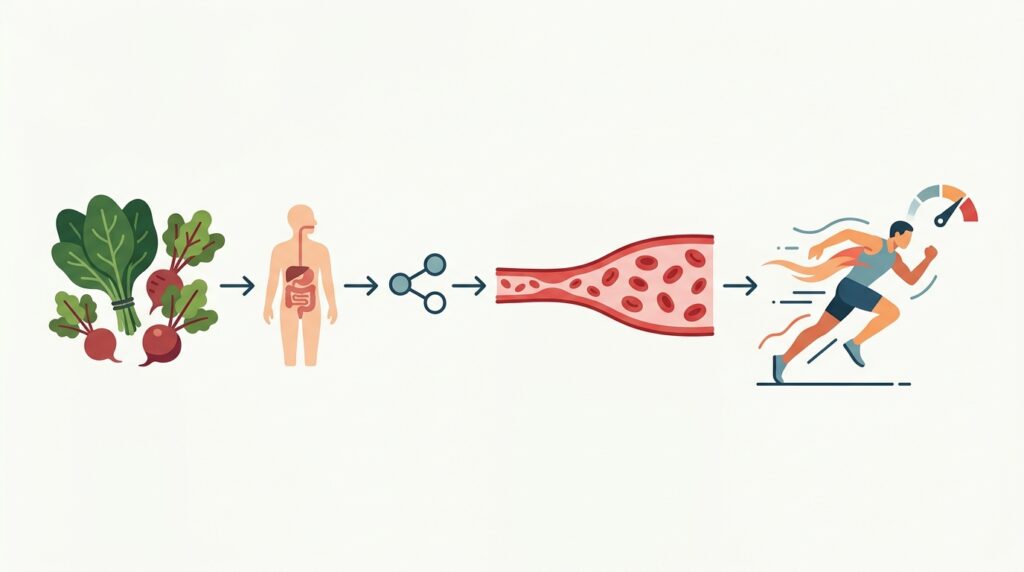
Nitrates in vegetables have gained attention in sports nutrition and cardiovascular health. Many athletes and fitness-focused individuals use nitrate-rich foods to improve endurance and circulation. But do nitrates in vegetables truly improve blood flow and stamina, or is it hype?
This guide explains how nitrates work, what science shows, and how you can use them effectively in your routine.
What Are Nitrates in Vegetables?
Nitrates are natural compounds found in many vegetables. When you consume them, your body converts nitrates into nitrites, and then into nitric oxide.
Nitric oxide plays a central role in circulation and muscle function.
Vegetables high in nitrates:
- Beetroot
- Spinach
- Arugula
- Lettuce
- Celery
These foods form the foundation of nitrate-based nutrition strategies.
How Nitrates Improve Blood Flow
The Nitric Oxide Pathway
After consumption, nitrates follow a biological pathway:
- Nitrates convert into nitrites through oral bacteria
- Nitrites convert into nitric oxide in the body
- Nitric oxide relaxes blood vessels
This process improves vascular function and circulation.
Effects on Blood Vessels
Nitric oxide causes vasodilation. This means blood vessels expand, allowing more blood to flow through them.
Benefits include:
- Better oxygen delivery
- Improved nutrient transport
- Reduced resistance in blood vessels
Improved circulation explains why nitrates in vegetables support both health and exercise performance.
Do Nitrates Improve Stamina?
Yes, nitrates in vegetables support stamina through multiple mechanisms.
1. Reduced Oxygen Cost
Your muscles require oxygen to produce energy. Nitrates improve how efficiently your body uses oxygen.
Result:
- You perform the same activity with less effort
- Energy demand decreases
- Endurance improves
2. Delayed Fatigue
Fatigue occurs when energy supply drops and waste products build up.
Nitrates help:
- Maintain muscle efficiency
- Improve oxygen delivery
- Delay exhaustion
This helps you train longer and maintain performance across sessions.
3. Improved Muscle Efficiency
Nitrates influence how muscles produce force.
Impact:
- Better contraction efficiency
- Lower energy use during repeated movements
- Improved performance in endurance sports
Scientific Evidence Behind Nitrates
Research in sports science supports the role of dietary nitrates.
Key findings:
- Improved time-to-exhaustion in endurance athletes
- Enhanced performance in cycling and running tests
- Better oxygen efficiency during moderate to intense exercise
These results are consistent across multiple controlled studies.
Best Vegetables for Nitrate Intake
Not all vegetables contain the same nitrate levels.
High-nitrate options:
- Beetroot
- Spinach
- Arugula
- Swiss chard
Moderate sources:
- Cabbage
- Carrots
- Green beans
Fresh, raw, or lightly processed forms retain more nitrates.
How to Use Nitrates for Performance
Timing Matters
Consume nitrate-rich vegetables 2 to 3 hours before exercise. This allows time for nitric oxide production.
Daily Intake Strategy
Consistent intake provides better results than occasional use.
Practical approach:
- Include nitrate-rich vegetables in daily meals
- Combine with pre-workout nutrition
- Maintain hydration
Recommended Intake
Most studies suggest:
- 300 to 600 mg of nitrates per day
- Equivalent to a serving of beetroot juice or large portions of leafy greens
Factors That Affect Nitrate Effectiveness
Oral Bacteria
The conversion of nitrates begins in your mouth. Using antibacterial mouthwash can reduce this process.
Diet Quality
A balanced diet improves how your body processes nitrates.
Include:
- Carbohydrates for energy
- Protein for recovery
- Micronutrients for overall function
Fitness Level
Beginners often notice stronger effects. Trained athletes may see smaller but still meaningful improvements.
Health Benefits Beyond Stamina
Nitrates in vegetables offer more than exercise benefits.
Cardiovascular Support
- Helps regulate blood pressure
- Supports vascular health
Brain Function
- Improved blood flow to the brain
- Better focus and cognitive performance
Metabolic Efficiency
- Supports energy production
- Reduces stress on the body during physical effort
Are There Any Risks?
For most people, nitrates from vegetables are safe.
Common concerns:
- Natural nitrates differ from processed nitrates in cured meats
- Vegetables contain antioxidants that balance nitrate effects
Mild side effects:
- Temporary color changes in urine
- Digestive sensitivity in rare cases
Practical Tips for Daily Use
If you want to apply this knowledge, focus on consistency and structure.
Action steps:
- Add leafy greens to at least one meal daily
- Use beetroot juice before workouts
- Avoid antibacterial mouthwash before training
- Track stamina and recovery changes
- Adjust intake based on performance
FAQs
Do nitrates in vegetables improve blood flow immediately?
Effects begin within a few hours after consumption. Peak impact occurs when nitric oxide levels rise.
Which vegetable has the highest nitrate content?
Beetroot ranks among the highest. Leafy greens like arugula and spinach also contain high levels.
Can you rely only on vegetables for stamina improvement?
Vegetables support performance, but training, sleep, and overall diet remain essential.
Are nitrate supplements better than vegetables?
Supplements offer convenience and concentration. Whole vegetables provide additional nutrients and fiber.
How often should you consume nitrates?
Daily intake works best for consistent results.