A homeowner in North Raleigh finishes a basement remodel. The framing is solid, the drywall is hung, and the paint color is picked out. Then the afternoon sun hits the new wall, and every seam, screw head, and uneven patch shows up.
This happens more often than most people expect. Hanging drywall is only half the job. The finishing work is what makes a wall look smooth and complete. That is why many homeowners look for a drywall finishing contractor Raleigh NC residents can rely on for this last and most visible stage.
Why Drywall Finishing Matters More Than People Think
Drywall finishing covers everything after the boards go up. That includes taping the joints, applying joint compound, feathering the edges, sanding, and preparing the surface for primer and paint.
Each step takes patience. A single coat of mud that is too thick can crack later. A seam that isn’t feathered wide enough can leave a visible ridge once the wall is painted.
Professionals often say a good finish is “invisible.” When done right, nobody notices it. When done poorly, it is the first thing guests see.
Understanding the Levels of Drywall Finish
The drywall industry uses a scale of finish levels, from Level 0 to Level 5. Knowing these levels helps homeowners understand what they are paying for.
Level 0 means no finishing at all. Levels 1 and 2 are common in garages, attics, or spaces that will be covered with tile. Level 3 works under heavy textures.
Level 4 is the standard for most homes. It suits flat or eggshell paint and typical room lighting. Level 5 adds a thin skim coat over the entire surface. It is often used in rooms with large windows, high ceilings, or glossy paint, where light reveals every flaw.
Many newer homes around the Triangle feature open floor plans and tall windows. In these spaces, the difference between Level 4 and Level 5 can be striking.
The Local Factors That Affect the Finish
Climate plays a bigger role in drywall work than many people realize. Central North Carolina summers bring high humidity, which slows the drying time of joint compound.
Rushing a second coat before the first one dries can lead to bubbling, shrinkage, or hairline cracks. Experienced finishers plan around the weather and often use fans, dehumidifiers, or quick-setting compounds to keep projects moving.
The region’s soil also matters. Clay-heavy ground can cause slight settling in homes over time. This often shows up as cracks near door frames, ceiling corners, or along taped seams. Skilled finishers know how to reinforce these weak spots so the repair lasts.
The Craft Behind Taping and Mudding
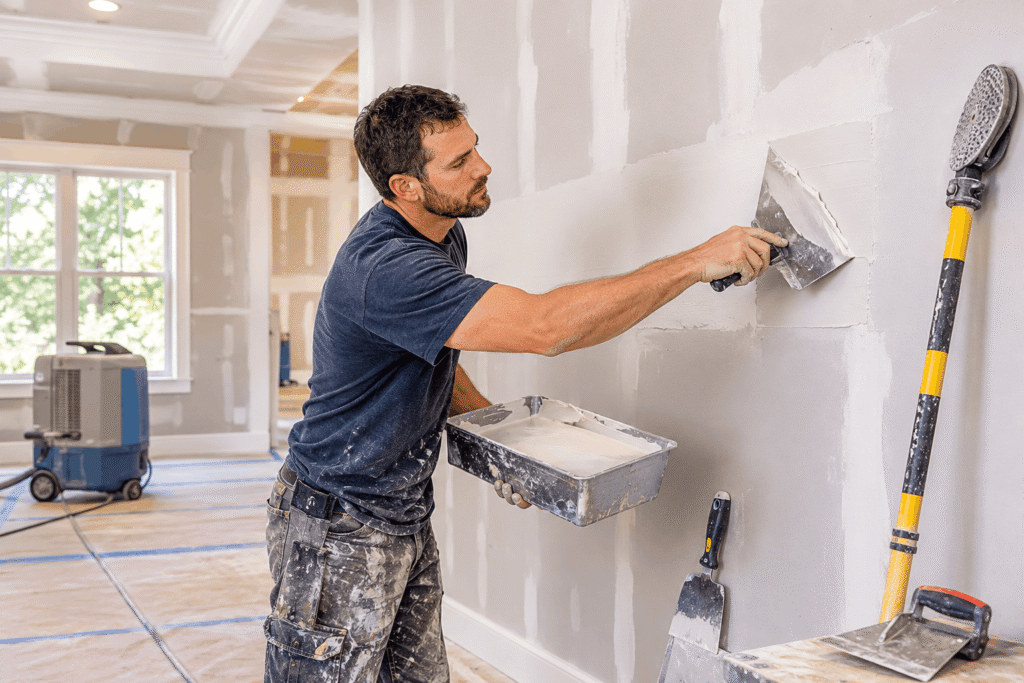
Taping and mudding is the heart of the finishing process. Paper or mesh tape covers the joints between drywall sheets. Then layers of compound are applied, each one wider and thinner than the last.
Homeowners searching for drywall taping and mudding Raleigh NC often discover that this work requires more skill than it looks. Holding a knife at the right angle, managing compound consistency, and blending edges takes years to master.
Corners are especially tricky. Inside corners need clean, straight lines. Outside corners use metal or vinyl corner bead that must be set perfectly flat. Small mistakes here are hard to hide.
Benefits of Hiring a Skilled Finisher
The most obvious benefit is appearance. A smooth wall makes paint look richer and a room feel more polished. It also raises the perceived quality of the entire home.
Durability is another advantage. Properly embedded tape and well-mixed compound resist cracking and peeling. That means fewer touch-ups over the years.
Time is a factor too. A DIY finishing job can stretch across several weekends of sanding and re-coating. A trained professional can usually move through the work faster, with less dust and cleaner results.
There is also the value angle. Buyers and home inspectors notice wall quality. Clean finishes can make a property feel well cared for, which helps during resale.
Real-World Situations Where Finishing Work Comes In
Drywall finishing isn’t only for new construction. It shows up in many everyday situations around the house.
A family converts a bonus room into a home office. The new walls need a finish that matches the rest of the house so the space doesn’t feel like an add-on.
A plumber cuts into a ceiling to fix a leaking pipe. Once the repair is done, the hole needs patching, taping, and blending so the ceiling looks untouched.
Another common case is the older home with old popcorn ceilings. After the texture is scraped off, the surface underneath is often rough and uneven. A skim coat brings it back to a smooth, modern look.
Water damage, nail pops, and settling cracks are also frequent calls. Local repair specialists such as Very Handy Wall and Ceiling Repairs often see these issues in homes of all ages, from older bungalows near downtown to newer builds in the suburbs.
What to Look For When Choosing a Finisher
When comparing options for a drywall finishing contractor Raleigh NC homeowners should look past price alone. Photos of past work, especially under strong lighting, tell a lot about skill level.
It also helps to ask which finish level is included in the quote. Two estimates can look very different simply because one assumes Level 4 and the other Level 5.
Questions about dust control, drying time, and cleanup are fair to ask. A clear answer usually signals an experienced pro. Checking licensing, insurance, and recent reviews adds another layer of confidence.
Final Thoughts
Drywall finishing is a quiet craft, but it shapes how every room looks and feels. The difference between a rushed job and a careful one often only becomes clear after the paint goes on.
For anyone planning a remodel, repair, or new build, understanding the basics of taping, mudding, and finish levels makes it easier to set the right expectations. Smooth walls are the result of patience, skill, and attention to detail.
FAQs
How long does drywall finishing usually take?
Most rooms take three to five days. Each coat of compound needs time to dry, and humid weather can add an extra day or two.
What is the difference between Level 4 and Level 5 drywall finish?
Level 4 includes three coats of compound on seams and screws. Level 5 adds a thin skim coat over the whole wall for a flawless surface under bright light.
Can drywall taping and mudding Raleigh NC homeowners do themselves?
Small patches are manageable for DIYers. Larger areas, ceilings, and corners usually look better when handled by an experienced finisher.
Why do drywall seams crack after finishing?
Cracks often come from house settling, thick compound layers, or tape that wasn’t fully embedded. Humidity changes can also cause movement over time.
How much does drywall finishing cost?
Cost depends on square footage, finish level, ceiling height, and repair needs. Getting several detailed quotes is the best way to compare fair pricing.