A child’s growth is often measured by physical milestones like their first steps or their height. However, some of the most critical transformations happen internally. Emotional development refers to how children start to understand, express, and manage their feelings as they grow. At CRY India, we believe that nurturing a child’s emotional health is just as important as ensuring their physical well-being, as it forms the bedrock for a resilient and successful adult life.
The Stages of Emotional Growth
Emotional development is a progressive journey that begins at birth.
-
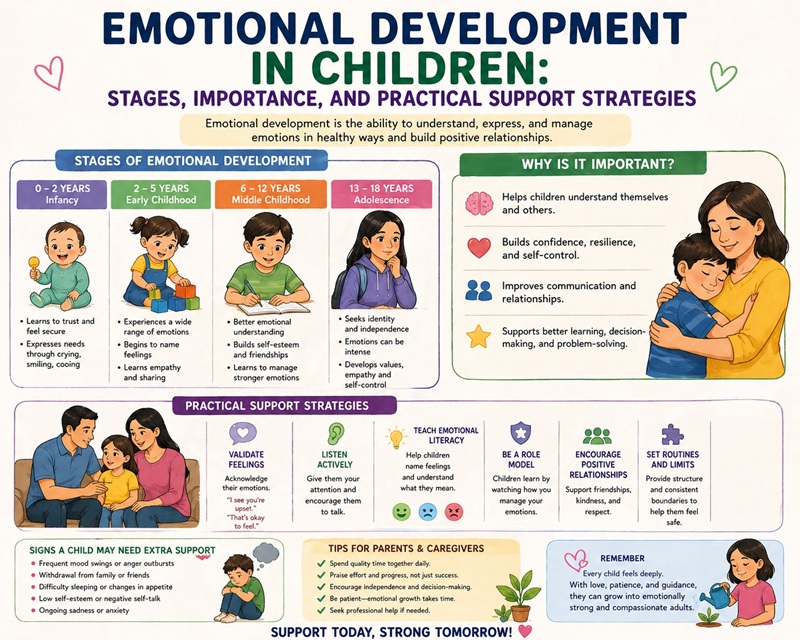
Infancy (0-2 years): During this stage, emotions are basic but intense. Infants learn trust through the “serve and return” interaction with caregivers. They express joy, fear, and frustration, laying the groundwork for secure attachment.
-
Preschool Years (3-5 years): This is a period of rapid expansion. Children begin to identify emotions in themselves and others. They start developing empathy and learn the basics of self-regulation, often through play and social interaction.
-
School Age (6-12 years): As social circles expand, children face more complex social dynamics. They learn to manage “big emotions” like disappointment or rejection and begin to understand that they can experience multiple feelings at once.
Why Emotional Development Matters
Why should we prioritize a child’s emotional landscape? The reasons are multifaceted. Firstly, children with healthy emotional foundations perform better academically. When a child can manage stress and focus despite setbacks, their cognitive abilities are fully utilized.
Secondly, it dictates the quality of their relationships. A child who understands their own feelings is better equipped to empathize with peers, leading to stronger social bonds and reduced instances of bullying. CRY India emphasizes that emotional intelligence is a key protector against mental health challenges later in life, helping children navigate the complexities of the modern world with confidence.
Practical Support Strategies for Caregivers
Supporting a child’s emotional development requires patience and intentionality. Here are a few strategies:
-
Label the Feeling: Help children find the words for what they are experiencing. Saying, “It looks like you’re feeling frustrated because that toy broke,” validates their experience and builds their emotional vocabulary.
-
Model Healthy Regulation: Children are keen observers. When you handle your own stress calmly, you provide a blueprint for them to follow.
-
Create a Safe Space: Ensure the home or classroom is an environment where all emotions—even the difficult ones—are accepted. Discipline should focus on the behavior, not the emotion behind it.
-
Practice Empathy: Encourage children to think about how others might feel in different scenarios. This is a core pillar of social-emotional learning.
At CRY India, our work involves creating supportive ecosystems where children’s voices are heard and their emotional needs are met. By investing in these “soft skills” today, we are building a more empathetic and stable society for tomorrow.
Frequently Asked Questions (FAQs)
1. At what age does emotional development start? It begins the moment a child is born. The initial bond and responsiveness of a caregiver to an infant’s cries are the very first building blocks of emotional security and trust.
2. How does emotional development affect school performance? Children who have strong emotional regulation skills are better able to concentrate, follow directions, and handle the social pressures of a classroom, which directly correlates to better academic outcomes.
3. What can I do if my child has frequent emotional outbursts? Outbursts are often a sign that a child lacks the vocabulary or tools to express a complex feeling. Consistent routines, labeling feelings, and teaching simple breathing techniques can help them regain control.
4. How does CRY India support the emotional health of children? CRY India works through community-based programs that train teachers and parents to recognize emotional distress and provide psychological support, ensuring a holistic approach to child rights and development.
5. Is emotional development different for every child? Yes. While there are general milestones, every child has a unique temperament. Factors like environment, genetics, and culture play a role in how a child perceives and expresses their emotions.
Must Read: 5 Severe Consequences of Child Labour | CRY India Advocacy