Planning an international trip today involves more than just booking flights and accommodations—it’s also about staying connected seamlessly without draining your wallet. Whether you’re navigating unfamiliar streets, booking rides, sharing travel updates, or managing work on the go, reliable mobile connectivity is essential.
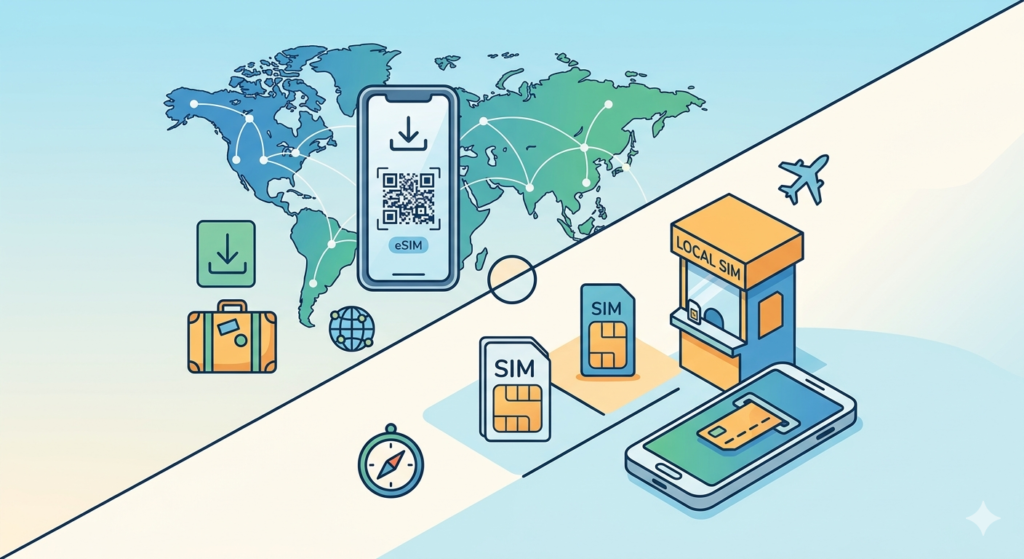
One of the biggest decisions travelers face is choosing between an eSIM and a local SIM card. Both options have their own advantages and drawbacks, and the right choice depends on your travel style, destination, budget, and convenience preferences.
In this comprehensive guide, we’ll explore everything you need to know about eSIMs vs local SIM cards, helping you make an informed decision for your next international trip.
What Is an eSIM?
An eSIM (embedded SIM) is a digital SIM that allows you to activate a mobile plan without needing a physical SIM card. Instead of inserting a chip into your phone, you download a mobile profile directly onto your device.
Modern smartphones—including newer iPhones, Samsung Galaxy devices, and Google Pixels—support eSIM technology. This innovation eliminates the need to swap SIM cards physically, making it particularly appealing for international travelers.
Key Features of eSIM:
- No physical SIM required
- Instant activation via QR code or app
- Ability to store multiple profiles
- Easy switching between networks
What Is a Local SIM Card?
A local SIM card is a traditional physical SIM purchased in the country you’re visiting. You insert it into your phone and use a local carrier’s network for calls, texts, and data.
Local SIM cards have been the go-to solution for international travelers for years, especially in regions where data is affordable and widely available.
Key Features of Local SIM:
- Physical SIM card required
- Purchased at airport shops, stores, or kiosks
- Uses local network rates
- Often includes local phone number
Advantages of Using an eSIM for Travel
1. Instant Connectivity
With eSIM, you can set up your data plan before even boarding your flight. Once you land, your phone connects automatically—no searching for SIM vendors or dealing with language barriers.
This is especially useful for:
- Late-night arrivals
- Tight itineraries
- First-time travelers
2. No Physical Hassle
No more fumbling with tiny SIM cards or worrying about losing your primary SIM. Everything is digital, streamlined, and secure.
3. Dual SIM Flexibility
Most eSIM-compatible phones allow you to keep your home SIM active while using an eSIM for data. This means:
- You can still receive OTPs
- Stay reachable on your original number
- Use data from your travel plan
4. Global Coverage
eSIM providers often offer regional or global plans, allowing you to travel across multiple countries without switching SIM cards.
If you’re exploring multiple destinations, this becomes incredibly valuable.
5. Easy Plan Management
You can switch plans, top up data, or change regions directly from your phone. No need to visit a store.
For example, platforms like Voyaio make it simple to browse, purchase, and activate eSIM plans tailored for international travelers—all from one place.
Advantages of Using a Local SIM Card
1. Lower Cost
Local SIM cards are often significantly cheaper than eSIM plans, especially in countries where mobile data is inexpensive.
Countries like:
- Thailand
- Turkey
- UAE
- Indonesia
offer very affordable prepaid packages.
2. Local Phone Number
Having a local number can be useful for:
- Booking taxis
- Making reservations
- Contacting local services
Some services may not accept international numbers.
3. Strong Network Performance
Local SIMs connect directly to domestic carriers, often providing better speed and coverage compared to some eSIM providers that rely on partner networks.
Disadvantages of eSIM
While eSIMs are convenient, they’re not perfect.
1. Device Compatibility
Not all phones support eSIM technology. Older or budget devices may not have this feature.
2. Higher Cost
eSIM plans can sometimes be more expensive than local SIM options, especially for long-term stays.
3. No Local Number
Most eSIM plans are data-only, meaning:
- No local calls
- No SMS (in many cases)
Disadvantages of Local SIM Cards
1. Time-Consuming Setup
You may need to:
- Wait in line at airport kiosks
- Show passport for registration
- Deal with unfamiliar processes
2. Language Barriers
In some countries, communication with vendors can be challenging.
3. SIM Swapping Hassle
You’ll need to remove your home SIM and keep it safe—losing it can be a major inconvenience.
When Should You Choose an eSIM?
An eSIM is ideal if:
- You want instant connectivity upon arrival
- You’re traveling to multiple countries
- You prefer convenience over cost
- You want to avoid physical SIM handling
- You rely heavily on apps like Google Maps, Uber, or WhatsApp immediately after landing
For frequent travelers, business professionals, and digital nomads, eSIMs offer unmatched flexibility.
If you’re looking for a reliable option, you can explore international eSIM plans through Voyaio, which provides coverage across multiple destinations with easy activation.
When Should You Choose a Local SIM?
A local SIM is a better choice if:
- You’re staying in one country for an extended period
- You want the cheapest possible data rates
- You need a local phone number
- Your phone does not support eSIM
Backpackers and long-term travelers often prefer this option for its cost-effectiveness.
eSIM vs Local SIM for Different Travel Types
1. Short Trips (1–7 Days)
Best Choice: eSIM
Why?
- No time wasted
- Immediate usability
- Enough data for navigation and communication
- Multi-Country Trips
Best Choice: eSIM
Switching SIMs in every country is impractical. eSIMs with regional coverage simplify everything.
- Long-Term Stays (2+ Weeks)
Best Choice: Local SIM
You’ll save more money and benefit from local rates.
- Business Travel
Best Choice: eSIM
Time is critical, and convenience outweighs cost.
- Budget Travel
Best Choice: Local SIM
If you’re counting every dollar, local SIMs are hard to beat.
Security Considerations
eSIM Security
- Cannot be physically removed
- Less risk of theft or loss
- Remote management possible
Local SIM Security
- Can be lost or stolen
- Needs careful handling
- Easier to replace in-country
Compatibility Checklist for eSIM
Before choosing an eSIM, ensure:
- Your phone supports eSIM
- It’s unlocked
- You have internet access for activation
Popular compatible devices include:
- iPhone XS and newer
- Samsung Galaxy S20 and newer
- Google Pixel 3 and newer
Cost Comparison: Is eSIM Worth It?
While eSIMs may appear more expensive upfront, consider the hidden costs of local SIMs:
- Transportation to SIM shops
- Time spent purchasing
- Potential overpaying due to lack of knowledge
In many cases, the convenience of eSIM outweighs the price difference.
Final Verdict: Which One Should You Choose?
There’s no one-size-fits-all answer.
- Choose eSIM for convenience, flexibility, and seamless travel
- Choose local SIM for affordability and local integration
Ultimately, your decision should align with your travel priorities.
Conclusion
Staying connected while traveling internationally doesn’t have to be complicated. Both eSIMs and local SIM cards offer viable solutions, but they cater to different types of travelers.
If you value ease, speed, and flexibility, eSIM is the modern solution that aligns with today’s digital lifestyle. On the other hand, if budget and local accessibility matter more, a traditional SIM card still holds strong.
As travel continues to evolve, so does connectivity—and choosing the right option can significantly enhance your overall experience.
Before your next trip, take a moment to evaluate your needs, compare your options, and choose wisely. A well-connected journey is always a better one.