Essential Guide to Engine Tuning with a Feeler Gauge
Accuracy is essential in engine tuning since even a slight deviation in the clearance of the components may have an impact on the efficiency and lifespan of the engine. Therefore, accurate measuring equipment must be used in tuning engines. One of such devices is a feeler gauge.
Used for setting the clearance of the valves, measuring the spark plugs’ gap, or other components, this measuring instrument is crucial in the engine tuning process. This article will discuss the feeler gauge in depth, including its functions, applications, and usage.
What is a feeler gauge?
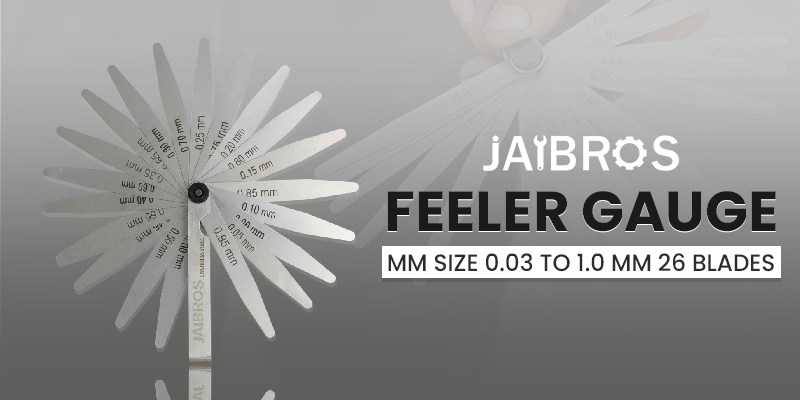
Feeler gauges are measuring devices consisting of thin metal blades of varying lengths. They allow measuring the distance between mechanical components.
A typical set of feeler consists of several blades to allow choosing a blade of the appropriate thickness. For those who use the metric system, metric feeler gauges are widely available.
Importance of Engine Tuning
Engine tuning is vital for maintaining performance, efficiency, and durability. Incorrect clearance leads to:
- Decreased engine power output
- Increased fuel usage
- Engine noise
- Accelerated wear and tear
Measurement accuracy ensures that all components work as intended, hence increasing effectiveness.
Common Uses in Engine Tuning
1. Tuning the Valve Clearance
One of the vital uses in engine tuning involves measuring the gap between the valves for accurate clearance. Misalignment of this gap may result in wrong mixture of air and fuel flow.
By using this equipment:
- Valve timing is improved
- The engine performs more efficiently
- There is less noise and wear and tear
2. Tuning the Spark Plug Gap
This involves setting a gap between electrodes in spark plugs for successful ignition.
By using this equipment:
- Engine ignition is optimized
- The fuel burns optimally
- Engine performance is improved
3. Piston Ring Gap
Piston rings play an important role in ensuring the right compression level. This requires accurate measurement to ensure:
- Higher compression levels
- Lower oil consumption
- Longer engine life
4. Tuning the Timing System Gaps
In some engines, timing components require precise spacing. Measuring these gaps ensures smooth synchronization of engine parts.
Role in CNC and Mechanical Applications
Though primarily useful for car-related tasks, the instrument has applications in CNC tools as well. The uses include:
- Setting up machines
- Checking alignment
- Precision measurements
Be it any CNC tool or just performing your engine servicing task, measurement accuracy is always essential.
Steps to Perform Tuning Using This Tool
Perform the following steps to tune your engine:
- Select the Right Blade
- Use the blade that matches your requirement for thickness.
- Place the Blade Between Parts
- Position the blade in the gap you wish to measure.
- Observe the Resistance
- There should be some resistance while inserting the blade.
- Fine Tune the Gap
- Adjust the gap till you get a perfect fit.
Choosing the Right Feeler Gauge
In the process of choosing a feeler, take into account:
Blade Span
The larger it is, the more accurate the readings you can make.
Manufacturing Standards
Steel blades must be made from high quality materials.
Unit of Measurement
Use a metric unit of measurement if your job requires such readings.
Ease of Use
Blades must be flexible but sturdy enough not to break.
Advantages of Choosing This Tool:
- Accurate measurement
- User-friendly
- Affordable
- Can be used for various purposes
- Engine efficiency
Tips on Care
For longevity:
- Keep blades clean
- Store blades in a dry place
- Do not bend blades
- Lightly oil blades to protect from corrosion
Correct maintenance of your tool will help it last for years.
Jaibros – Reliable Source for Quality Tools
Looking for top-quality measurement tools and accessories for CNC operations? Look no further than Jaibros, an industry leader. Offering a wide array of tools, including feeler gauges, collets, holders, and other CNC tools, offers the most precise and durable tools to both professional and amateur users. Being a CNC tools online shop in India on the rise ensures convenient access to high-end tools all over India.
Most Common Mistakes
Choosing the incorrect blade size
- Trying to fit the blade in a very tight space
- Neglecting regular maintenance of your tools
- Failing to double-check the measurements taken
To avoid common mistakes, one should focus on achieving accuracy.
Conclusion
In any case, proper tool selection, correct technique use, and regular maintenance of tools will lead to perfectly tuned engines. The importance of using a gauge when adjusting the engine cannot be overstated.
A feeler gauge is essential when it comes to adjusting the engine because it ensures that the engine runs at its highest efficiency level possible.
FAQs
- How is the feeler gauge used for engine tuning?
The tool helps measure and regulate the minute spaces such as valve clearance and spark plug gap in engines.
- What is the distinction between a regular and metric feeler gauge?
The metric feeler gauge measures in millimeters, while a regular gauge measures in inches.
- How will you pick the best feeler gauge set?
Consider its blade selection, durability, and compatibility with the system of measurement.
- Is the instrument suitable for CNC operations?
Absolutely, it has applications in CNC tool calibration, alignments, and fine tuning.
- How frequently should it be maintained?
Cleaning and storing it appropriately after each use ensure its longevity.