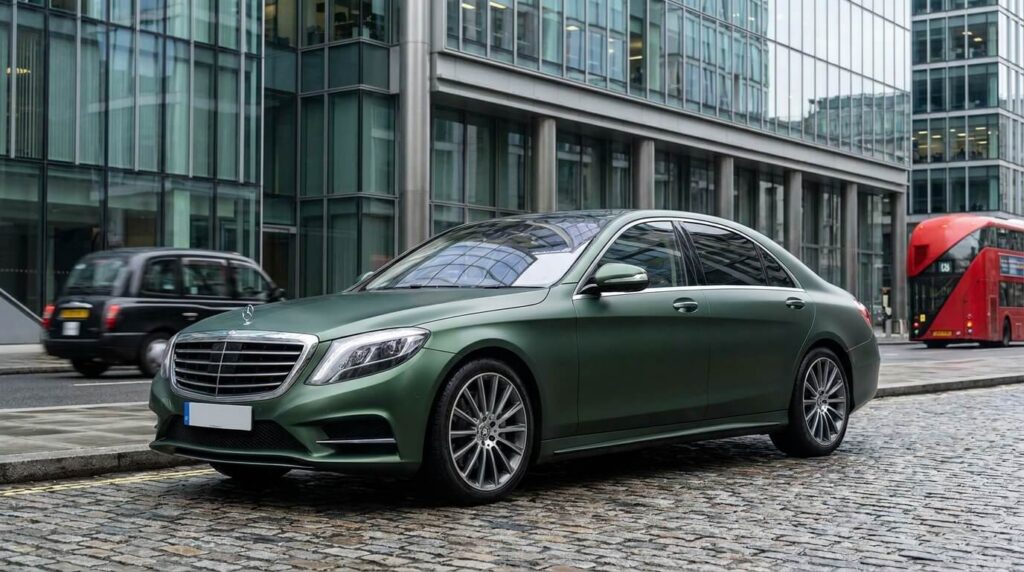
A green vinyl wrap for cars is a high-performance adhesive film applied over a vehicle’s original paint to change its appearance. Instead of repainting your car, you install a removable vinyl layer that delivers a fresh green finish in matte, gloss, satin, or metallic textures.
Manufacturers engineer automotive vinyl films with air-release technology, pressure-sensitive adhesives, and UV-resistant coatings. These features help installers apply the wrap smoothly while protecting the original paint underneath.
Car enthusiasts, business owners, and everyday drivers choose vinyl wrapping because it offers flexibility. You can transform a factory-white sedan into a bold racing green coupe without permanent modification. If you decide to switch styles later, professionals can remove the film safely.
Why Choose a Green Car Wrap Over Paint?
Many vehicle owners compare vinyl wrapping with traditional resprays. While high-quality paint jobs deliver impressive results, they require sanding, priming, multiple coats, and curing time. A wrap simplifies the process.
Cost plays a major role. A professional paint job in a custom green shade can cost significantly more than a full vinyl wrap. Wrap installation also takes less time, often two to five days depending on vehicle size.
Vinyl wraps offer additional advantages:
- Protect original paint from UV exposure and minor scratches
- Allow reversible color changes
- Provide access to unique finishes not easily replicated with paint
- Maintain higher resale value by preserving factory coating
Luxury and performance car owners often use color change wraps to experiment with bold shades like British Racing Green or military matte olive without affecting the vehicle’s long-term value.
Popular Shades and Finishes of Green Vinyl Wrap
Green has evolved into one of the most requested car wrap colors. Automakers and aftermarket specialists now offer a wide spectrum of tones and finishes.
Matte Green
Matte green vinyl wrap delivers a non-reflective, stealth-inspired appearance. Shades like matte army green and matte forest green create a rugged, tactical look that suits SUVs, trucks, and sports cars.
Drivers who prefer understated elegance often choose matte finishes because they reduce glare and create a modern aesthetic.
Gloss and Metallic Green
Gloss green mimics factory paint with a shiny, polished surface. Emerald green and racing green remain popular among sports car enthusiasts.
Metallic green vinyl incorporates fine metal flakes into the film, reflecting light dynamically. This finish works particularly well on performance vehicles like BMW M models, Audi RS series, and Ford Mustangs.
Satin, Chrome, and Specialty Finishes
Satin green sits between matte and gloss. It offers subtle sheen without excessive shine, making it ideal for premium styling.
Chrome green wraps create a bold, mirror-like effect. While eye-catching, chrome films require expert installation due to their delicate structure.
Brands like TeckWrap and KPMF also produce iridescent or color-shifting green films that transition between teal, emerald, and gold under different lighting conditions.
Best Vinyl Wrap Brands for Green Finishes
Choosing a reputable brand ensures durability, color consistency, and easier installation.
3M 2080 Series
3M remains one of the most trusted names in automotive films. The 2080 line includes several green options in gloss, matte, and satin finishes. Installers appreciate its Controltac adhesive technology for repositioning during application.
Avery Dennison Supreme Wrapping Film
Avery Dennison produces vibrant, high-performance films with excellent conformability. Their satin and metallic greens deliver strong visual depth.
VViViD Vinyl
VViViD offers budget-friendly options suitable for DIY users. While professionals may prefer premium brands, VViViD works well for partial wraps and accent panels.
KPMF (Kay Premium Marking Films)
KPMF specializes in unique color tones and metallic effects. Many custom shops recommend this brand for standout green finishes.
Selecting certified installers trained by 3M or Avery Dennison improves results. Certification ensures proper surface preparation, stretching techniques, and post-heating processes.
How to Maintain a Green Vinyl Wrapped Car
Proper maintenance preserves color vibrancy and extends lifespan.
Wash your vehicle regularly using pH-neutral car shampoo. Avoid abrasive brushes or automatic car washes with harsh bristles.
Whenever possible:
- Park in shaded areas
- Remove bird droppings quickly
- Use microfiber cloths for cleaning
- Apply wrap-safe sealants or ceramic coatings
Some detailing professionals apply ceramic coating specifically formulated for vinyl surfaces. This extra layer enhances UV protection and makes cleaning easier.
Avoid high-pressure washing directly along edges, as strong jets may cause lifting over time.
Common Mistakes to Avoid
Many vehicle owners choose the cheapest installer without checking certifications or portfolio work. Poor installation reduces durability and visual appeal.
Do not ignore surface preparation. Installers must thoroughly clean and decontaminate paint before application.
Avoid exposing freshly wrapped vehicles to heavy rain or washing within the first 48 hours. Adhesive needs time to bond securely.
Frequently Asked Questions
1. How long does a green vinyl wrap last?
High-quality vinyl wraps typically last five to seven years with proper care and maintenance.
2. Will a vinyl wrap damage my car’s original paint?
No. When professionals install and remove the wrap correctly, it protects the factory paint underneath.
3. Can I wrap only part of my car in green vinyl?
Yes. Many drivers wrap roofs, hoods, or accent panels instead of the entire vehicle.
4. Is matte green harder to maintain than gloss?
Matte finishes require specific cleaning products to avoid shine marks, but maintenance remains manageable with proper care.
5. Does wrapping affect insurance premiums?
Insurance companies may classify wraps as cosmetic modifications. Always inform your provider to ensure proper coverage.
6. Can I remove the wrap myself later?
You can remove vinyl using heat and careful peeling, but professionals minimize risk of adhesive residue or damage.