Hail Damage Roof Repair
The Quick Answer Before We Get Into the Details
In most cases, yes, hail damage roof repair is possible when the damage is limited to isolated impact points on shingles or flashing. Full roof replacement typically becomes necessary when the fiberglass mat is cracked across a wide area, when the roof is already older than 15 to 20 years, or when the damage is widespread across multiple slopes rather than concentrated in a few spots. The only way to know for certain is a hands-on inspection, but that general rule holds true for the large majority of hail claims we see around Katy.
Now let’s break down exactly how that decision actually gets made.
Hail Damage Roof Repair: When It’s Actually Enough
Signs Repair Will Hold Up
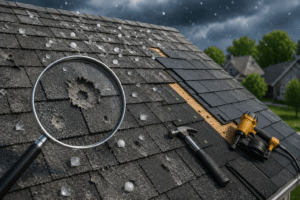
Repair is usually the right call when the damage is scattered but shallow, meaning the granules got knocked loose in a few spots without the shingle mat cracking all the way through underneath. A handful of bruised shingles, a cracked pipe boot, or dented flashing concentrated on one section of roof are all classic repair situations.
What a Repair Actually Involves
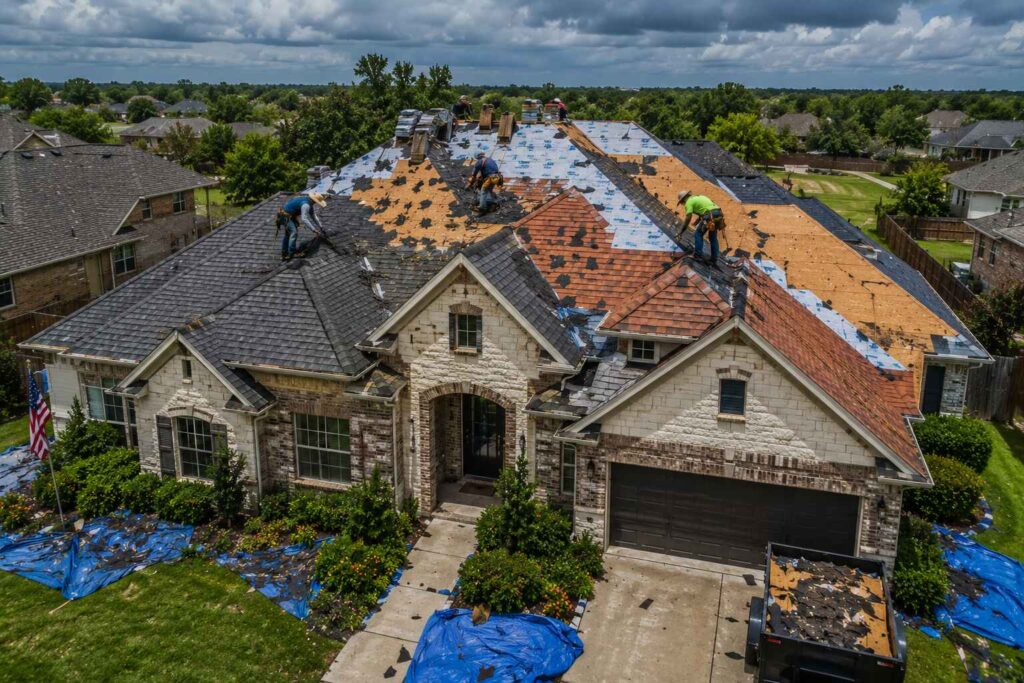
A proper hail damage roof repair means replacing the specific damaged shingles, resealing or replacing compromised flashing, and checking the surrounding area to make sure nothing nearby was missed during the initial inspection. It’s a targeted fix, not a full teardown, and when done correctly it can last just as long as the rest of the existing roof.
When the Damage Points to Roof Replacement Instead
Signs You’re Past the Point of Repair
Once hail has cracked the shingle mat across a large portion of the roof, individual patch repairs stop being a reliable fix. Water finds its way through no matter how carefully each spot gets sealed, which is the point where full roof replacement becomes the more sensible option rather than repeatedly patching a roof that keeps leaking.
How Roof Age Changes the Decision
An older roof changes the math significantly. Shingles lose flexibility over time, so hail that would only bruise a newer roof can crack an aging one clean through. A roof already past 15 to 20 years old, combined with moderate to severe hail damage, usually points toward replacement rather than a repair that’s likely to need revisiting again soon.
How a Professional Actually Makes the Repair vs. Replacement Call
The Inspection Process
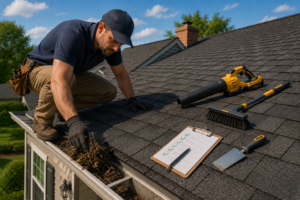
A real inspection means walking every slope of the roof, checking flashing and pipe boots up close, and looking at the attic from underneath for early moisture signs. Steep or high roofs sometimes call for drone imagery instead of walking the surface directly, but the goal stays the same, a complete, honest picture of the roof’s actual condition rather than a quick glance from the ground.
What Insurance Adjusters Look For
Adjusters typically evaluate the density and depth of hail impacts across multiple test squares on the roof, along with the roof’s age and overall condition. A roof with scattered, isolated hits often gets approved for repair coverage, while widespread damage across most slopes tends to support a full replacement claim.
Repair vs. Replacement: A Side by Side Comparison
- Damage pattern: Isolated and scattered points on hits favor repair. Dense, widespread cracking across multiple slopes favors replacement.
- Roof age: Under 15 years generally supports repair. Over 15 to 20 years generally supports replacement.
- Shingle mat condition: Bruised but intact favors repair. Cracked through favors replacement.
- Cost today: Repair is significantly cheaper upfront. Replacement is a larger investment but resets the roof’s full lifespan.
- Long-term outlook: A good repair on a younger roof can last as long as the rest of the roof. Patching an aging, heavily damaged roof often means repeating the process again soon.
What Happens If You Choose Wrong
Choosing repair when the damage actually warranted replacement usually means dealing with the same leak again within a year or two, often after spending money on a fix that never really solved the underlying problem. On the flip side, replacing a roof that only needed a targeted repair means spending significantly more than necessary. This is exactly why an honest, hands-on inspection matters more than a guess based on a quick look from the driveway. If you’re weighing this decision right now, our hail damage roof repair team can walk the roof and give you a clear answer instead of a sales pitch toward the bigger job.
Final Thoughts on Making the Right Call for Your Roof
The repair versus roof replacement decision really comes down to how deep and widespread the damage actually is, combined with how much life the roof had left before the storm hit. According to the Federal Alliance for Safe Homes, a thorough professional inspection following any hailstorm is the most reliable way to determine the true extent of damage and the appropriate next step. Trust the inspection over a guess, and lean toward a roofer willing to recommend the cheaper repair option when it genuinely makes sense, not just the company pushing the biggest job available.
If you’re not sure which side of that line your roof falls on, call 346-733-8558 and we’ll get you a straight answer.
Frequently Asked Questions
- Can hail damage roof repair be done on an older roof?
Sometimes, but older roofs are more prone to needing full replacement since aged shingles crack more easily under impact than newer, more flexible materials.
- Does insurance typically prefer repair over full roof replacement?
Insurance coverage depends on the actual extent of damage found during inspection, not a general preference. Adjusters approve whichever outcome matches the documented condition of the roof.
- How many hail hits on a roof usually justify a full replacement?
There’s no single fixed number, since it depends on hit density, depth, and how the damage is distributed across the roof’s slopes, which is why a professional inspection matters more than a rough count.
- Is it ever worth choosing replacement even if repair would technically work?
In some cases, yes, particularly if the roof is already close to the end of its expected lifespan and a large repair cost would be better invested into a full reset instead.
- How long does a typical hail damage roof repair take compared to a full replacement?
A targeted repair often takes a single day, while a full replacement typically takes one to three days depending on roof size and complexity.