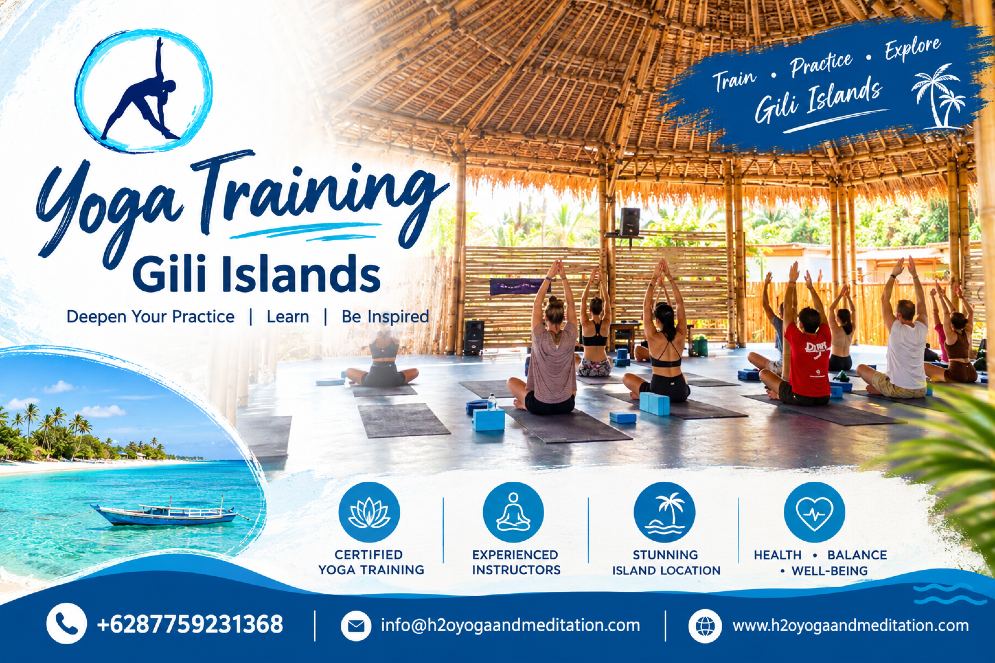
Choosing the right yoga program involves more than finding a beautiful island destination. You need to consider your experience, learning goals, teaching qualifications, course structure, accommodation, and budget. The Gili Islands and nearby Lombok offer opportunities to explore yoga in a peaceful tropical setting while connecting with an international community of practitioners.
If you are researching Yoga Training Gili Islands programs, understanding the differences between regular yoga classes, immersive retreats, and professional teacher training courses will help you make an informed decision. H2O Yoga and Meditation Center can help you explore yoga experiences in the Gili Islands area and a 200-hour yoga teacher training opportunity on neighboring Lombok.
1. Define Your Yoga Training Goals
Start by identifying what you want to achieve. Some people want to improve flexibility, build strength, manage stress, and develop a consistent personal practice. Others want to study yoga philosophy, meditation, anatomy, and teaching techniques to prepare for a career as a yoga instructor.
A short yoga retreat or series of classes may suit you if you want to relax and deepen your existing practice. However, if you plan to teach professionally, look for a structured teacher training program with a comprehensive curriculum, supervised teaching practice, and a recognized certification pathway.
Clarifying your goals will help you narrow down the Yoga Training Gili Islands options that match your needs.
2. Compare the Course Curriculum
A quality yoga training program should offer more than daily physical practice. Review the curriculum carefully to understand what you will learn and how the instructors deliver each subject.
For a comprehensive 200-hour teacher training, look for these essential areas:
- Asana and alignment: Learn postures, functional movement, modifications, and safe sequencing.
- Yoga philosophy: Explore traditional teachings, yoga ethics, and the principles behind the practice.
- Anatomy and biomechanics: Understand how the body moves and how to adapt poses for different students.
- Pranayama and meditation: Develop breathing techniques, concentration, and mindfulness.
- Teaching methodology: Practise cueing, class planning, adjustments, and guiding students.
- Practical teaching: Gain experience leading classes and receiving constructive feedback.
A balanced curriculum connects traditional yoga teachings with practical knowledge, helping students develop a more complete understanding of the discipline.
3. Check the Teachers’ Experience and Credentials
Your instructor can significantly influence your training experience. Before enrolling, review the lead trainer’s qualifications, teaching background, areas of expertise, and approach to student development.
For example, the 200-hour Hatha-Vinyasa Yoga Teacher Training associated with Samastha Yoga Shala features Maddy Jones, an E-RYT 500 teacher with more than 11 years of teaching experience and over 4,000 teaching hours. Her background includes a bachelor’s degree in kinesiology, a concentration in strength and conditioning, and advanced biomechanics training.
The program combines alignment, yoga philosophy, movement science, meditation, and teaching practice. Its small-group format, designed for approximately 8–12 students, also allows for individual feedback and closer interaction with the trainer.
When comparing programs, ask how much direct guidance you will receive and whether the teaching team can support students with different experience levels.
4. Understand the Difference Between Gili Air and Lombok
The Gili Islands and Lombok offer different environments for yoga experiences. Gili Air provides a relaxed island atmosphere, with sandy beaches, tropical surroundings, and opportunities to combine yoga with swimming, snorkelling, and quiet time.
Lombok offers a broader range of natural settings, from coastal areas to green landscapes and jungle retreats. It can be a suitable choice for students seeking a dedicated, month-long learning experience away from their usual routines.
Although people often search for Yoga Training Gili Islands, it is worth considering programs on neighboring Lombok as well. H2O Yoga and Meditation Center is based on Gili Air, while the Samastha Yoga Shala 200-hour teacher training takes place in Kuta, Lombok. These are separate locations, so confirm the venue before booking your travel.
5. Review the Duration and Daily Schedule
The length of a program affects how deeply you can explore yoga. Weekend courses and short retreats provide an introduction, while a 200-hour teacher training requires a more substantial commitment.
The Samastha Yoga Shala program follows a four-week format, with 28 days and 27 nights of accommodation. Its schedule combines morning Hatha-Vinyasa practice, anatomy workshops, philosophy, pranayama, meditation, and practice teaching.
Regular teaching sessions give students opportunities to build confidence gradually rather than waiting until the end of the course to lead a class.
Before enrolling, check the daily timetable, rest periods, attendance requirements, assessment process, and opportunities to integrate what you learn.
6. Compare Accommodation, Meals, and Total Costs
Your surroundings can influence your comfort and ability to focus. Compare accommodation options, meals, facilities, group sizes, and the support available throughout the course.
The Samastha Yoga Shala training includes 27 nights of accommodation in a jungle retreat setting in Kuta, Lombok, daily yoga and meditation practice, 200 contact hours, training materials, mentorship, and two meals per day. Vegetarian, vegan, and omnivore meal options are available.
Accommodation choices include a shared dormitory, a shared triple room, and a private room. Prices vary by room type and booking period, so check the current rates directly with the provider.
Remember to budget for flights, transfers, travel insurance, additional meals, and optional activities. A clear breakdown of included and excluded expenses will help you compare programs fairly.
7. Verify Certification and Student Support
If your goal is to become a yoga teacher, check whether the program offers a recognized qualification and what you must complete to graduate. Ask about teaching assessments, practical examinations, attendance requirements, and the support available after graduation.
The Samastha Yoga Shala course is described as a 200-hour program offered through a Yoga Alliance-accredited Registered Yoga School. Confirm the school’s current registration, certification requirements, and eligibility details before making a payment.
You should also consider whether the program provides individual feedback, a supportive learning environment, and opportunities to connect with fellow students from different countries.
Explore Yoga Training Opportunities with H2O Yoga and Meditation Center
Choosing the right program starts with matching your personal goals to the course structure, teaching team, location, and budget. Whether you want to deepen your personal practice on Gili Air or pursue a professional qualification on Lombok, careful research will help you choose an experience that suits your needs.
H2O Yoga and Meditation Center can help you explore yoga opportunities in the Gili Islands area. For details about the 200-hour Hatha-Vinyasa teacher training, curriculum, accommodation, and enrollment, visit Samastha Yoga Shala. H2O community members can use the code H2O10 at checkout for a 10% discount, subject to the provider’s current terms.