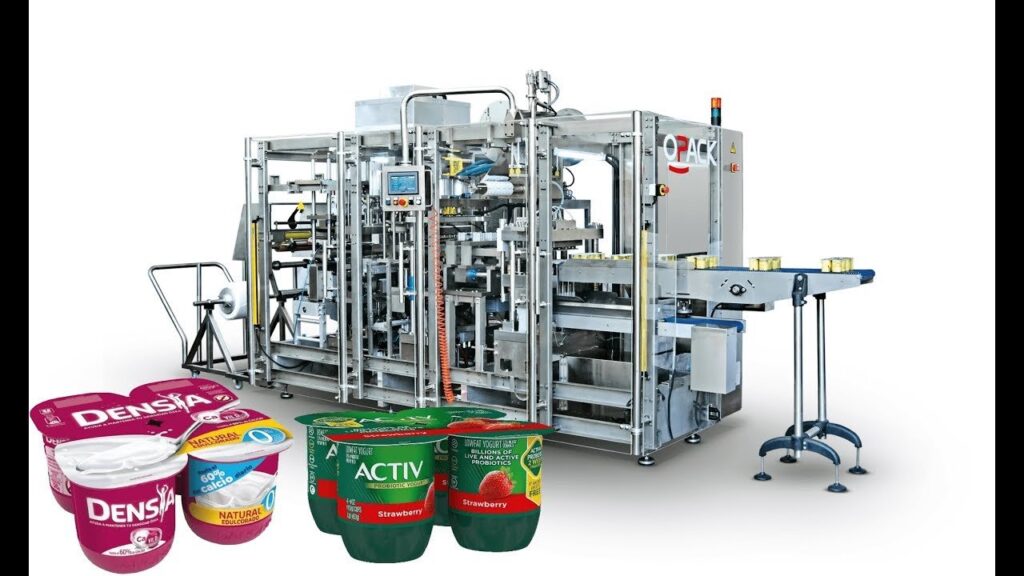
Selecting the right packaging can have a major impact on yogurt production, product protection, and customer satisfaction. Yogurt containers need to withstand filling, sealing, refrigeration, transportation, and everyday handling. Businesses also need packaging that supports efficient production and attractive product presentation. Choosing suitable custom yogurt containers requires careful consideration of material, size, sealing performance, design, and manufacturing requirements.
Start With the Container Material
Material selection is one of the first decisions to make when developing yogurt packaging. The material should be suitable for direct food contact and provide enough strength for automated filling, sealing, storage, and transportation.
Plastic is widely used for yogurt containers because it can offer a combination of lightweight construction, durability, and design flexibility. Different plastics have different characteristics, so manufacturers should select materials based on the yogurt product, filling process, temperature requirements, and packaging equipment.
Confirm Food-Grade Requirements
Yogurt containers come into direct contact with food, making material safety essential. Choose packaging manufactured from suitable food-contact materials and ask suppliers for relevant compliance documentation.
Clear specifications can help ensure that the selected containers meet applicable food packaging requirements in the intended market.
Choose the Correct Container Size
Container capacity should match the portion size and product requirements. Yogurt brands may need small individual cups, medium family-sized containers, or larger formats for foodservice applications.
Consider the product volume along with the required headspace. The container should provide enough room for filling and sealing without causing spills or interfering with the lid or foil seal.
Offering multiple sizes can also help a brand serve different customer groups while maintaining consistent packaging design.
Evaluate Filling Requirements
The container must work smoothly with the filling equipment used in production. Dimensions, opening size, wall thickness, and container shape can influence how efficiently yogurt moves through an automated filling line.
Before finalizing the design, discuss container specifications with the filling equipment supplier and packaging manufacturer. This coordination can help prevent problems involving alignment, positioning, or filling accuracy.
Consider Container Stability
Containers should remain stable during filling and sealing. A base that provides adequate support can reduce tipping and improve production consistency.
For high-speed filling operations, even small dimensional variations can create problems. Consistent manufacturing tolerances therefore play an important role in reliable production.
Focus on Sealing Performance
A secure seal helps protect yogurt from contamination and maintains product quality throughout storage and transportation. The container rim should provide a suitable surface for the selected sealing material and equipment.
Test the sealing process with actual production conditions whenever possible. Evaluate seal strength, consistency, appearance, and ease of opening.
Check Compatibility With Sealing Materials
Yogurt packaging may use foil, plastic film, or other sealing materials depending on the production system and product requirements. The container and seal need to work together effectively.
A strong seal should remain intact during refrigeration, transportation, and handling while still allowing consumers to open the package conveniently.
Consider Refrigeration Performance
Yogurt requires controlled storage conditions, so the container should maintain its shape and performance throughout refrigeration and distribution.
Consider how the packaging will perform when exposed to cold temperatures, condensation, and repeated handling. If the product moves through different temperature environments, evaluate the container’s dimensional stability under those conditions.
Think About Branding and Appearance
Packaging provides an important opportunity to communicate a brand’s identity. Container shape, color, labels, printed graphics, and finishing options can influence how products appear on refrigerated shelves.
Custom yogurt containers allow businesses to develop packaging that supports specific branding requirements. A distinctive shape or carefully designed surface can help products stand out while providing space for nutritional information, ingredients, product names, and other required details.
Plan the Labeling Area
Make sure the container provides enough usable space for labels or direct decoration. The surface should also support consistent application without wrinkles, misalignment, or distortion.
If the container uses in-mold labeling, coordinate the artwork and container design during the early development stage.
Review Storage and Transportation Needs
Yogurt containers should remain stable during packing, stacking, and transportation. Consider whether the containers nest efficiently before filling and stack securely after sealing.
Efficient packaging dimensions can help businesses maximize refrigerated storage space and reduce transportation inefficiencies.
Test Before Ordering in Bulk
Before committing to large-scale production, request samples and perform practical tests. Evaluate filling, sealing, stacking, refrigeration, handling, and appearance.
Testing the complete packaging system can reveal issues that may not appear in computer models or technical drawings. Making changes before production tooling is finalized can also reduce development costs and delays.
Select a Reliable Manufacturing Partner
The manufacturer should understand both container production and your specific filling and sealing requirements. Review their experience, quality control processes, customization capabilities, production capacity, and lead times.
Clear communication throughout development helps ensure that the final packaging meets technical and commercial expectations.
Make an Informed Packaging Decision
Choosing the right yogurt packaging involves more than selecting an attractive container. Businesses should evaluate material safety, capacity, filling compatibility, sealing performance, refrigeration, branding, storage, transportation, and manufacturing consistency.
By carefully testing and developing custom yogurt containers, yogurt producers can create packaging that supports efficient production while protecting product quality and strengthening brand presentation. A thoughtful selection process can reduce production problems and provide dependable packaging throughout the product’s lifecycle.

![move-in-and-move-out-cleaning-checklist[1]](https://blogpulseguru.com/wp-content/uploads/2026/10/move-in-and-move-out-cleaning-checklist1-300x200.jpg)
![professional-trauma-cleanup-service[1]](https://blogpulseguru.com/wp-content/uploads/2026/10/professional-trauma-cleanup-service1-300x174.jpg)


![software-1[1]](https://blogpulseguru.com/wp-content/uploads/2026/10/software-11-300x169.jpg)