VisiFlora
Eye health is an important part of everyday wellness, yet it is easy to overlook until screen fatigue, dryness, or changes in vision begin to affect daily activities. Long hours at work, frequent smartphone use, limited sleep, and inconsistent eating habits can all influence how comfortable the eyes feel. For this reason, many adults are becoming more interested in nutrition and supplements as part of their overall eye care routine.
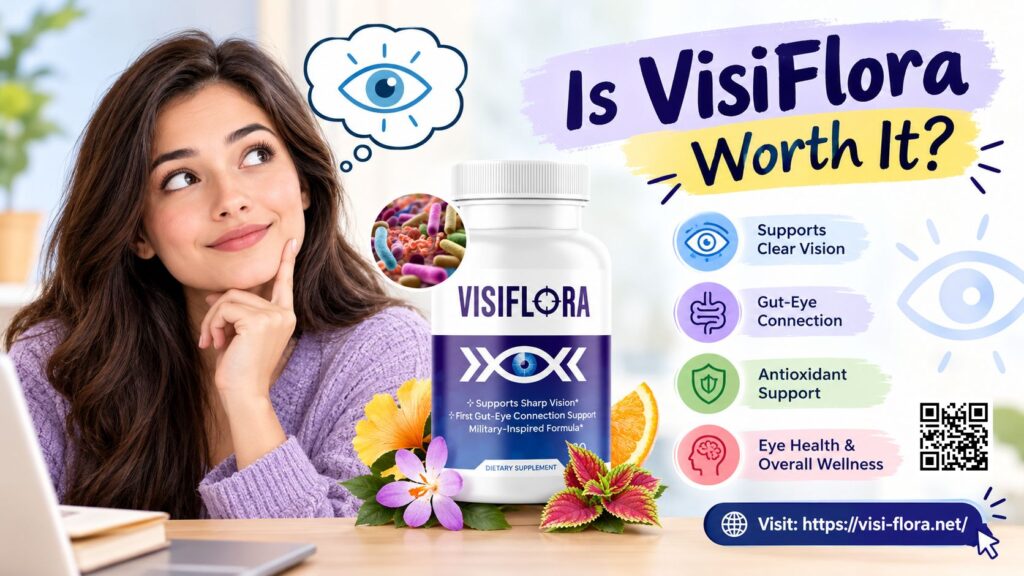
VisiFlora is marketed as a dietary supplement designed to support eye wellness through a combination of vitamins, minerals, antioxidants, carotenoids, and botanical extracts. One aspect that distinguishes its marketing approach is its focus on the gut-eye connection, which explores the possible relationship between digestive health, nutrient absorption, and eye wellness.
But is VisiFlora worth considering? The answer depends on its ingredients, the quality of the available evidence, individual nutritional needs, and expectations about what a supplement can realistically accomplish.
What Is VisiFlora?
VisiFlora is a dietary supplement marketed for vision support and everyday eye wellness. Its official website presents the product as a formula combining nutrients and botanical ingredients associated with eye health.
The product’s marketing emphasizes two broad areas: nutritional support for the eyes and the potential connection between digestive wellness and visual health. This approach reflects growing interest in how different body systems interact, although research into these relationships is still developing.
The formula’s advertised ingredients include nutrients and plant compounds such as lutein, zeaxanthin, vitamin A, zinc, bilberry extract, saffron extract, vitamins C and E, taurine, and alpha-lipoic acid. Other botanical ingredients are also listed in the product’s online descriptions.
Each ingredient has its own characteristics, research history, and safety considerations. However, evidence about an individual ingredient should not automatically be interpreted as proof that a finished supplement delivers a particular benefit.
People considering VisiFlora should review the current product label to confirm the complete ingredient list, serving size, and quantity of each ingredient. This is especially important when a formula combines numerous nutrients and botanical extracts.
What Is the Gut-Eye Connection?
The gut-eye connection is an area of scientific interest involving possible relationships between the digestive system, immune activity, metabolism, inflammation, and eye health.
The digestive tract contains a complex community of microorganisms commonly called the gut microbiome. These microorganisms interact with the body in different ways, including through the production of substances involved in normal biological processes.
Researchers are investigating whether changes in the gut microbiome and related inflammatory pathways may be associated with certain eye conditions. Nutrition, genetics, age, environmental factors, and overall health may all influence these relationships.
However, the science is complex. Research suggesting an association between digestive health and eye conditions does not prove that a particular supplement can improve vision by changing the gut microbiome.
VisiFlora’s gut-eye positioning is therefore best understood as the product’s proposed nutritional approach rather than proof of a clinically established treatment mechanism.
Why Nutrient Absorption Matters
The body needs to absorb nutrients from food and supplements before it can use them. Digestive health can influence how some nutrients are processed and absorbed, although the degree of influence varies by nutrient and individual circumstances.
A balanced diet that includes vegetables, fruits, legumes, whole grains, nuts, and other nutrient-rich foods can support general nutritional health. Adequate hydration and appropriate medical care for digestive problems may also be important.
A supplement cannot compensate for every nutritional problem, and consumers should be cautious of claims suggesting that digestive support automatically leads to clearer eyesight.
Key Ingredients in the VisiFlora Formula
VisiFlora is promoted as a multi-ingredient eye wellness formula. Understanding the general role of its advertised ingredients can help consumers evaluate the product more carefully.
The descriptions below explain the ingredients’ known nutritional or research context. They do not establish that VisiFlora itself has been proven to improve eyesight or prevent eye disease.
Lutein and Zeaxanthin
Lutein and zeaxanthin are carotenoids found in foods such as spinach, kale, collard greens, and other leafy vegetables. They are also present in the macula, a part of the retina responsible for detailed central vision.
These compounds are of particular interest in eye nutrition because they contribute to macular pigment and have antioxidant properties.
Research on certain combinations of nutrients, including the AREDS2 formulation, has helped establish a role for specific supplements in slowing the progression of age-related macular degeneration in selected people at increased risk. Those findings apply to the studied formulation and population, not automatically to every product containing lutein or zeaxanthin.
For consumers evaluating VisiFlora, the actual amounts of these carotenoids matter. Simply seeing their names on a label does not establish that a product provides a studied dose or produces a specific result.
Vitamin A and Beta-Carotene
Vitamin A is essential for normal vision and supports the functioning of the retina. It also contributes to maintaining healthy tissues on the surface of the eye.
Beta-carotene is a plant pigment that the body can convert into vitamin A. Carrots, sweet potatoes, pumpkin, and certain leafy vegetables are familiar dietary sources.
Adequate vitamin A intake is important, but taking excessive amounts does not necessarily improve eyesight. High-dose supplementation can carry risks, and beta-carotene supplements require particular caution among current and former smokers because high-dose studies have identified increased lung cancer risk in these groups.
Anyone considering a supplement containing beta-carotene should check the dosage and discuss personal risk factors with a qualified healthcare professional.
Zinc
Zinc is an essential mineral involved in many biological processes, including normal visual function. It is found in foods such as meat, shellfish, dairy products, legumes, and nuts.
Certain eye-health research has examined zinc in combination with other nutrients, particularly for people with specific stages of age-related macular degeneration.
However, zinc supplementation is not automatically necessary for everyone. Excessive intake can cause side effects and interfere with copper absorption. Consumers should review the quantity provided by VisiFlora alongside any other supplements they already take.
Vitamins C and E
Vitamins C and E are antioxidants that help protect cells from oxidative stress. Vitamin C is found in fruits and vegetables, while vitamin E is present in foods such as nuts, seeds, and vegetable oils.
Both vitamins have been studied in nutritional approaches to eye health. Their role depends on the overall dietary pattern, dosage, and specific formulation being considered.
The presence of these vitamins in a supplement can contribute to its nutritional profile, but it does not prove that the finished product prevents eye disease or reverses vision changes.
Bilberry Extract
Bilberry is a fruit containing anthocyanins, plant compounds that have attracted scientific interest because of their biological properties.
Bilberry has traditionally been associated with eye wellness, but the evidence for specific vision benefits remains limited and varies across studies. Results involving one extract or dosage cannot automatically be applied to every commercial supplement.
Consumers should therefore assess bilberry as one ingredient within the broader formula rather than treating it as a guarantee of better night vision or sharper eyesight.
Saffron Extract
Saffron is a botanical ingredient that has been investigated for several potential health applications, including aspects of visual function.
Some research has explored saffron preparations in particular eye-health settings. However, study findings depend on the preparation, dosage, duration, and population examined.
The presence of saffron extract in VisiFlora does not establish that the complete formula has undergone equivalent clinical testing.
Taurine and Alpha-Lipoic Acid
Taurine is a naturally occurring compound involved in several normal physiological functions. Alpha-lipoic acid is another compound studied for its role in antioxidant processes.
Both ingredients appear in a variety of supplement formulations. Their biological roles make them relevant to nutritional research, but their inclusion does not independently demonstrate that a supplement improves visual clarity or treats eye conditions.
The quantities provided and the overall formulation should be reviewed before drawing conclusions about potential benefits.
Other Botanical Ingredients
VisiFlora’s online ingredient descriptions also mention botanical compounds such as bilberry, ginkgo biloba, eyebright, and Coleus forskohlii, along with other nutrients and plant extracts.
These ingredients have different properties and research backgrounds. Some have been studied for circulation-related effects or other biological processes, but research findings are not always consistent, and evidence may be limited.
Herbal ingredients can also interact with medications. Ginkgo biloba, for example, may increase bleeding risk in certain circumstances, particularly when combined with medicines that affect blood clotting.
People who take prescription medicines or have existing health conditions should consult a healthcare professional before starting a multi-ingredient supplement.
Potential Benefits: What Can Consumers Realistically Expect?
VisiFlora is marketed to support eye wellness, visual comfort, and nutritional needs associated with normal vision. Whether it offers meaningful benefits to a particular individual depends on several factors.
Nutritional Support for Normal Eye Function
Vitamins and minerals contribute to normal body functions, including those required for healthy vision. A supplement may be useful when it helps address an identified nutritional gap or meets a specific need recommended by a healthcare professional.
However, people who already obtain adequate amounts of essential nutrients may not experience additional benefits from taking more.
Interest in Macular Wellness
Lutein and zeaxanthin have received considerable attention in eye nutrition research. Their presence may be relevant to consumers interested in macular health.
Still, the benefit of a product depends on its complete formulation, ingredient quantities, quality, and intended use. VisiFlora should not be assumed to have the same effects as a clinically studied eye supplement simply because some ingredients overlap.
Everyday Visual Comfort
Some people experience eye discomfort after extended screen use, reading, or close-up work. Screen positioning, reduced blinking, glare, dry environments, and uncorrected vision problems may contribute to these symptoms.
VisiFlora is marketed for eye wellness, but there is insufficient product-specific evidence here to establish that it reliably relieves digital eye strain or dry eyes.
Practical changes to screen habits and an eye examination may be more appropriate first steps for persistent discomfort.
Supporting a Broader Wellness Routine
A supplement can be considered alongside a balanced diet and other healthy habits. However, it should not become the central strategy for maintaining eye health.
Regular eye examinations, UV protection, suitable vision correction, nutritious meals, and attention to new symptoms remain important regardless of whether a person chooses to use a supplement.
Is VisiFlora Worth It?
Whether VisiFlora is worth considering depends on what a consumer expects from it and how much reliable information is available about its formulation.
There are several factors to assess before making a decision.
Review the Ingredient Amounts
A long ingredient list may look appealing, but the number of ingredients alone does not establish quality or effectiveness.
Check whether the label lists the amount of each ingredient per serving. If amounts are unclear or hidden within a proprietary blend, it may be difficult to compare the product with research findings or other supplements.
The current packaging should be treated as the primary reference for ingredient quantities and directions.
Look for Product-Specific Clinical Evidence
Research about individual nutrients is useful background, but it is not the same as a clinical trial on VisiFlora itself.
A well-designed study of the finished product would provide more relevant information about its safety, tolerability, and potential effects. Without such evidence, claims about specific improvements in eyesight should be treated cautiously.
Testimonials and customer stories may describe personal experiences, but they cannot establish that a product caused a particular result or that other consumers will experience the same outcome.
Consider Your Individual Needs
The usefulness of a supplement can depend on age, dietary habits, existing conditions, medications, and nutritional status.
Someone with a diagnosed eye condition may require a specific treatment or a clinically studied nutritional formulation. Another person with no identified nutritional deficiency may not need an additional supplement at all.
A healthcare professional can help determine whether supplementation makes sense for an individual’s circumstances.
Compare the Cost and Purchase Terms
Before ordering VisiFlora, review the current price, serving size, shipping charges, return policy, and any recurring billing terms.
Compare the cost with alternatives that provide clear ingredient amounts and transparent product information. A higher price does not automatically mean a better product, and a promotional discount is not evidence of clinical effectiveness.
Who Should Be Careful Before Using VisiFlora?
Dietary supplements are not suitable for everyone. Multi-ingredient formulas deserve particular attention because they can combine nutrients and botanicals with different safety considerations.
Speak with a qualified healthcare professional before using VisiFlora if you:
- Take prescription medicines or several other supplements.
- Have a diagnosed eye condition or a history of significant vision problems.
- Have allergies to any listed ingredients.
- Are pregnant, planning pregnancy, or breastfeeding.
- Have a chronic medical condition that may affect supplement safety.
- Already take a multivitamin containing overlapping nutrients.
Follow the directions on the current product label and do not exceed the recommended serving. Stop taking the product and seek appropriate advice if you experience a suspected adverse reaction.
VisiFlora should not replace prescribed medication, professional eye care, or recommended treatment for an existing condition.
Sudden vision loss, significant eye pain, new flashes or floaters, or a sudden increase in visual disturbances require urgent medical evaluation. These symptoms should not be managed by trying a supplement first.
Daily Habits That Support Eye Wellness
Regardless of whether someone chooses VisiFlora, everyday habits remain a practical foundation for maintaining eye health.
Eat a Balanced Diet
Include leafy greens, colorful vegetables, fruit, whole grains, legumes, nuts, and suitable protein sources. These foods supply a range of nutrients that contribute to overall health.
Carrots and sweet potatoes provide beta-carotene, while leafy green vegetables supply lutein and zeaxanthin. A varied eating pattern is generally more useful than relying on one food or a single supplement.
Take Breaks During Screen Use
The 20-20-20 rule offers a simple reminder: approximately every 20 minutes, look at something about 20 feet away for at least 20 seconds.
Adjust screen brightness and text size to comfortable levels, reduce glare, and position the screen at a suitable distance. Taking breaks can help reduce the demands of prolonged close-up work.
Protect Your Eyes From Ultraviolet Light
Wear sunglasses that block 99% to 100% of UVA and UVB radiation when outdoors. A wide-brimmed hat can offer additional protection.
UV protection is useful throughout the year and is not limited to particularly sunny days.
Get Regular Eye Examinations
Eye examinations can identify changes in vision and signs of certain eye conditions before obvious symptoms appear. The appropriate schedule depends on age, medical history, risk factors, and existing diagnoses.
People with diabetes, a family history of eye disease, or persistent visual symptoms may need more frequent professional monitoring.
Where to Buy VisiFlora
Consumers interested in learning more about VisiFlora can visit the website provided for the product:
Visit the Official website >>>
Before placing an order, review the current product label, ingredient quantities, serving instructions, price, shipping details, and refund conditions. Make sure the product information is clear and that the terms of purchase are understood.
It is also sensible to check whether claims about vision support are backed by evidence specific to the finished formula. Marketing language can describe the intended purpose of a supplement, but it does not independently establish clinical effectiveness.
The decision to purchase VisiFlora should be based on transparent product information, individual needs, realistic expectations, and professional advice when appropriate.
Frequently Asked Questions
What is VisiFlora?
VisiFlora is a dietary supplement marketed for eye wellness and vision support. Its advertised formula includes a combination of vitamins, minerals, carotenoids, antioxidants, and botanical ingredients.
Does VisiFlora improve eyesight?
The product is marketed for vision support, but the information discussed here does not establish that VisiFlora improves visual acuity or restores lost eyesight. Vision changes can have different causes and should be assessed by an eye care professional.
What is the gut-eye connection?
The gut-eye connection refers to scientific interest in possible relationships between the digestive system, the immune system, inflammation, and eye health. Research is ongoing, and it does not establish that a particular supplement can treat eye disease through this pathway.
Does VisiFlora contain lutein and zeaxanthin?
The product’s online descriptions list lutein and zeaxanthin among its advertised ingredients. Check the current product label to confirm the exact formulation and the amount provided per serving.
Can VisiFlora replace an eye examination?
No. A supplement cannot replace a comprehensive eye examination, prescription lenses, or treatment recommended for an eye condition.
Is VisiFlora suitable for daily use?
Follow the directions and warnings on the current label. People taking medicines, living with medical conditions, or considering supplements during pregnancy or breastfeeding should consult a healthcare professional first.
How long does VisiFlora take to work?
A reliable timeframe cannot be established without appropriate clinical evidence on the finished product. Be cautious of claims promising rapid or guaranteed improvements in vision.
Final Verdict: Making an Informed Decision About VisiFlora
VisiFlora offers a multi-ingredient approach to eye wellness, with its marketing emphasizing familiar nutrients and botanical extracts alongside the gut-eye connection. Some of these ingredients have established nutritional roles, while others have been studied for potential benefits in specific contexts.
However, the presence of researched ingredients does not prove that the finished product produces the same outcomes as clinical studies. Clear ingredient quantities, relevant product-specific research, appropriate safety information, and transparent purchase terms are important when deciding whether a supplement represents good value.
For adults considering VisiFlora, the sensible approach is to view it as a possible addition to a broader wellness routine rather than a replacement for a balanced diet or professional eye care. Healthy screen habits, UV protection, regular eye examinations, and attention to changes in vision remain essential.
Ultimately, whether VisiFlora is worth considering depends on individual needs and the quality of evidence available for the product itself. An informed decision starts with realistic expectations, careful label review, and a clear understanding of what nutritional supplementation can and cannot do.
Disclaimer: This article is for informational purposes only and does not provide medical advice. Dietary supplements are not intended to diagnose, treat, cure, or prevent disease. Individual results may vary. Consult a qualified healthcare professional before starting a new supplement, particularly if you have a medical condition or take medication.