ISO 27001 Certification in Malaysia – Strengthening Information Security and Building Business Trust
ISO 27001 Certification in Malaysia is becoming increasingly important for organizations that want to protect sensitive information, strengthen cybersecurity, and establish customer confidence. As businesses in Malaysia continue to adopt digital technologies, cloud computing, online transactions, and data-driven operations, protecting information has become a major business priority.
ISO/IEC 27001 is an internationally recognized standard for Information Security Management Systems (ISMS). It provides a structured framework that helps organizations identify security risks, implement appropriate controls, and continuously improve their information security practices.
Whether a business operates in manufacturing, IT, healthcare, finance, education, logistics, or professional services, implementing ISO 27001 can help protect valuable information and improve operational reliability.
What Is ISO 27001 Certification?
ISO 27001 is an international information security standard developed to help organizations establish, implement, maintain, and continually improve an Information Security Management System (ISMS).
The standard focuses on protecting three essential aspects of information security:
-
Confidentiality: Ensuring that information is accessible only to authorized individuals.
-
Integrity: Maintaining the accuracy and reliability of business information.
-
Availability: Ensuring that information and systems remain accessible when required.
By following ISO 27001 requirements, organizations can develop a systematic approach to managing cybersecurity risks rather than depending only on individual security measures.
Why Is ISO 27001 Certification Important in Malaysia?
Malaysia has a growing digital economy supported by industries such as financial services, information technology, telecommunications, e-commerce, healthcare, and manufacturing. These industries regularly handle confidential business information, employee records, customer details, and financial data.
Cybersecurity threats, unauthorized access, data breaches, and information theft can create significant financial and reputational damage.
Obtaining ISO 27001 Certification in Malaysia helps organizations demonstrate their commitment to information security and responsible data management.
Some important reasons businesses consider ISO 27001 certification include:
-
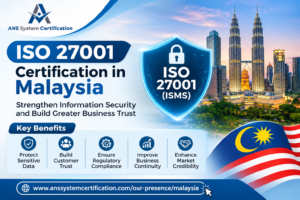
Improved Information Security: Helps identify vulnerabilities and implement security controls to protect sensitive information.
-
Risk Management: Provides a structured method for assessing and addressing information security risks.
-
Customer Confidence: Demonstrates that an organization follows internationally recognized information security practices.
-
Business Opportunities: Can strengthen eligibility for contracts and partnerships where information security requirements are important.
-
Regulatory Support: Helps organizations establish processes that support applicable data protection and information security obligations.
-
Business Continuity: Encourages organizations to prepare for security incidents and reduce operational disruptions.
Key Requirements of ISO 27001
To achieve ISO 27001 certification, an organization must establish an effective Information Security Management System that meets the applicable standard requirements.
The main requirements include:
1. Understanding the Organization
Organizations must identify internal and external factors that may affect information security. They should also understand the expectations of customers, employees, suppliers, regulators, and other relevant stakeholders.
2. Risk Assessment and Treatment
Businesses must identify potential information security risks, evaluate their impact, and determine suitable measures to reduce or manage those risks.
3. Information Security Policies
Organizations should develop documented policies that communicate information security responsibilities, objectives, and guidelines to employees and relevant stakeholders.
4. Access Control
Appropriate access restrictions must be established to ensure that confidential information and business systems are available only to authorized users.
5. Employee Awareness and Training
Employees play an important role in maintaining information security. Organizations should provide awareness programs and training to help employees recognize cybersecurity threats and follow security procedures.
6. Monitoring and Continuous Improvement
Regular monitoring, internal audits, management reviews, and corrective actions help ensure that the ISMS remains effective and continues to improve.
ISO 27001 Certification Process in Malaysia
Organizations planning to achieve certification should follow a systematic approach to developing and implementing their ISMS.
The general certification process includes the following steps:
Step 1: Initial Assessment
Understand the organization’s existing information security practices, business operations, and security requirements.
Step 2: Define the ISMS Scope
Determine which departments, locations, systems, processes, and information assets will be covered under the ISMS.
Step 3: Risk Assessment
Identify potential threats, vulnerabilities, and risks associated with information assets. Evaluate their likelihood and potential business impact.
Step 4: Documentation and Implementation
Develop the required information security policies, procedures, risk treatment plans, and other relevant documentation. Implement appropriate security controls across the organization.
Step 5: Internal Audit
Conduct an internal audit to evaluate whether the implemented ISMS meets ISO 27001 requirements and identify areas requiring improvement.
Step 6: Management Review
Top management should review the effectiveness of the ISMS, audit results, security objectives, and improvement opportunities.
Step 7: Certification Audit
An independent certification body conducts the certification audit, generally through Stage 1 and Stage 2 assessments. If the organization successfully meets the applicable requirements and receives certification approval, the ISO 27001 certificate is issued.
Regular surveillance audits help ensure that the management system continues to meet the standard’s requirements.
Industries That Benefit from ISO 27001 Certification
ISO 27001 Certification in Malaysia is suitable for organizations of different sizes and industries. Since information security is important across almost every business sector, the standard offers valuable benefits to:
-
Information Technology Companies: Protect software applications, cloud platforms, databases, and customer information.
-
Banking and Financial Institutions: Strengthen the security of financial transactions and confidential customer records.
-
Healthcare Organizations: Protect patient information, electronic medical records, and healthcare databases.
-
Manufacturing Companies: Secure production data, intellectual property, and operational technology.
-
Educational Institutions: Protect student records, examination information, and institutional databases.
-
E-commerce Businesses: Improve the security of online transactions and customer information.
-
Telecommunication Companies: Strengthen network security and protect communication-related information.
-
Consulting and Professional Services: Maintain the confidentiality of client documents, business strategies, and sensitive records.
Implementing an ISMS allows these organizations to develop consistent security practices and improve their ability to manage information-related risks.
Choosing the Right ISO 27001 Certification Body in Malaysia
Selecting an appropriate certification body is an important part of the certification journey. Organizations should consider the certification body’s competence, industry experience, audit capabilities, transparency, and accreditation status.
A reliable certification body should provide a clear explanation of the certification process, audit requirements, applicable scope, and certification conditions.
ANS System Certification offers certification-related services to organizations seeking to strengthen their management systems and demonstrate conformity with international standards.
Businesses looking for ISO 27001 Certification in Malaysia can explore the services and country-specific information available through ANS System Certification.
Before selecting a certification provider, organizations should verify the relevant accreditation and recognition arrangements and ensure that the certification scope meets their business and customer requirements.
Conclusion
Information security is no longer limited to IT departments; it is an essential part of modern business management. Organizations must take proactive measures to protect confidential information, manage cybersecurity risks, and maintain customer trust.
Achieving ISO 27001 Certification in Malaysia helps businesses establish a structured Information Security Management System, improve risk management, strengthen internal controls, and demonstrate their commitment to information protection.
For Malaysian businesses aiming to expand into international markets, build stronger partnerships, and improve information security practices, ISO 27001 certification can be a valuable strategic investment.
By implementing the standard and working with a suitable certification body, organizations can create a more secure, reliable, and resilient business environment.