ISO 55001 Certification Australia: Building Excellence in Asset Management
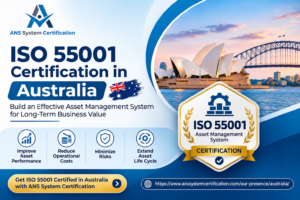
Effective asset management plays a vital role in the long-term success of businesses across Australia. Organisations depend on physical assets such as machinery, equipment, infrastructure, buildings, vehicles, and technology to maintain smooth operations and achieve business objectives. Managing these assets efficiently helps reduce operational costs, improve productivity, and ensure long-term sustainability. This is where ISO 55001 Certification Australia becomes valuable for organisations looking to establish a structured Asset Management System (AMS).
ISO 55001 is an internationally recognised standard that provides requirements for establishing, implementing, maintaining, and continually improving an Asset Management System. It helps organisations manage their assets throughout their lifecycle while balancing performance, cost, opportunities, and risks.
What Is ISO 55001 Certification?
ISO 55001 certification demonstrates that an organisation has implemented an effective Asset Management System aligned with internationally recognised requirements. The standard provides a systematic framework for managing assets from acquisition and operation to maintenance and disposal.
The primary objective of ISO 55001 is to help organisations maximise the value of their assets while supporting business goals. It encourages organisations to make informed decisions, manage asset-related risks, and improve operational performance.
Businesses in Australia operating in manufacturing, construction, transportation, energy, healthcare, mining, and infrastructure sectors can benefit from implementing this standard.
Importance of ISO 55001 Certification Australia
Australian businesses operate in competitive environments where asset reliability, operational efficiency, and cost management are essential. Poor asset management can result in unexpected breakdowns, financial losses, safety concerns, and reduced productivity.
Achieving ISO 55001 Certification Australia helps organisations establish consistent asset management practices and improve control over their resources.
The certification supports businesses in developing long-term asset management strategies, improving maintenance planning, identifying potential risks, and ensuring that assets contribute effectively to organisational objectives.
It also helps organisations demonstrate their commitment to quality, reliability, accountability, and continuous improvement.
Key Benefits of ISO 55001 Certification
Implementing ISO 55001 offers several benefits to Australian organisations.
1. Improved Asset Performance
The standard helps organisations monitor and evaluate asset performance throughout their lifecycle. Regular maintenance and performance assessments help improve reliability and reduce unexpected equipment failures.
2. Reduced Operational Costs
Effective asset management allows businesses to identify unnecessary expenses, optimise maintenance schedules, and make better investment decisions. This contributes to improved cost efficiency.
3. Better Risk Management
ISO 55001 encourages organisations to identify and address asset-related risks. This helps minimise operational disruptions, equipment failures, and potential financial losses.
4. Increased Productivity
Well-maintained assets support uninterrupted operations and improve overall business productivity. Organisations can use their resources more effectively and achieve operational targets.
5. Enhanced Stakeholder Confidence
ISO 55001 certification demonstrates that an organisation follows a structured approach to managing its assets. This can strengthen confidence among customers, suppliers, business partners, and other stakeholders.
6. Support for Sustainable Business Growth
By improving resource utilisation and asset lifecycle planning, organisations can support environmental responsibility, operational sustainability, and long-term business development.
Who Needs ISO 55001 Certification in Australia?
ISO 55001 is suitable for organisations of different sizes and industries that manage significant physical or non-physical assets.
Some of the major industries that can benefit include:
- Manufacturing companies managing machinery and production equipment.
- Construction organisations responsible for buildings and infrastructure.
- Mining companies managing heavy equipment and operational facilities.
- Energy and utility providers maintaining critical infrastructure.
- Transportation and logistics businesses managing vehicles and transport networks.
- Healthcare organisations managing medical equipment and facilities.
- Government departments and public infrastructure organisations.
Whether a business manages a small collection of equipment or a large infrastructure network, ISO 55001 provides a structured approach to asset management.
ISO 55001 Certification Process in Australia
Organisations seeking ISO 55001 Certification Australia generally follow a systematic certification process.
Step 1: Understand the Requirements
The organisation reviews ISO 55001 requirements and identifies how they apply to its business activities, assets, and operational objectives.
Step 2: Gap Analysis
An assessment is conducted to identify differences between existing asset management practices and the requirements of the standard.
Step 3: Implement the Asset Management System
The organisation establishes policies, objectives, procedures, responsibilities, and controls for managing its assets effectively.
Step 4: Employee Awareness and Training
Employees and relevant personnel are made aware of their responsibilities and the importance of maintaining the Asset Management System.
Step 5: Internal Audit
An internal audit is conducted to evaluate whether the implemented system meets the applicable ISO 55001 requirements.
Step 6: Management Review and Corrective Actions
Management reviews the system’s performance, audit findings, risks, and opportunities. Any identified nonconformities are addressed through appropriate corrective actions.
Step 7: Certification Audit
An independent certification body evaluates the organisation’s Asset Management System. Certification is granted when the organisation successfully demonstrates conformity with the applicable requirements.
Why Choose ANS System Certification?
Choosing a reliable certification body is an important consideration when pursuing ISO certification. ANS System Certification provides certification-related services to organisations seeking to demonstrate conformity with internationally recognised management system standards.
Businesses interested in ISO 55001 Certification Australia can explore the available certification services and relevant information through the ANS System Certification Australia page.
Organisations should select an appropriately accredited certification body and verify its accreditation scope before proceeding with certification.
Conclusion
Asset management is essential for improving operational efficiency, controlling costs, reducing risks, and achieving sustainable business growth. ISO 55001 provides Australian organisations with an internationally recognised framework for managing assets effectively throughout their lifecycle.
Obtaining ISO 55001 Certification Australia can help businesses improve asset performance, strengthen stakeholder confidence, and establish a culture of continuous improvement. With a structured Asset Management System, organisations can make better decisions, protect valuable resources, and build a stronger foundation for long-term success.