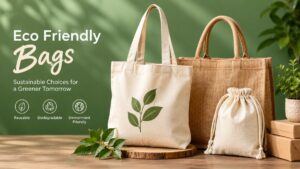
Choosing between jute and cotton bags affects more than the purchase price. For wholesalers, retailers, and private-label brands, the wrong material can increase packing costs, create inconsistent product presentation, or reduce customer satisfaction. When comparing Eco Friendly Bags, buyers should evaluate material performance, intended use, printing requirements, order specifications, and freight costs before approving a bulk purchase.
Specifications: What Should Buyers Compare?
Both materials have practical advantages, but neither suits every application. Buyers sourcing from Eco Friendly Bags Manufacturers should compare the following specifications before requesting quotations.
| Specification | Jute Bags | Cotton Bags |
| Material appearance | Textured, natural finish | Softer, woven fabric appearance |
| Typical positioning | Grocery, gifting, promotional packaging | Retail shopping, merchandise, promotional giveaways |
| Branding | Works with suitable printing or labels | Offers options for printing and branding |
| Handling | Texture and construction affect usability | Fabric weight, stitching, and handles affect usability |
| Key limitation | Coarser texture may not suit every application | Fabric quality and construction influence cost and durability |
Check the overlooked details
Do not approve a bag based on material name alone. Confirm dimensions, fabric construction, handle length, stitching, closure, print area, and acceptable colour variation.
A useful procurement observation: two bags described as cotton can differ considerably in fabric weight and construction. Likewise, jute bags with similar dimensions may have different handle reinforcement and finishing.
Ask for a physical sample with the intended artwork. Check whether the bag stands as expected, carries the intended contents, and maintains a suitable appearance after normal handling. Record approved specifications in the purchase order so production can be checked against the same reference.
Objective: Five Criteria for Evaluating Suppliers
When comparing Eco Friendly Bags Suppliers, assess their ability to meet your actual order requirements rather than choosing the lowest quotation.
- Material and construction: Check the proposed fabric, dimensions, stitching, handles, and finishing. A supplier who identifies these details clearly is easier to evaluate. Vague descriptions are a warning sign.
- Sampling and approval: Request a sample matching the intended design and printing. Approve it in writing before bulk production. Skipping sampling to save time can lead to costly specification mismatches.
- MOQ and pricing: Ask for the minimum order quantity (MOQ), price breaks, printing charges, and packaging costs. A low unit price may be less attractive once setup charges, rejected pieces, and freight are included.
- Quality control: Agree on inspection points, including dimensions, stitching, handle attachment, print placement, and visible defects. Ask how nonconforming pieces will be reported and resolved.
- Production and dispatch planning: Confirm the proposed production schedule, packing method, dispatch arrangements, and required documents. Unclear shipment commitments can disrupt retail launches and promotional campaigns.
Benefits: How the Right Choice Protects Your Purchase
The better material depends on the job the bag must perform.
- Application-based selection: Jute suits buyers seeking a textured natural appearance, while cotton may suit brands preferring a softer fabric finish.
- More predictable product consistency: Documented material and dimensional requirements reduce disagreements between the approved sample and delivered batch.
- Better margin control: Comparing the complete landed cost—not just the quoted unit price—helps buyers protect margins.
- Fewer packaging surprises: Confirming folding, bundling, carton quantities, and outer-pack protection reduces handling uncertainty.
- More effective branding: Reviewing artwork placement and print legibility on an actual sample helps prevent expensive rework.
- Clearer supplier accountability: Written specifications and inspection criteria make it easier to identify and resolve discrepancies.
There is a trade-off: cotton may be preferable for certain branded retail applications, while jute may fit rustic packaging concepts. Neither is automatically cheaper, more durable, or more environmentally responsible in every situation. Reuse patterns, material sourcing, manufacturing, and disposal all influence environmental impact.
Availability: Plan Sourcing and Freight Carefully
For Indian buyers, sourcing decisions should consider supplier location, production coordination, packaging, and the final delivery destination. Eco Friendly Bags Manufacturers in India may offer different material options and production arrangements, so compare actual quotations and documented capabilities rather than assuming all suppliers operate alike.
Before confirming an order, ask about material availability, production lead time, dispatch estimates, carton dimensions, and shipment documentation. For interstate or export shipments, packaging should protect the bags from moisture, dirt, compression, and transit damage as appropriate to the material and route.
A common buyer mistake is booking transport before confirming the finished quantity and packing dimensions. Final carton measurements can affect freight calculations. Keep the delivery schedule realistic and obtain written confirmation of important milestones.
About Us
At Square N Circle, we are based at Noor Sarai Street, Near Canal Road, Nagina, Bijnor, Uttar Pradesh-246762, India. Our website, squarencircle.com, is our online business destination. Buyers considering our product range can contact us to discuss their sourcing requirements and confirm relevant product details before placing an order.
Request a Sourcing Discussion
If you are comparing jute and cotton bags for retail, promotional campaigns, or private-label packaging, share your requirements with us.
Please include:
- Required quantity and bag dimensions
- Preferred material and intended application
- Artwork, printing, and handle requirements
- Individual packaging or bulk packing preferences
- Target market and delivery location
- Sampling requirements and expected delivery schedule
We can use these details to understand your enquiry and discuss the specifications that need confirmation before an order is finalised.
Conclusion
The right Eco Friendly Bags choice depends on the intended application, construction requirements, branding, and total landed cost—not simply whether jute or cotton has a lower quoted price. Buyers should approve a representative sample, document specifications, and confirm packaging and dispatch arrangements before committing to bulk production. Better sourcing decisions begin with measurable requirements and realistic expectations.
Frequently Asked Questions
1. Are jute or cotton bags better for bulk orders?
Jute suits textured, natural-looking packaging, while cotton suits many soft-fabric retail and promotional applications. Compare construction, branding, and landed cost before choosing.
2. How can I evaluate Eco Friendly Bags Manufacturers?
Check samples, written specifications, pricing, MOQ, inspection arrangements, packaging details, and production commitments. Verify claims rather than relying on verbal assurances.
3. What should I include in a bulk bag specification?
Record material, dimensions, handles, stitching, colour, artwork, printing position, packing method, and acceptable quality limits.
4. Are cotton bags always more durable than jute bags?
No. Durability depends on fabric construction, stitching, handle reinforcement, load, and frequency of use. Request samples and evaluate them for the intended application.
5. How do I compare Eco Friendly Bags Suppliers in India?
Compare equivalent specifications and include printing, packaging, transport, and potential rejection costs. The lowest unit quotation may not offer the lowest total cost.