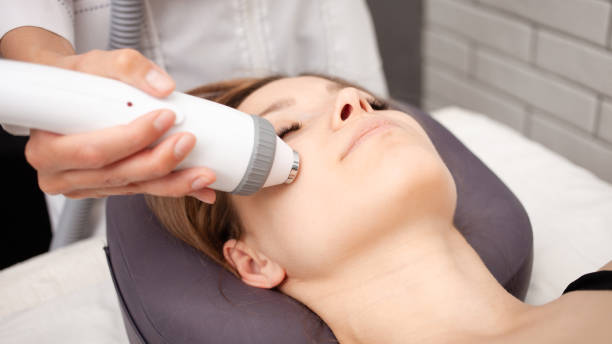
cosmetologist does rf lifting, radio waves affect skin, facelift, rejuvenation and healing. Healthy lifestyle, beautiful toned skin. cosmetology.
Laser hair removal works. But it doesn’t work the same on every skin tone. That’s the part a lot of clinics gloss over. Lighter skin with dark hair used to be the ideal match. Darker skin carried higher risk of burns or pigment changes with the older machines. Things have improved. The right laser and an experienced provider make a real difference now. Still, patients need to know what actually applies to their skin before they book.
1. Why Skin Tone Matters in the First Place
Lasers target the pigment in the hair follicle. Melanin in the skin can absorb some of that energy too. On very light skin the contrast is high, so the laser can hit the hair hard without much risk to the surrounding tissue. On deeper skin tones the contrast drops. The laser has to work more carefully or it can heat the skin itself. That’s where burns, dark spots, or light spots can show up if the settings or the device aren’t right.
2. What Modern Lasers Can Handle
Older lasers struggled with medium to deep skin tones. Newer ones do better. Nd:YAG lasers operate at a wavelength that reaches the follicle while interacting less with surface melanin. They’re generally the safer choice for darker skin. Alexandrite and diode lasers still work well on lighter and some medium tones when the provider knows how to adjust. No single laser is perfect for every person. A clinic that only owns one type of machine may not be the best fit for every patient walking in.
3. The Fitzpatrick Scale Still Gets Used
Providers often talk in Fitzpatrick types – basically a 1 to 6 scale from very fair to very deep. Types 1-3 are usually straightforward with most systems. Types 4-6 need more caution and typically the longer-wavelength lasers. Your exact tone, how you tan or burn, and any history of pigment problems all factor in. A good consult includes looking at your skin in person, not just asking you to pick a number on a chart.
4. Realistic Results Across Different Tones
Most people see significant permanent hair reduction after a series of sessions. Complete permanent removal of every single hair is rare. Darker, coarser hair responds best no matter the skin tone. Fine, light hair is harder for any laser to catch. On deeper skin tones the process can take more sessions because the energy levels stay more conservative to protect the skin. Patience matters. Spacing treatments correctly matters too.
5. Risks That Go Up with Deeper Skin Tones
Hyperpigmentation (dark marks) and hypopigmentation (light marks) are the main concerns. Burns are less common with proper equipment and technique but still possible. The risk climbs when someone uses an aggressive setting on skin that can’t handle it, or when the patient has recent sun exposure. A provider who regularly treats a range of skin tones will know how to stay in the safe zone. One who mainly sees very fair patients may not.
6. What the Actual Sessions Feel Like
Most people describe it as a rubber-band snap or quick hot pinch. Cooling systems on the newer devices help a lot. Darker skin sometimes needs more cooling and lower energy, so the sensation can feel milder. Redness afterward is normal. On deeper tones any color change needs watching. If dark or light patches appear and don’t fade, the settings or the device may need adjustment for the next visit.
7. Aftercare Is Not Optional
Sun protection is non-negotiable between sessions and for weeks after. Heat, heavy sweating, and certain skincare actives can irritate treated skin. On deeper skin tones the barrier can be a bit more reactive, so gentle products matter. Skipping aftercare is one of the faster ways to end up with unwanted pigment changes. Providers should hand you clear written instructions, not just a verbal rundown.
Factors that influence how well it works for you:
- How dark and coarse the hair is
- Your actual skin tone and any tendency toward pigment issues
- The specific laser wavelength being used
- The experience level of the person running the machine
Other Treatments People Ask About at the Same Time
While laser hair removal is happening, some patients also look at skin texture treatments. Tixel treatment sometimes comes up in the same clinics. It uses thermal energy to improve texture and mild scarring without the same pigment risks some lasers carry. It’s a different procedure entirely, but the consultation overlap is common once someone is already talking about skin and hair concerns. Worth asking about if uneven texture bothers you alongside the unwanted hair.
Conclusion
Laser hair removal can work across a wide range of skin tones today, but the device, the settings, and the person operating it all matter more when your skin has more melanin. Lighter tones still have the easiest path. Deeper tones need the right wavelength and a provider who treats them regularly. Don’t let a clinic talk you into a laser that isn’t suited for your skin just because it’s the one they have. Ask what technology they use for your tone, how many similar patients they treat, and what the realistic timeline looks like. And if texture is also on your mind, Tixel treatment is one of the options some of the same practices offer. Go in informed and the results are usually worth the process.
FAQ
1. Can people with dark skin safely get laser hair removal? Yes, with the right laser (usually Nd:YAG) and an experienced provider. Older or mismatched lasers raise the risk of pigment changes, so the technology and the operator both matter.
2. How many sessions do most people need? Typically six to eight, sometimes more for deeper skin tones or finer hair. Results appear gradually across the series rather than all at once.
3. Does laser hair removal work on light or gray hair? Not well. The laser needs pigment in the hair to target. Very light, red, or gray hair often sees little to no reduction.
4. Is Tixel treatment related to laser hair removal? No. Tixel is a skin-resurfacing treatment that uses heat to improve texture and mild scarring. Some clinics offer both, so patients sometimes discuss them in the same visit, but they treat different concerns.