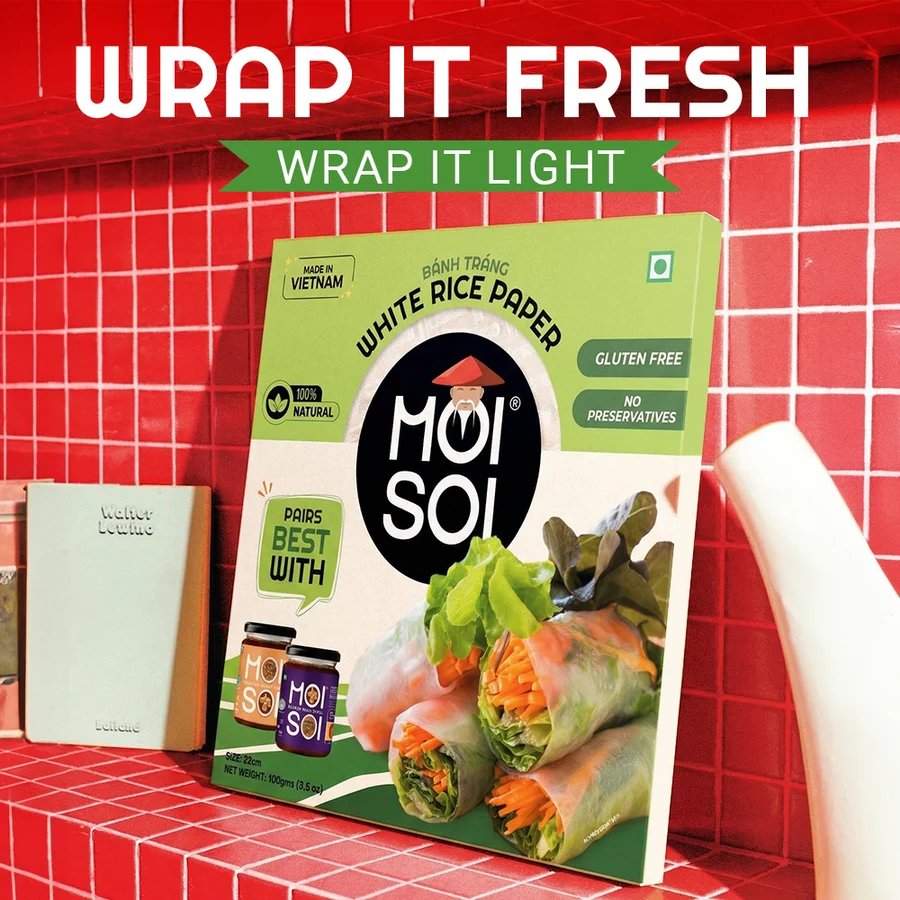
Rice paper is one of the easiest ingredients to use when you want to make fresh, colourful and versatile Asian-inspired meals at home. Thin, delicate and translucent, rice paper sheets can be softened in warm water and wrapped around vegetables, herbs, noodles, paneer, tofu and other fillings.
Moi Soi White Rice Paper is designed for fresh spring rolls, Asian-inspired wraps, salad rolls and other creative recipes. Each sheet has a 22 cm diameter and is made with white rice, tapioca starch, water and salt. The product page describes the sheets as gluten-free and recommends pairing them with Moi Soi Chilli Sauce or Ponzu Sauce.
What Is Rice Paper?
Rice paper is a thin sheet commonly used for making Vietnamese-style fresh spring rolls and other wraps. Unlike wheat-based flatbreads, rice paper becomes soft and flexible when briefly soaked in warm water.
Moi Soi White Rice Paper has a delicate, translucent texture that allows the colours of the fillings to show through the wrapper. The sheets are 22 cm in diameter, making them suitable for individual wraps and rolls.
Rice paper can be filled with fresh vegetables, herbs and noodles, but its uses extend far beyond traditional fresh rolls.
How to Prepare Rice Paper for Rolling
Preparing rice paper is simple, but the soaking time matters.
Place a rice paper sheet in warm water for a few seconds. Once it becomes pliable, remove it and place it on a clean, flat surface. Avoid soaking it for too long because the sheet will continue softening after it comes out of the water.
Add your fillings towards the lower centre of the sheet. Fold the sides inward, then roll it tightly while keeping the filling compact.
Moi Soi recommends briefly soaking the sheets in warm water until soft before filling and rolling.
1. Make Fresh Vegetable Spring Rolls
Fresh vegetable spring rolls are one of the simplest rice paper recipes to try.
Fill softened rice paper with cucumber, carrots, lettuce, cabbage, bell peppers and fresh herbs. Add cooked noodles for a more substantial roll.
Serve the rolls with a dipping sauce such as chilli sauce or Ponzu Sauce. Moi Soi specifically recommends these pairings for its White Rice Paper.
The combination of crisp vegetables, soft rice paper and a flavourful dipping sauce makes this an easy option for lunch, appetisers or light dinners.
2. Try Paneer Rice Paper Rolls
Rice paper works particularly well with Indian ingredients too.
Cut paneer into strips and stir-fry it with vegetables and an Asian-style sauce. Once the filling has cooled slightly, wrap it in softened rice paper along with lettuce and fresh herbs.
Moi Soi’s Wok & Roll Dinner Box uses rice paper wraps with saucy vegetables and paneer, demonstrating how rice paper can be incorporated into a hands-on Asian-inspired meal.
3. Make Noodle-Filled Rice Paper Rolls
Noodles are a natural match for rice paper.
Cook rice noodles, glass noodles or other Asian noodles and allow them to cool. Add a small portion to softened rice paper along with vegetables and herbs.
Avoid overfilling the sheet. A compact filling makes the roll easier to fold and helps prevent the wrapper from tearing.
For extra flavour, serve the finished rolls with chilli sauce, Ponzu Sauce or your favourite Asian dipping sauce.
4. Create Crispy Rice Paper Rolls
Rice paper does not have to be served fresh.
Try filling softened sheets with vegetables, tofu or paneer and then pan-frying them until the outside becomes crisp. This creates a different texture while keeping the filling flavourful.
You can also experiment with different fillings, such as mushrooms, cabbage, carrots and spring onions.
Keep the rolls tightly wrapped before cooking so the filling stays contained.
5. Prepare Rice Paper Dumplings
Rice paper can also be used to create dumpling-style snacks.
Fill softened sheets with finely chopped vegetables, mushrooms or tofu. Fold the wrapper around the filling and cook the dumplings in a pan until lightly crisp.
Serve them with a dipping sauce made from chilli sauce, soy sauce, vinegar or Ponzu Sauce.
This is a creative way to use rice paper when you want something different from traditional spring rolls.
6. Make Fresh Salad Wraps
Rice paper is ideal for turning a salad into a handheld meal.
Layer lettuce, cucumber, carrots, cabbage, herbs and noodles inside the softened sheet. Add tofu, paneer or another filling for extra substance.
Because the rice paper is translucent, colourful ingredients can make the finished rolls especially appealing when served as appetisers or party food.
7. Try Asian-Inspired Breakfast Wraps
Rice paper can even be used for quick breakfast or brunch recipes.
Add scrambled eggs, sautéed vegetables and spring onions to a softened sheet. Fold and pan-fry the wrap until lightly crisp.
For a spicy variation, add a small amount of chilli sauce or chilli oil to the filling.
The result is a flexible fusion recipe that combines familiar ingredients with an Asian-inspired format.
8. Experiment with Rice Paper Snacks
Rice paper can be transformed into quick snack ideas by combining different fillings and cooking methods.
Try combinations such as:
- Tofu, cucumber and herbs
- Paneer, capsicum and lettuce
- Mushrooms, cabbage and spring onions
- Rice noodles, carrots and fresh herbs
- Egg, cucumber and lettuce
Serve the finished rolls with your preferred Asian sauce for dipping.
9. Use Rice Paper for Creative Desserts
Moi Soi describes its rice paper sheets as suitable for creative desserts as well as savoury recipes.
For a simple dessert wrap, fill softened rice paper with sliced fruit such as mango, banana or strawberries. You can add coconut, chocolate, nuts or another sweet filling before rolling.
The delicate wrapper provides a different way to present fruit and other dessert ingredients.
10. Build a DIY Rice Paper Roll Dinner
Rice paper rolls can make mealtimes interactive.
Place softened or dry rice paper sheets alongside bowls of prepared vegetables, noodles, herbs, paneer, tofu and sauces. Everyone can build their own rolls with the fillings they prefer.
This approach works particularly well for casual dinners and gatherings.
Moi Soi’s Wok & Roll Dinner Box follows a similar DIY format, allowing diners to assemble rice paper wraps with stir-fried vegetables and paneer.
What Fillings Go Well with Rice Paper?
The beauty of rice paper is its flexibility. You can mix fresh, crunchy and cooked ingredients in the same roll.
Some popular filling combinations include:
- Rice noodles with cucumber and carrots
- Lettuce with paneer and capsicum
- Tofu with cabbage and spring onions
- Mushrooms with herbs and noodles
- Egg with cucumber and lettuce
- Fresh mango with coconut for a dessert roll
Fresh herbs such as mint and coriander can add another layer of flavour, while dipping sauces bring the entire combination together.
Rice Paper vs Other Wraps
Rice paper offers a different experience from traditional wheat-based wraps. When softened, it becomes delicate and translucent, allowing the fillings to remain visible.
It also works well for both fresh and cooked recipes. You can use it for Vietnamese-inspired spring rolls, salad wraps, dumpling-style snacks, crispy rolls and creative desserts.
Moi Soi’s White Rice Paper is made with white rice, tapioca starch, water and salt, and the product page describes it as gluten-free.
Tips for Making Better Rice Paper Rolls
A few simple techniques can make rice paper recipes easier to prepare:
Do not oversoak the sheets
Brief soaking is enough to soften the rice paper. Over-soaking can make it difficult to handle.
Keep the fillings moderate
Too much filling can make the wrapper difficult to fold and more likely to tear.
Add contrasting textures
Combine soft noodles with crisp vegetables, fresh herbs and crunchy toppings.
Keep wet ingredients controlled
Excess moisture can make the wrapper difficult to handle, so drain cooked ingredients before adding them.
Serve with a flavourful dip
A good dipping sauce can add acidity, spice and savouriness to otherwise mild fillings.
Bring More Asian Flavours to Your Kitchen
Rice paper is much more than an ingredient for traditional spring rolls. With a little creativity, you can use it for fresh vegetable wraps, noodle rolls, paneer wraps, dumpling-style snacks, crispy appetisers and even desserts.
Moi Soi White Rice Paper is made for easy preparation, with thin 22 cm sheets that soften quickly in warm water. Its versatility makes it a useful ingredient for experimenting with Vietnamese-inspired and fusion recipes at home.
Frequently Asked Questions
1. How do you soften rice paper?
Briefly soak a rice paper sheet in warm water until it becomes soft and pliable. Moi Soi recommends soaking the sheet for a few seconds before filling it.
2. What can I put inside rice paper rolls?
You can use vegetables, noodles, herbs, tofu, paneer, eggs, mushrooms and other fillings. Sweet fillings such as fruit can also be used for dessert rolls.
3. Can rice paper be cooked?
Yes. Rice paper can be used for fresh rolls as well as cooked recipes such as crispy rolls and dumpling-style snacks.
4. Is Moi Soi White Rice Paper gluten-free?
The Moi Soi product page describes its White Rice Paper as gluten-free. Always check the current product packaging and ingredient information for your specific dietary requirements.
5. What sauce goes with rice paper rolls?
Moi Soi recommends pairing its White Rice Paper with Chilli Sauce or Ponzu Sauce. You can also experiment with other Asian dipping sauces.
6. Can rice paper be used for desserts?
Yes. Moi Soi describes its rice paper sheets as suitable for creative desserts, so you can experiment with fruit, coconut, chocolate and other sweet fillings.